Agentic Commerce: How AI Agents Are Changing Online Shopping?
Online shopping has traditionally required people to search for products, compare options, visit different websites, add items to a cart, and complete checkout themselves.
AI agents are beginning to change that process.
Instead of simply recommending products, an AI agent can potentially search for products, compare options, evaluate them against a user’s requirements, and perform authorized actions on the user’s behalf.
Quick answer: Agentic commerce is a form of digital commerce in which AI agents participate in shopping and purchasing workflows. Depending on the system and permissions available, an agent can discover products, compare options, prepare a purchase, and potentially complete authorized transactions.
What Is Agentic Commerce?
Agentic commerce describes a shopping experience in which an AI agent performs some of the tasks normally handled manually by the customer.
Traditional AI shopping tools may help users search for products or generate recommendations. Agentic commerce goes further by allowing an AI system to take actions toward a specific shopping goal.
For example, a user could say:
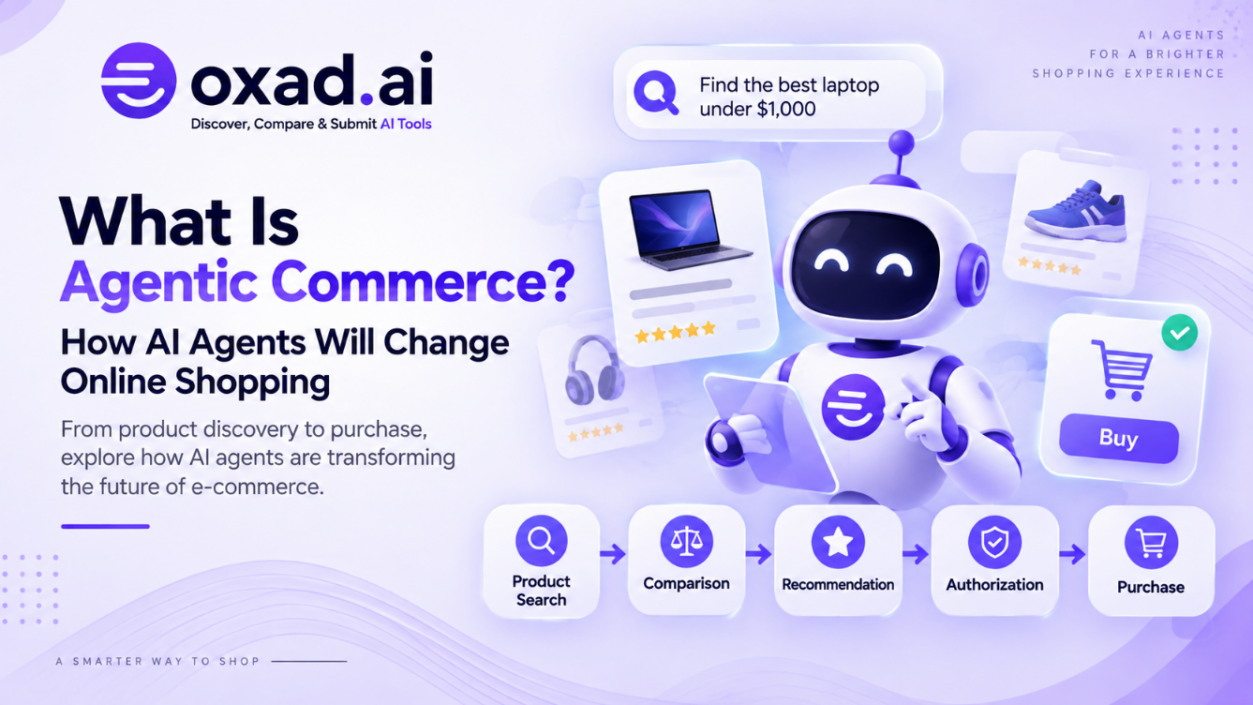
“Find a laptop under $1,000 with at least 16GB of RAM and good battery life.”
A traditional search experience would return products for the user to investigate. An AI shopping agent could potentially search multiple sources, compare specifications, filter unsuitable products, and present a smaller set of relevant options.
With the appropriate merchant, payment, and authorization infrastructure, a more advanced system could potentially prepare or complete a purchase.
Stage
Possible agent activity
User goal
The user describes what they want to buy.
Discovery
The agent searches for relevant products.
Comparison
The agent compares products using the user’s criteria.
Recommendation
The agent presents suitable options.
Authorization
The user or a predefined policy authorizes an action.
Purchase
The system may complete an authorized transaction when supported.
Why Is Agentic Commerce Becoming Important?
AI agents are changing how people can interact with software. Instead of manually completing every step inside an application, users can increasingly describe an objective and allow software to handle parts of the workflow.
Shopping is a natural application because many purchasing journeys contain repetitive tasks such as searching, filtering, comparing prices, checking availability, and reviewing product information.
Shopping task
How an AI agent could help
Product discovery
Search multiple sources for relevant products.
Comparison
Compare specifications, prices, features, and other criteria.
Filtering
Remove products that do not meet the user’s requirements.
Price research
Compare available prices and offers.
Checkout preparation
Prepare a cart or purchase request.
Transaction
Complete an authorized transaction when the necessary infrastructure exists.
Agentic Commerce vs Traditional Online Shopping
Traditional online shopping
Agentic commerce
The customer performs most product research.
An agent can perform part of the research.
The customer visits multiple websites.
The agent can gather information from multiple sources.
The customer manually compares products.
The agent can compare products against defined criteria.
The customer builds the shopping list.
The agent can create or suggest a shopping list.
The customer completes checkout.
An authorized agent may handle some transaction steps.
This does not mean traditional online shopping disappears. Agentic commerce introduces another interface through which consumers may interact with products and merchants.
How Does an AI Shopping Agent Work?
An AI shopping agent needs several components to turn a natural-language request into a useful purchasing workflow.
Component
Purpose
AI model
Understands the request and reasons about available options.
Product data
Provides product details, prices, availability, and specifications.
Search tools
Help discover products and supporting information.
Context
Maintains the user’s requirements and relevant information gathered during the task.
Payment infrastructure
Supports authorized transactions.
Permission layer
Controls which actions the agent can perform.
Can AI Agents Actually Buy Products?
Potentially, yes. However, the ability to complete a purchase depends on the AI system, merchant infrastructure, payment technology, and permissions available to the agent.
Finding a product and purchasing it are not the same capability.
Capability
What it means
Product discovery
Finding products that may match the request.
Recommendation
Presenting products that appear suitable.
Cart preparation
Adding or preparing selected products for checkout.
Checkout preparation
Preparing the transaction without necessarily submitting payment.
Payment
Completing an authorized transaction.
Important: An AI shopping agent should not automatically receive unlimited purchasing authority. Payments, subscriptions, expensive purchases, and other sensitive actions may require explicit user approval, spending limits, or additional safeguards.
What Are Agentic Payments?
Agentic payments refer to payment workflows designed to support transactions involving AI agents acting on behalf of users or businesses.
A conventional online transaction generally assumes that a human is interacting directly with the merchant. An agentic transaction introduces an AI system into that process.
This creates several important requirements.
Question
Why it matters
Who is the user?
The transaction needs to be associated with an authorized identity.
What can the agent purchase?
Permissions should define the agent’s purchasing authority.
What is the spending limit?
Limits can restrict the financial impact of unexpected actions.
Was the transaction authorized?
The system needs a reliable authorization mechanism.
Which merchant is involved?
The transaction must reach the intended merchant or service.
Why Does Trust Matter in Agentic Commerce?
Trust becomes particularly important when an AI system moves from providing information to taking actions.
A consumer may be comfortable asking an AI to compare headphones. Allowing that same system to spend hundreds of dollars without confirmation introduces a different level of risk.
This creates different levels of agent autonomy.
Level
Possible responsibility
1
Find products and provide information.
2
Compare products and provide recommendations.
3
Prepare a cart or checkout.
4
Purchase within predefined limits.
5
Handle recurring or broader purchasing workflows under ongoing authorization.
The exact boundaries will vary between systems, but the principle is straightforward: greater autonomy requires stronger controls.
How Could Agentic Commerce Change Product Search?
Traditional product search often starts with keywords.
A customer might search for:
“Best running shoes under $150.”
An AI shopping agent can potentially work with a richer request:
“I run three times a week, usually on roads, have a $150 budget, and want something comfortable for longer runs.”
The agent can use these requirements to create a more detailed product-selection task.
This could make conversational product discovery increasingly important because users can describe their needs rather than translating every requirement into separate search queries.
Will AI Agents Replace Google Shopping?
There is no single outcome. AI agents and search engines can coexist and perform different roles.
Search engines are primarily designed to help users discover information. Agents are designed to help users accomplish goals through a combination of information, tools, and actions.
The distinction becomes more significant as AI systems move from search and recommendation toward action and execution.
Search-oriented experience
Agent-oriented experience
“Show me laptops under $1,000.”
“Find a laptop under $1,000 that meets my requirements.”
User opens and compares results.
Agent can perform part of the comparison.
User decides what to do next.
Agent can suggest or prepare the next action.
User completes the transaction.
Agent may complete authorized transaction steps.
Search can therefore become one component of a broader agentic shopping workflow rather than disappearing.
What Does Agentic Commerce Mean for Online Stores?
The change affects merchants as well as consumers.
If AI agents become an important interface between consumers and stores, merchants may need to make their product information easy for both humans and software systems to understand.
Product information
Why it matters
Product title
Helps systems identify the product accurately.
Specifications
Allows agents to compare products against user requirements.
Pricing
Provides current information for price comparison.
Availability
Prevents recommendations based on unavailable products.
Shipping and returns
Helps agents evaluate the complete purchasing conditions.
Merchant identity
Provides important context for purchasing decisions.
Could Agentic Commerce Affect SEO?
Potentially, yes. Traditional SEO focuses heavily on visibility in search results. Agentic commerce introduces another question:
Can an AI system understand, evaluate, trust, and recommend your product?
This does not make traditional SEO irrelevant. Search engines and AI systems can both depend on accurate, useful, well-structured, and trustworthy information.
For e-commerce businesses, the opportunity may therefore expand from optimizing pages for search engines to making product information accessible to AI-driven discovery systems.
This broader shift is related to AI Search Optimization, where businesses consider how their content and information can be discovered and understood by AI-powered search experiences.
What Role Does Web Data Play in Agentic Commerce?
AI shopping agents need current and useful information.
They may need to discover product pages, retrieve specifications, compare offers, and monitor changes in availability or pricing.
Firecrawl illustrates the type of web-data infrastructure that can support AI workflows requiring structured information from websites.
For agentic commerce, the quality and freshness of product data can directly affect the usefulness of an agent’s recommendations.
Why Does User Context Matter?
A useful shopping agent needs more than product information. It also needs to understand the requirements and preferences that define a good purchase for a particular user.
User requirement
Possible agent behavior
Budget
Exclude products above the spending limit.
Brand preference
Prioritize or filter selected brands.
Delivery requirements
Filter products based on delivery availability.
Product features
Compare products against required specifications.
Previous preferences
Use relevant preferences when personalization is enabled.
Context becomes particularly important when a purchase involves many constraints. Systems focused on AI context, such as Context.dev, are relevant to this broader challenge because agents need the right information at the right time.
What Are the Main Risks of Agentic Commerce?
Giving an AI system the ability to influence or execute purchases creates new technical, financial, and privacy considerations.
Risk
Potential problem
Wrong recommendation
The agent may misunderstand the user’s requirements.
Outdated information
Product data, pricing, or availability may have changed.
Unexpected purchase
The agent may interpret authorization incorrectly.
Fraud and manipulation
Attackers may attempt to manipulate agents, merchants, or transactions.
Privacy
Shopping agents may process personal or financial information.
Merchant influence
Businesses may attempt to influence how products are presented or prioritized.
These challenges mean that agentic commerce requires more than capable AI models. Identity, permissions, security, payment controls, transparency, and auditing can all become important parts of the ecosystem.
What Could Agentic Commerce Look Like in Everyday Life?
Imagine planning a family trip.
Instead of manually searching for flights, hotels, restaurants, and activities, you could provide an AI agent with information such as:
Destination
Travel dates
Budget
Preferred hotel type
Flight preferences
Dietary requirements
Activities you want to include
The agent could research available options and organize them into a plan.
With the appropriate integrations and authorization, future systems could potentially go further and handle reservations or payments.
The fundamental change is that the consumer describes an outcome rather than manually controlling every individual step.
Will AI Agents Always Make Purchases Automatically?
Not necessarily.
Different purchases require different levels of user control. A low-cost household item may be suitable for automated purchasing under a predefined budget, while a high-value purchase or long-term subscription may require explicit confirmation.
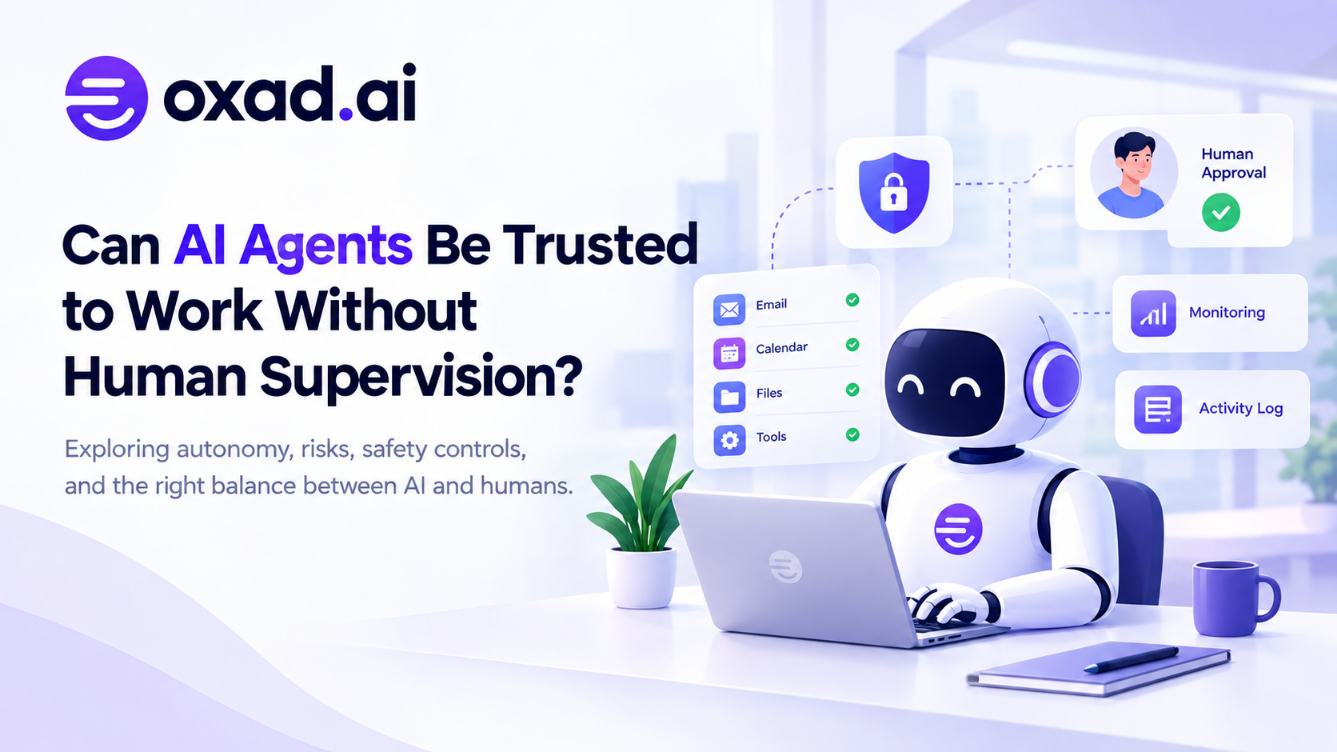
Human control remains important. Agentic commerce is most practical when users can clearly define what an agent may do, what it cannot do, how much it can spend, and when approval is required.
What Could Agentic Commerce Mean for Affiliate Marketing?
Affiliate marketing could also change if AI agents become important product-discovery interfaces.
Today, a consumer may read an article, click an affiliate link, and purchase a product. In an agentic environment, an AI system could potentially perform product discovery and recommendation directly.
This creates several questions for the affiliate industry:
How will an agent identify eligible offers?
How will attribution work?
Who receives credit for an AI-generated recommendation?
How will merchants expose affiliate information to agents?
How will consumers distinguish recommendations from paid placements?
The answers are still developing, but agentic commerce could create another layer between product discovery and purchase.
What Should Businesses Do About Agentic Commerce?
Businesses do not necessarily need to build an AI shopping agent immediately. A practical starting point is making existing product information accurate, structured, accessible, and easy for software systems to interpret.
Area
Practical action
Product data
Keep specifications and descriptions accurate.
Pricing
Provide current and consistent pricing information.
Inventory
Keep availability information updated.
Policies
Clearly explain shipping, returns, warranties, and other conditions.
Structured data
Use appropriate machine-readable product information.
AI readiness
Consider how AI systems can discover and understand your products.
What Is the Future of Agentic Commerce?
Agentic commerce is still developing, and the ecosystem includes several moving parts: AI agents, merchants, product-data systems, payment infrastructure, identity systems, and security controls.
The broader evolution can be understood as a progression:
Commerce model
Consumer interaction
Traditional commerce
Consumer manually performs most purchasing activities.
Search-driven commerce
Search engines help consumers discover products.
AI-assisted commerce
AI helps research, compare, and recommend products.
Agentic commerce
AI agents can potentially perform authorized actions toward a purchasing goal.
The future may not be a world where AI agents make every purchase automatically. Consumers may instead choose different levels of automation depending on the type, value, and sensitivity of a transaction.
For simple purchases, an agent could potentially handle much of the workflow. For important decisions, the agent may remain primarily a researcher and assistant while the human makes the final decision.
Key Takeaways
Agentic commerce allows AI agents to participate in shopping and purchasing workflows.
The key difference from conventional AI recommendations is the ability to perform authorized actions.
AI shopping agents can potentially search, compare, filter, and prepare purchases.
Authorized transactions require appropriate identity, payment, permission, and security systems.
Accurate product data will become increasingly important if AI becomes a major shopping interface.
Agentic commerce could affect e-commerce, product discovery, SEO, and affiliate marketing.
Human approval can remain important for sensitive or high-value purchases.
Frequently Asked Questions
What is agentic commerce?
Agentic commerce is online commerce in which AI agents perform parts of product discovery, evaluation, purchasing, or related shopping workflows.
What is an AI shopping agent?
An AI shopping agent is an AI system designed to help users discover, compare, evaluate, and potentially purchase products.
Can AI agents buy products?
Some systems can support purchasing actions when the required merchant, payment, identity, and authorization infrastructure is available.
What are agentic payments?
Agentic payments are payment workflows designed to support transactions involving authorized AI agents acting on behalf of users or businesses.
Will AI agents replace online shopping websites?
Not necessarily. AI agents may become another interface through which consumers discover, compare, and purchase products.
How will agentic commerce affect SEO?
Businesses may increasingly need product information that can be understood by both traditional search engines and AI-driven discovery systems.
Is agentic commerce safe?
Its safety depends on the implementation, including identity, permissions, spending limits, security controls, transaction safeguards, and monitoring.
Why is product data important for AI agents?
Agents need accurate product information to compare options and provide useful recommendations. Outdated or incomplete data can lead to poor decisions.
What is the difference between AI shopping and agentic commerce?
AI shopping may focus on search and recommendations, while agentic commerce can involve AI systems taking authorized actions toward completing a purchase.
Will humans still control purchases?
Users can retain control through spending limits, approval requirements, transaction rules, and clearly defined agent permissions.
Could agentic commerce affect affiliate marketing?
Yes. AI agents could become another product-discovery channel, potentially changing how recommendations, affiliate links, and attribution work.
Is agentic commerce fully developed?
No. The ecosystem is still developing, with AI agents, payment systems, merchants, identity technologies, and security mechanisms evolving together.




6 Replies to “Agentic Commerce: How AI Agents Are Changing Online Shopping?”
The idea of an agent handling several steps of a purchase is interesting, especially when permissions and confirmation are involved.
The article makes it easier to separate product recommendations from agents that can actually take actions.
The discussion around trust and payment authorization seems just as important as the automation itself.
The idea of agents handling several shopping steps makes the difference between recommendations and real automation much clearer.
L’idea del commercio gestito dagli agenti è interessante, soprattutto quando entrano in gioco autorizzazioni e conferme.
The discussion of payment authorization and trust is just as important as the automation itself.