OpenAI Agents API: Why the Codex Harness Could Change How AI Agents Are Built
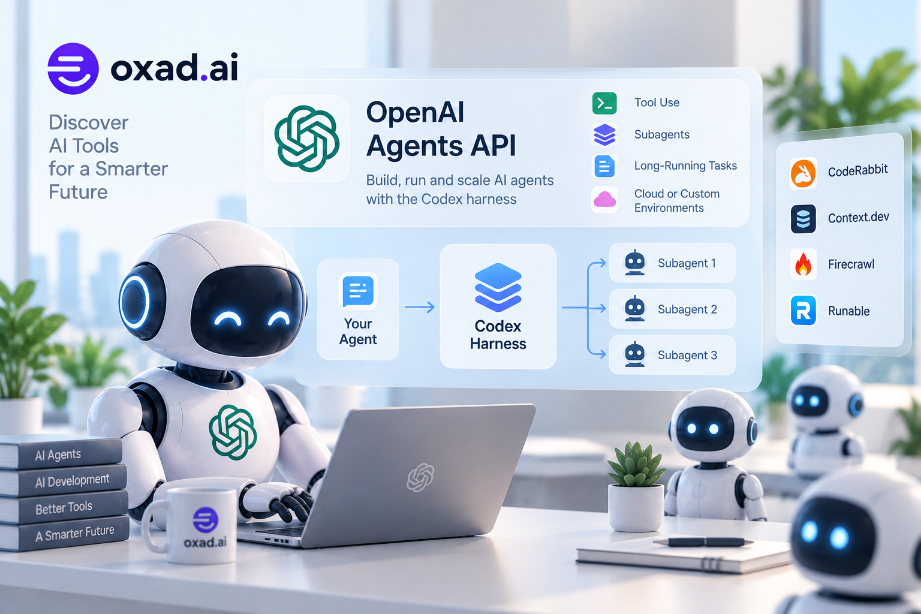
OpenAI is making a significant move in the evolution of AI agents with the launch of the Agents API. Announced as a public beta, the new API gives developers access to the same type of agent harness and infrastructure that powers Codex, allowing them to build AI agents capable of working across longer sessions, using multiple tools, managing context, and delegating tasks to subagents.
The important part is not simply that OpenAI has introduced another API. The bigger change is that developers no longer have to build every component of a sophisticated agent system from scratch. OpenAI is effectively turning the infrastructure behind its own agentic workflows into a platform that developers can build on.
For the AI industry, this could accelerate the transition from AI that answers questions to AI that completes multi-step work.
Key takeaway: The OpenAI Agents API is less about creating another chatbot and more about providing the infrastructure needed to build long-running, tool-using, multi-agent systems.
What Is the OpenAI Agents API?
The OpenAI Agents API is a developer platform for creating and running AI agents using an infrastructure layer based on the Codex harness.
OpenAI says the system is designed around several problems that become increasingly difficult as agents become more autonomous:
Maintaining context across long sessions
Using tools efficiently
Working with files and code
Running tasks inside controlled environments
Managing multiple steps without constant human prompting
Delegating independent tasks to subagents
Recovering and continuing work across longer workflows
This represents a significant difference from a conventional API request where an application sends a prompt, receives a response, and handles everything else itself.
With the Agents API, much more of the orchestration layer can be handled by the platform.
Why the Codex Harness Matters
The most interesting part of the announcement is arguably the Codex harness.
An AI model by itself is not a complete agent. A useful autonomous system needs an environment in which it can reason, access information, use tools, execute actions, maintain state, inspect results, and decide what to do next.
That surrounding infrastructure is often referred to as a harness.
Building such a system independently can require significant engineering effort. Developers need to solve problems involving context management, tool selection, execution environments, retries, permissions, state management, logging, and coordination.
OpenAI’s approach is to provide much of this infrastructure as a managed platform.
This means developers can concentrate more on what their agent is supposed to accomplish rather than recreating the underlying machinery required to keep the agent running.
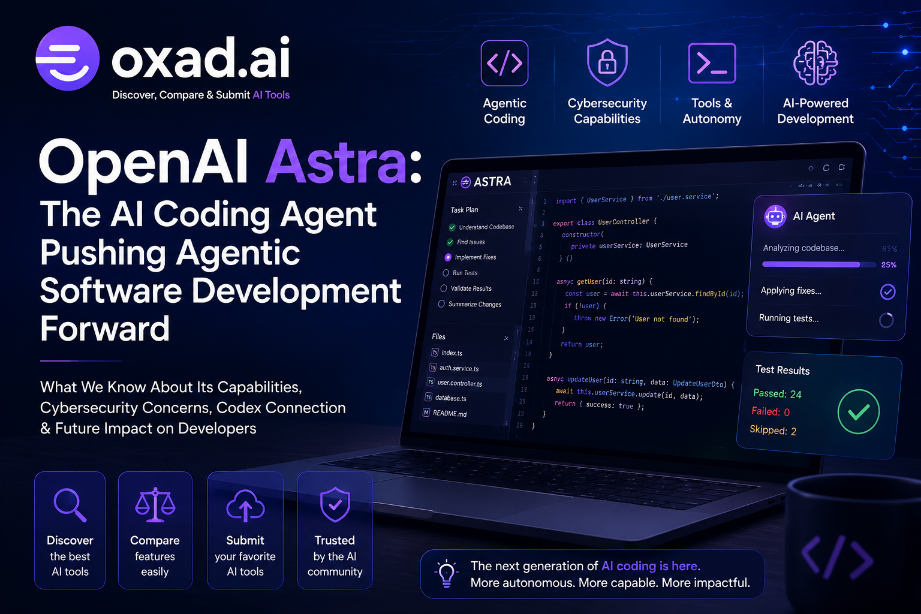
This direction also connects directly with the broader evolution of AI coding. OXAD’s analysis of OpenAI Astra and the evolution of agentic coding explores how AI systems are increasingly moving beyond code generation toward longer, tool-based engineering workflows.
From Prompt Chains to Real AI Agents
Before modern agent frameworks became popular, developers often built complex AI applications using chains of prompts.
A typical workflow might look like this:
Ask a model to analyze a problem.
Send the result to another model call.
Ask the model to choose a tool.
Execute the tool externally.
Return the result to the model.
Repeat the process.
This approach can work, but it becomes increasingly complicated as the workflow grows.
An agentic architecture attempts to make the process more dynamic. Instead of defining every step in advance, the agent can determine which actions are necessary to accomplish the objective.
That difference becomes especially important when a task cannot be predicted in advance.
For example, a software engineering agent might need to:
Inspect a repository
Understand an unfamiliar codebase
Search documentation
Identify the likely cause of an error
Modify several files
Run tests
Analyze failed tests
Make additional changes
Review the final result
The developer may define the objective, while the agent handles much of the sequence required to reach it.
Long-Running Agents Are the Bigger Story
One of the strongest aspects of the Agents API is its focus on long-running sessions.
Many current AI interactions are still relatively short. A user asks something, receives an answer, and starts another interaction.
That model becomes less useful when an agent is expected to work on a complicated task for hours.
Long-running work introduces a fundamental problem: the amount of information generated during the task can eventually exceed the model’s available context.
OpenAI says the Agents API includes context-management mechanisms designed to allow agents to continue working across longer sessions. The system can compact earlier context while preserving information needed to continue the task.
This is important because an agent that can work for several hours without losing track of its objective is fundamentally different from a chatbot that simply remembers the previous few messages.
AI Agents Can Use More Than One Tool
Another major component is tool use.
Real-world agents need access to information and actions outside the model itself. Depending on the application, this could include databases, APIs, web search, code execution, file systems, business software, or internal company systems.
The Agents API supports multiple approaches to connecting agents with tools, including MCP, custom functions, and built-in capabilities.
OpenAI also describes tool-search capabilities that can make relevant tools available when needed rather than loading every possible tool definition into the agent’s context.
This can become increasingly important as AI applications grow.
An agent connected to hundreds or thousands of tools cannot realistically treat every tool as equally relevant at every moment. Efficient tool discovery therefore becomes part of the intelligence layer surrounding the model.
Subagents Could Change How Complex Tasks Are Solved
Perhaps the most important capability for advanced workflows is multi-agent execution.
The Agents API can allow a main agent to delegate independent pieces of work to subagents operating in parallel.
Consider a research task involving a new software product.
Instead of asking one agent to perform everything sequentially, a coordinator could delegate:
One subagent to investigate the product
Another to analyze competitors
Another to inspect technical documentation
Another to evaluate pricing
Another to verify important claims
The main agent can then consolidate the results.
This architecture resembles how human teams operate. Instead of one person doing every task, a coordinator divides a large objective into smaller assignments.
That could make AI systems much more effective at complex research, software development, data analysis, and business workflows.
The Importance of the Execution Environment
An intelligent agent is only as useful as the environment in which it operates.
OpenAI therefore allows developers to choose different execution environments depending on their requirements.
Developers can use OpenAI-managed environments or integrate with ecosystem infrastructure providers. OpenAI also introduced hosted sandboxes designed to give agents controlled environments for running code, working with files, and producing artifacts.
This is an important architectural distinction.
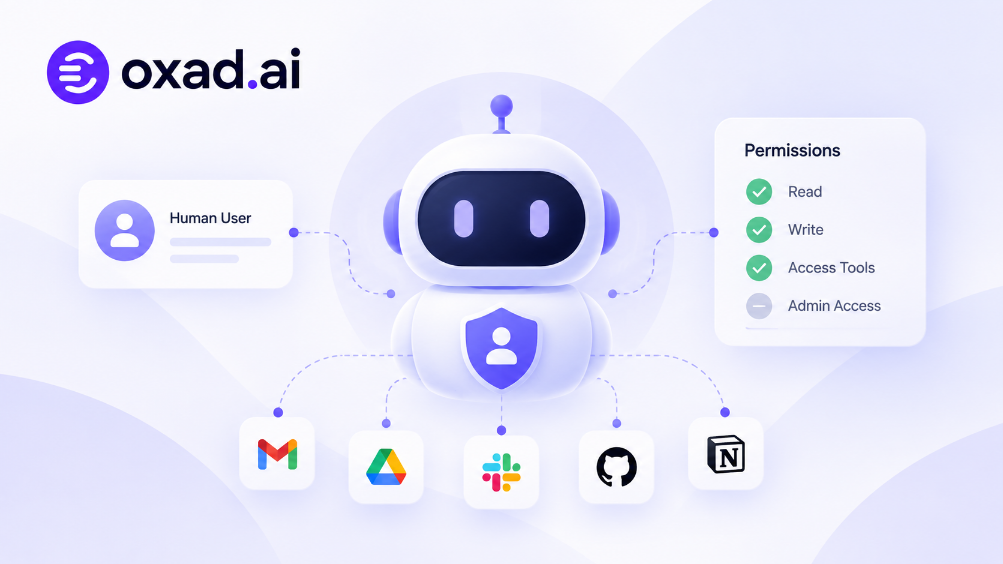
The model does not automatically need unrestricted access to a developer’s computer, production servers, or internal systems. Instead, the agent can operate inside a controlled environment with specific permissions.
For production AI agents, this type of isolation is likely to become increasingly important.
Security Becomes More Important as Agents Become More Autonomous
Greater autonomy creates a security problem that traditional chatbots do not face to the same degree.
A chatbot that generates text has limited ability to directly affect the outside world.
An agent with access to terminals, APIs, files, credentials, browsers, and external systems is different.
If an agent can take actions, developers must carefully control what those actions are allowed to affect.
Important security principles include:
Security Layer
Why It Matters
Sandboxing
Limits what an agent can access or modify.
Permission controls
Prevents unnecessary access to sensitive systems.
Human approval
Allows people to review sensitive actions before execution.
Monitoring
Makes agent behavior easier to inspect and audit.
Logging
Creates a record of decisions and actions.
This is particularly relevant because the AI industry is simultaneously developing more capable coding and cybersecurity systems. The rise of autonomous AI-powered cyber operations makes the security architecture around agents just as important as the model itself.
Where Tools Like CodeRabbit Fit In
The emergence of agent platforms does not necessarily mean specialized AI developer tools become obsolete.
In many cases, the opposite could happen.
An agent responsible for modifying a software project still needs quality-control mechanisms. Code review, testing, security analysis, documentation, and deployment can remain separate layers around the agent.
CodeRabbit, for example, focuses on AI-assisted code review and can provide an additional quality-control layer for development teams.
This suggests that the future AI development stack may look less like a single universal chatbot and more like a collection of specialized services coordinated by agents.
Context Is Becoming Infrastructure
Another important part of the emerging agent ecosystem is access to reliable external information.
An agent cannot make useful decisions if it only knows what was included in its initial prompt.
For many applications, agents need current information from websites, documentation, databases, company records, APIs, and other sources.
This is where tools such as Context.dev become particularly relevant. Its platform is designed to provide web data, crawling, structured extraction, search, and other forms of live context for AI agents and LLM applications.
Firecrawl represents another important part of this infrastructure layer, providing web crawling, scraping, browser interaction, and AI-ready web data capabilities.
The larger trend is worth watching: as models become better at reasoning and acting, access to reliable context becomes a critical component of agent performance.
Runable Shows Where Agentic Workflows Can Lead
The agent ecosystem is also expanding beyond traditional software engineering.
Runable is an example of a broader AI workspace that combines agents with website and app development, research, documents, presentations, creative generation, automation, and other workflows.
This illustrates a potentially important direction for the industry.
AI agents may eventually become the coordination layer between many specialized capabilities rather than simply another interface for generating text.
A user could describe an objective, while different AI systems handle research, coding, design, analysis, testing, and publishing.
What This Means for AI Developers
The Agents API could lower the technical barrier to building sophisticated AI agents.
Previously, a development team interested in long-running autonomous agents might have needed to create its own orchestration framework, execution system, context management, tool infrastructure, and multi-agent coordination layer.
With more of that infrastructure provided by OpenAI, teams can potentially spend more time building application-specific capabilities.
The competitive advantage could therefore shift toward three areas:
Better tools: Agents need access to useful actions and data.
Better context: Agents need accurate information at the right moment.
Better workflows: Agents need clear objectives and reliable ways to verify their work.
The model remains important, but it is becoming only one component of the overall system.
How the Agents API Could Change Software Development
The biggest potential impact may be on the way developers interact with software.
Instead of manually opening an editor and performing every individual action, developers could increasingly describe objectives at a higher level.
For example:
“Investigate the recent API failures, identify the root cause, implement a fix, run the relevant tests, review the changes, and prepare the project for deployment.”
An advanced agent could potentially coordinate much of that workflow.
That does not eliminate the developer. Instead, it changes the developer’s role from manually executing every operation toward defining objectives, reviewing results, designing systems, and managing risk.
The Agents API could have consequences beyond OpenAI’s own ecosystem.
As more companies adopt agent-based architectures, demand is likely to increase for specialized infrastructure:
AI coding tools
Web scraping and browsing systems
Vector databases
RAG platforms
Agent observability
AI security tools
Workflow automation
Code review systems
Data enrichment APIs
Sandboxed execution environments
That creates a much larger market for specialized AI tools.
Instead of competing to become the one application users interact with, many tools can become capabilities that agents call when they need them.
What Developers Should Watch Next
The Agents API is currently in public beta, so developers should expect the platform to evolve.
The most important things to watch are not simply benchmark scores but practical performance.
Developers should evaluate:
How reliably agents complete long-running tasks
How well they recover from failures
How effectively they manage context
How accurately they select tools
How useful multi-agent delegation becomes
How predictable execution costs are
How secure the execution environments are
How easily agents can integrate with existing systems
The difference between an impressive demonstration and a production-ready agent will ultimately be reliability.
The Bigger Picture: AI Is Moving From Models to Systems
The OpenAI Agents API represents a broader change taking place across the AI industry.
For years, competition was largely centered around increasingly capable models. Bigger context windows, stronger reasoning, better coding, improved multimodal capabilities, and lower inference costs dominated the conversation.
Now the focus is increasingly moving toward systems that use those models to accomplish real objectives.
A powerful model is useful.
A powerful model connected to tools is more useful.
A powerful model that can maintain context, execute actions, delegate work, verify results, and continue operating over long periods represents something much closer to an autonomous digital worker.
That is why the Agents API deserves attention.
Final Verdict
The OpenAI Agents API could become one of the more important infrastructure releases in the development of AI agents.
Its significance is not simply that developers can call an OpenAI model through another API. The more important development is that OpenAI is exposing the infrastructure patterns it has developed around Codex: long-running sessions, context management, tool use, execution environments, and subagent coordination.
If these capabilities prove reliable at scale, building sophisticated AI agents could become substantially easier.
For developers, the opportunity is to focus less on constructing the machinery that keeps agents running and more on building the tools, data, workflows, and domain expertise that make those agents genuinely useful.
And for the wider AI tools ecosystem, the implications could be even bigger. The next generation of AI applications may not be standalone tools waiting for users to operate them. They may become capabilities that other AI agents discover, call, combine, and coordinate automatically.
That would represent a significant shift in how software itself is built and used.
Explore more AI tools: OXAD.AI indexes more than 12,000 AI tools across coding, agents, research, automation, creative AI, productivity, and other categories. Explore the AI tools directory to discover platforms that can become part of the emerging agentic AI stack.
Frequently Asked Questions About OpenAI Agents API
What is the OpenAI Agents API?
The OpenAI Agents API is a developer platform for building and running AI agents using infrastructure based on the Codex harness, including context management, tool use, execution environments, and multi-agent capabilities.
Is the OpenAI Agents API available?
Yes. OpenAI announced the Agents API as a public beta for developers.
What is the Codex harness?
The Codex harness is the surrounding infrastructure that helps an AI agent manage context, use tools, execute work, and coordinate complex tasks rather than simply generating a response.
Can Agents API use subagents?
Yes. The platform includes multi-agent capabilities that allow a main agent to delegate independent tasks to subagents and combine their results.
Can AI agents run code?
Agents can operate in supported execution environments, including OpenAI-hosted sandboxes, where they can run code, work with files, and produce artifacts.
Why is context management important for AI agents?
Long-running tasks can generate more information than a model can keep in its active context. Effective context management allows agents to continue working while preserving important information from earlier parts of the task.
Will the Agents API replace AI coding tools?
Not necessarily. It is more likely to become infrastructure that can work alongside specialized coding, code review, web data, research, and automation tools.
What tools can complement AI agents?
Tools for code review, web data, crawling, research, automation, and execution can all complement an agent. OXAD pages such as CodeRabbit, Context.dev, Firecrawl, and Runable are useful examples of specialized capabilities within this broader ecosystem.
What is the biggest challenge for AI agents?
Reliability is one of the biggest challenges. An agent needs to make correct decisions over many steps, recover from failures, use tools appropriately, manage context, and operate within clearly defined security boundaries.
Why is the Agents API important for the future of AI?
It reflects the industry’s shift from AI models that primarily generate responses toward AI systems that can plan, use tools, delegate work, execute actions, and complete longer-running objectives.