AI Agent Identity: Why Autonomous AI Needs Its Own Permissions
AI agents are moving from answering questions to taking actions. They can send emails, interact with software, access files, run code, use APIs, manage workflows, and increasingly make decisions on behalf of users.
That shift creates a security question that is easy to overlook: who is the agent when it acts?
A traditional application usually has a clear identity. A human employee has an account, a service has credentials, and a server has a defined role. AI agents are different. An agent may act on behalf of a user, call several tools, delegate work to another agent, access multiple systems, and operate for extended periods without a person approving every individual action.
This is why AI agent identity is becoming an important part of the next generation of AI infrastructure.
The question is no longer simply whether an AI model is intelligent enough to complete a task. The more important question is whether the surrounding infrastructure can clearly control what that agent is allowed to do, on whose behalf it is acting, and what happens when something goes wrong.
Why AI Agents Are Creating an Identity Problem
For years, software security was built around relatively predictable actors.
A user logs in. An application receives a token. A service calls an API. Access is granted according to predefined permissions.
AI agents introduce a more complicated relationship.
An agent can receive an instruction from a person, interpret that instruction, decide which tools it needs, call those tools, process the results, and potentially ask another agent to complete part of the task.
The result is a chain of actions rather than a single request.
Consider a simple instruction:
“Find the best flight for my trip and book it if the price is below $500.”
The user has provided one instruction, but the agent may need to search travel services, access a calendar, compare options, use personal information, and potentially interact with a payment system.
This creates an important distinction between what the user asked for and what the agent is technically capable of doing.
Those two things should not automatically be treated as equivalent.
AI Agents Are Becoming Software Actors
The development of agentic AI is changing the role of AI systems inside software infrastructure.
Modern agent platforms increasingly allow AI systems to use tools, work with files, execute code, maintain context, operate for longer periods, and coordinate multiple steps or agents.
These capabilities represent a broader change:
AI is becoming an actor inside the digital environment rather than simply an interface for generating information.
Once an AI system becomes an actor, identity and authorization become fundamental infrastructure problems.
This also changes how developers should think about AI security. The model itself is only one component of the system. The surrounding runtime, tools, data, credentials, and permissions can have an equally important impact on the security of the overall application.
An AI Agent Should Not Simply Become the User
One of the easiest ways to build an agent is to give it the same credentials as the person using it.
It is also one of the most dangerous architectural shortcuts.
If an agent receives broad access to a user’s account, it can become difficult to distinguish between actions that were explicitly authorized and actions that the agent decided to perform while interpreting an instruction.
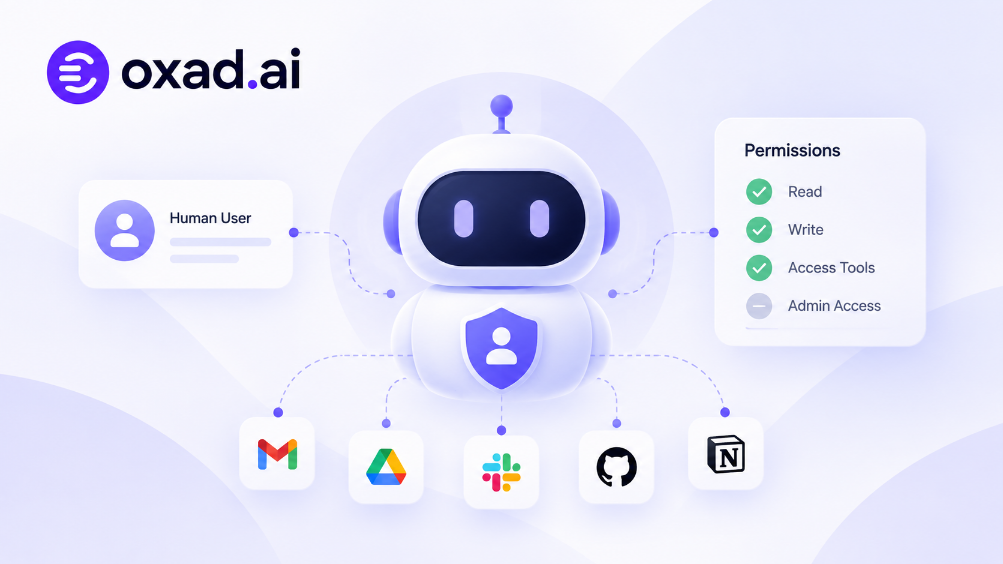
A better model is to give the agent its own identity and explicitly define its relationship with the human user.
Actor
Identity
Authority
Human user
Personal identity
Provides the original authorization
AI agent
Dedicated agent identity
Performs approved tasks
Subagent
Delegated identity
Performs a defined subtask
Tool
Service identity
Provides a specific capability
This separation makes it easier to answer a critical question after an action occurs:
Who actually performed this action, under whose authority, and with which permissions?
Least Privilege Becomes More Important
Traditional cybersecurity already uses the principle of least privilege: users and services should receive only the permissions required to perform their jobs.
AI agents make this principle even more important because their behavior can be dynamic.
An agent may start with a simple task and discover that it needs another tool. It may interpret information differently than expected. It may encounter unexpected instructions inside a document or website. It may delegate work to another agent.
If the agent has unrestricted access, an unexpected decision can potentially become a high-impact action.
A safer architecture limits permissions at several levels:
Which applications can the agent access?
Which files can it read?
Which APIs can it call?
Which actions can it perform?
Which data can it export?
How long should its permissions remain valid?
Which operations require human approval?
This represents an important change in mindset.
Instead of asking “Which permissions does the user have?”, organizations increasingly need to ask:
“Which permissions should this particular agent have for this particular task?”
Agent Identity Is More Than a Username
An effective agent identity should provide more than a label.
For production systems, the identity should ideally be connected to the agent’s purpose, owner, permissions, tools, execution environment, and lifecycle.
This allows organizations to understand not only which agent performed an action, but also why the agent was allowed to perform it.
Tool Access Is Part of Agent Identity
An agent’s identity cannot be separated completely from the tools it can use.
Consider two agents powered by the same underlying model.
The first can read a public website and summarize information.
The second can access a company’s database, modify customer records, send emails, execute code, and make financial transactions.
The underlying model might be identical, but the risk profile is completely different.
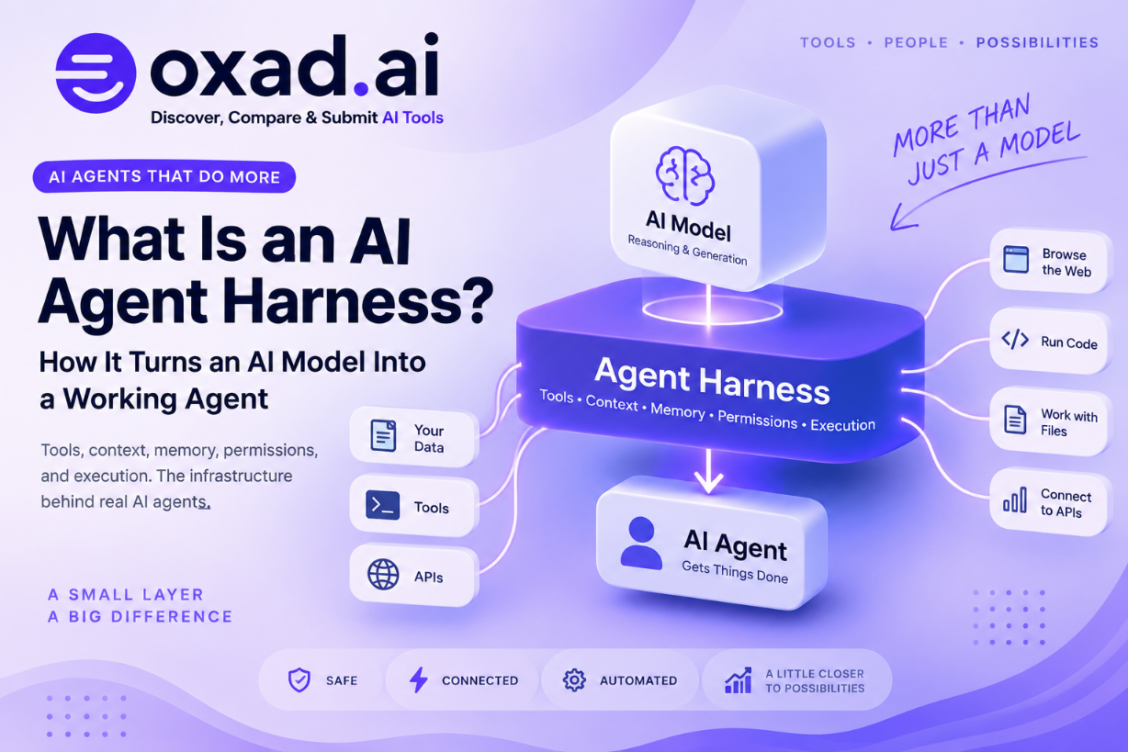
This means the security boundary increasingly exists around the combination of:
model + identity + tools + data + permissions + execution environment.
This is one reason modern agent platforms are placing more emphasis on sandboxes, tool management, execution environments, context isolation, and monitoring.
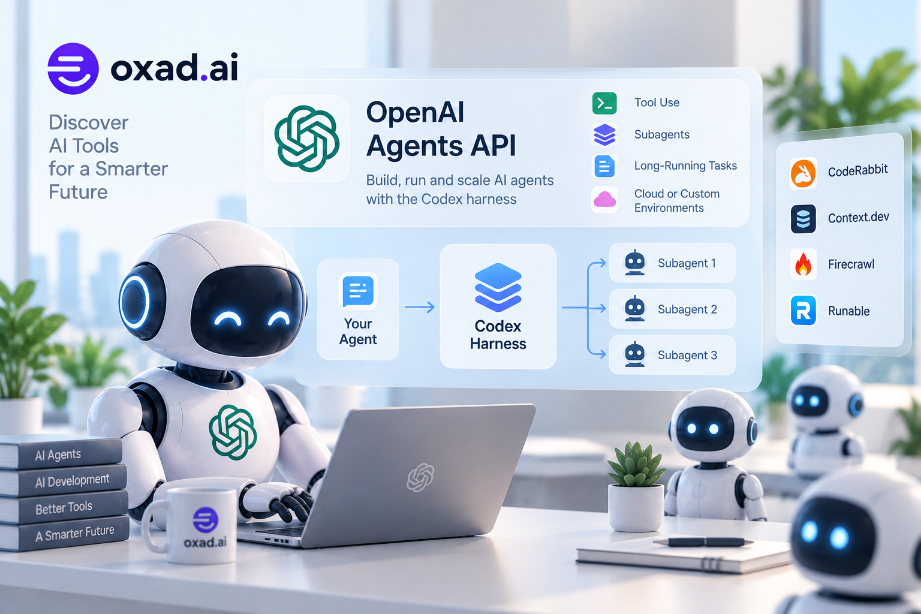
For developers exploring agent infrastructure, the OpenAI Agents API guide provides an example of how the agent runtime itself is becoming a distinct infrastructure layer.
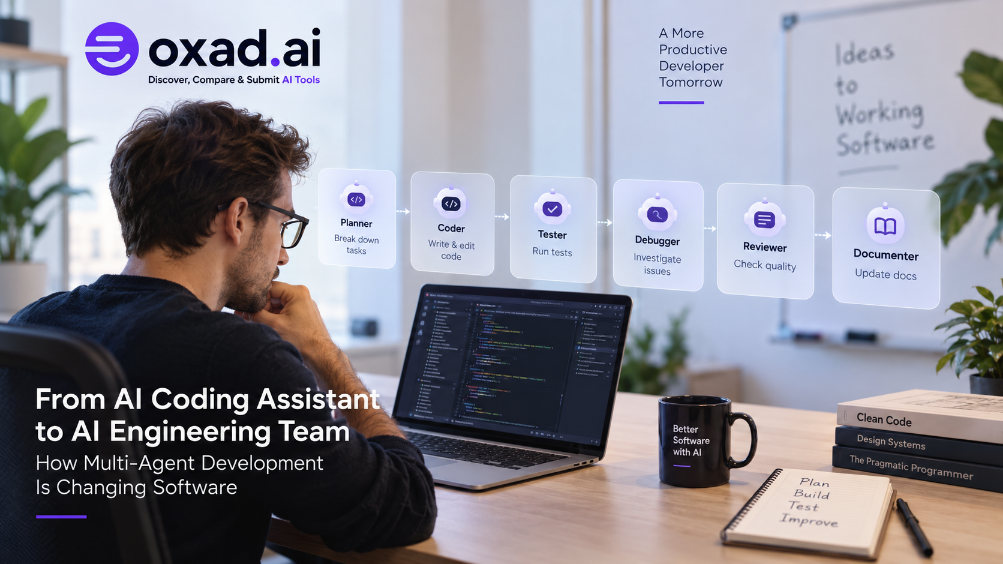
Subagents Make Identity More Complicated
The identity problem becomes harder when an agent can create or delegate work to other agents.
Imagine a research agent that creates three subagents:
One searches the web.
One analyzes documents.
One processes data with code.
If all three operate using the same credentials, an organization may lose visibility into which component performed a particular action.
A stronger architecture creates explicit delegation relationships.
The main agent should establish that a subagent was created for a specific purpose and that the subagent received only the permissions necessary for that purpose.
This creates an authorization chain:
Human → Primary Agent → Subagent → Tool
Every step in that chain should ideally be observable and attributable.
This becomes especially important for enterprise systems where an AI workflow can cross multiple applications and organizational boundaries.
Permissions Should Be Dynamic
Agent permissions do not always need to be permanent.
A user might allow an agent to read a document for the next 30 minutes but not give it permission to modify the document.
Another workflow might allow an agent to prepare a financial transaction but require human approval before execution.
This creates a more flexible permission model.
Action
Possible Control
Read public information
Automatic
Read private documents
Scoped permission
Create an email draft
Automatic
Send an email
Approval or trusted policy
Modify important records
Restricted permission
Make a payment
Explicit authorization
Change security settings
Human approval
The objective is not to make agents useless by asking humans to approve everything.
The objective is to create a clear distinction between low-risk automation and high-impact decisions.
Why AI Agent Security Is Becoming More Urgent
The identity problem is becoming more important as AI systems gain access to real-world tools and services.
Recent security research and incident reports involving autonomous AI systems have highlighted the risks associated with giving models access to external systems, credentials, and tools.
These developments do not mean that AI agents are inherently unsafe. They demonstrate something more useful for developers:
Giving an AI system the ability to act changes the security model.
The more capable the agent becomes, the less reasonable it is to rely on the assumption that the model itself will always determine the correct security boundary.
Security therefore has to exist outside the model.
The Agent Runtime May Become a New Security Layer
The future of AI infrastructure may increasingly resemble a combination of an operating system and an identity platform.
The model provides reasoning.
The agent runtime manages execution.
The identity layer determines who the agent is.
The authorization layer determines what it can do.
The tool layer determines which capabilities are exposed.
The sandbox limits where actions can occur.
The monitoring layer records what actually happened.
This architecture could become just as important as the underlying language model.
It also explains why the agent ecosystem is expanding beyond chat interfaces. OXAD.AI’s AI agent tools guide covers platforms designed around autonomous workflows, business agents, multi-agent systems, knowledge agents, and AI application development.
AI Agent Identity Could Become a New Infrastructure Category
The market is increasingly moving toward dedicated solutions for agent identity and authorization.
Industry proposals and enterprise platforms are exploring ways to give agents unique identities, credentials, authorization policies, and verifiable relationships with the humans or organizations they represent.
This suggests that agent identity may eventually become a standard component of enterprise AI deployments rather than a specialized security feature.
The implications are significant.
An organization deploying hundreds or thousands of agents may eventually need an inventory of those agents just as it maintains inventories of employees, applications, servers, and service accounts.
Each agent could have:
A unique identity.
A defined owner.
A stated purpose.
A set of approved tools.
Explicit permissions.
A lifecycle and expiration policy.
An audit trail.
A mechanism for immediate revocation.
That is much closer to identity management than traditional chatbot configuration.
What Developers Should Build Into AI Agents Today
Developers do not need to wait for a universal AI identity standard before adopting stronger security practices.
Several principles can be applied to agent systems today.
Define the Agent’s Purpose
An agent should have a clearly defined reason for existing. A general-purpose agent with unrestricted access to everything is difficult to secure and difficult to audit.
Separate Read and Write Permissions
Reading information and changing information should not automatically have the same authorization level.
Limit Tool Access
Only expose the tools required for the workflow. If an agent does not need a capability, there is little reason to give it one.
Control Delegation
If an agent can create subagents, establish clear rules about what those subagents can inherit and what they cannot.
Log Agent Actions
When something unexpected happens, developers need to reconstruct the chain of events rather than simply knowing that an AI request occurred.
Make High-Impact Actions Reversible
Where possible, agents should create drafts, previews, staged changes, or approval requests before irreversible actions are executed.
Build for Revocation
Every serious agent deployment should have a way to immediately disable the agent and invalidate its credentials or permissions.
AI Agent Identity and Enterprise Governance
For businesses, agent identity is not only a technical security problem. It is also a governance problem.
An organization needs to know:
Which agents exist?
Who owns each agent?
What business purpose does each agent serve?
Which systems can it access?
Which data can it read?
Which actions can it perform?
Which agents can delegate to other agents?
When should an agent’s access expire?
How can access be revoked?
Who is accountable when an agent makes a mistake?
These questions become increasingly important as organizations move from experimenting with individual AI assistants to deploying large numbers of autonomous agents across business processes.
Where AI Agent Development Is Heading
The next stage of AI development is unlikely to be defined only by larger models.
It will also be defined by what those models are allowed to do.
Agent systems are increasingly moving toward long-running workflows, tool use, persistent context, cloud execution, and multi-agent coordination.
As these capabilities become normal, identity and authorization will become increasingly difficult to treat as secondary features.
The central challenge will be finding the right balance between autonomy and control.
An agent that needs human approval for every action is barely autonomous. An agent with unrestricted access is difficult to trust.
The future lies somewhere between those extremes: agents that can act independently within clearly defined boundaries.
The Bigger Shift: From AI Assistants to AI Principals
The most important change may be conceptual.
For years, we thought about AI as something a person interacts with.
Increasingly, we will need to think about AI as something that interacts with other software on a person’s behalf.
That distinction changes everything.
Once an AI system can access accounts, call APIs, execute code, modify files, communicate with other agents, and make decisions, it becomes a participant in the digital environment.
Participants need identities.
They need permissions.
They need accountability.
And they need boundaries.
AI agent identity may therefore become one of the foundational technologies of the agentic AI era.
The companies building the next generation of AI infrastructure will not only need to make models more capable. They will also need to make autonomous systems trustworthy enough to operate in the real world.
For developers and businesses adopting AI agents today, the practical lesson is simple:
Do not give an agent more authority than it needs simply because the model is capable of using it.
Build the identity, permissions, tools, execution environment, monitoring, and human controls around the model.
That is how autonomous AI can become useful without becoming uncontrollable.
Conclusion
AI agent identity is becoming an essential part of the security architecture surrounding autonomous AI.
As agents move from generating information to accessing systems, using tools, modifying data, executing code, and delegating tasks, traditional user-based authorization models become increasingly difficult to apply on their own.
A dedicated identity allows an agent to be treated as a distinct software actor with a defined purpose, limited permissions, controlled tools, and an auditable history.
The most secure AI systems will therefore not be the ones that simply give agents more autonomy. They will be the ones that give agents the right autonomy, within the right boundaries, with the right accountability.