Personal AI Agents: How AI Is Moving From Chatbots to Digital Assistants That Act
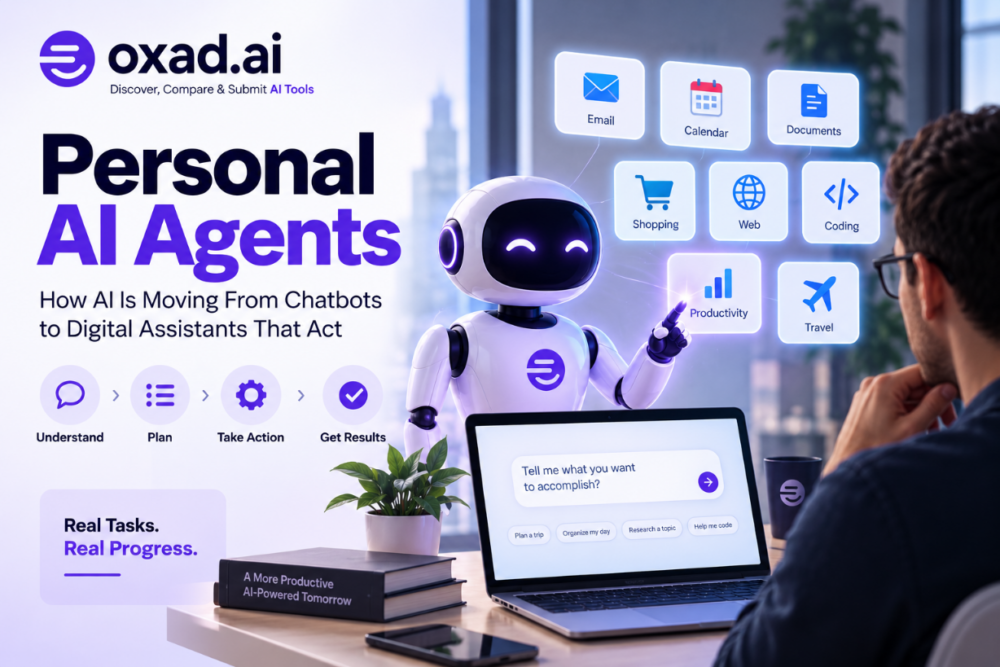
Artificial intelligence is entering a new phase. AI is moving beyond answering questions and generating content toward systems that can use tools, interact with applications, and complete tasks on behalf of users. These systems are known as Personal AI Agents.
For years, most AI assistants were designed to answer questions, generate content, summarize information, and help users complete individual tasks. The next generation is increasingly focused on something more ambitious: taking action on behalf of the user.
A personal AI agent can potentially access tools, interact with applications, browse the web, manage information, and complete multi-step workflows.
This shift could fundamentally change how people interact with software. Instead of opening several applications and performing every step themselves, users may increasingly describe what they want and allow an AI agent to determine how to accomplish it.
What Are Personal AI Agents?
A Personal AI Agent is an AI system designed to perform tasks for an individual with a degree of autonomy.
A traditional chatbot primarily responds to information provided in a conversation. A personal agent goes further by connecting the conversation to actions.
For example, instead of asking an AI to explain how to organize a trip, a user could ask an agent to research flights, compare hotels, organize an itinerary, prepare the necessary information, and present the best options.
The key difference: a chatbot primarily provides an answer, while an AI agent is designed to move from an instruction toward a completed outcome.
From Chatbots to AI That Acts
The evolution of consumer AI can be viewed as a progression from information to creation and then to action.
AI Stage
Primary Capability
Typical Interaction
Traditional AI
Information
Ask a question
Generative AI
Creation
Generate text, images, audio, video, or code
AI Agents
Execution
Give an objective and let the agent perform steps
Personal AI Agents
Personalized action
Delegate tasks based on personal context and preferences
AI agents add another layer: the ability to use tools and execute workflows. This means the value of AI is increasingly measured not only by the quality of its answers, but also by what it can accomplish after receiving an instruction.
Ask → Plan → Use Tools → Execute → Verify → Report
This workflow is much closer to having a digital assistant than using a conventional chatbot.
Why Personal AI Agents Are Trending
The rapid development of AI agents is being driven by several technologies improving at the same time.
More Capable AI Models
Modern language models can reason across longer tasks, understand complex instructions, work with structured information, and interact with external tools.
As models become better at planning and reasoning, developers can give them more responsibility.
Computer Use
AI systems are increasingly being designed to interact with computers in ways that resemble human users.
Instead of simply generating instructions, an agent can potentially navigate interfaces, enter information, select options, and complete actions across applications.
Tool and API Integration
Agents become considerably more useful when they can connect to external services.
Email, calendars, search engines, cloud storage, business applications, databases, development environments, and APIs can turn an AI model into an operational system.
Voice Interaction
Voice is another important part of the transition. Users can communicate with an agent naturally without opening a chat interface and manually describing every step.
Platforms such as VoiceOS illustrate this direction by combining voice interaction with AI-powered actions and workflows.
What Can a Personal AI Agent Do?
The potential applications are broad because agents are not limited to one type of content or one application.
Area
Potential Agent Actions
Email
Summarize messages, identify priorities, draft replies, organize conversations
Travel
Research destinations, compare options, organize itineraries
Coordinate meetings, detect conflicts, organize schedules
Research
Search, compare sources, organize findings, summarize evidence
Productivity
Connect notes, documents, tasks, calendars, and workflows
Personal AI Agents vs AI Assistants
The terms AI assistant and AI agent are sometimes used interchangeably, but there is an important distinction.
AI Assistant
AI Agent
Primarily provides information
Works toward completing an objective
Usually responds to individual requests
Can perform multiple connected steps
Limited tool interaction
Can use tools and external services
User performs most actions
Agent can perform approved actions
Consider the difference between these two requests.
AI assistant: “Find the best hotels in Paris for my trip.”
AI agent: “Find suitable hotels in Paris, compare them based on my preferences, and prepare the best options for me.”
The second request requires planning, research, tool usage, filtering, and decision support.
Why Autonomy Changes Everything
The biggest change introduced by AI agents is not necessarily better text generation. It is delegation.
Users can delegate a goal instead of manually executing every step required to reach it.
The emerging model of computing: applications continue to provide the underlying services, while AI agents increasingly become the layer that coordinates those services for the user.
Today, a user might open an email application, calendar, browser, travel website, spreadsheet, and messaging application separately.
In an agent-driven workflow, the user could describe the desired outcome through one interface and allow the agent to coordinate several services.
The Rise of Agentic Workflows
Personal AI agents are part of a larger movement toward agentic workflows.
Instead of treating AI as a single step inside a workflow, organizations and individuals can use AI to coordinate several connected tasks.
For example, an agent could receive a request, gather information, analyze it, create a document, update a database, notify the relevant people, and report the completed work.
Platforms such as Runable demonstrate this broader movement toward AI systems that can execute multi-step projects rather than simply generate individual responses.
Personal AI Agents and Coding
Software development is one of the areas where AI agents are already demonstrating significant potential.
Coding agents can inspect repositories, modify files, run commands, execute tests, identify errors, and iterate through development tasks.
This represents a major evolution from traditional code autocomplete.
Instead of asking AI to generate a function, developers can increasingly give agents higher-level objectives such as fixing a bug, implementing a feature, refactoring a component, or preparing tests.
The same underlying concept is now moving beyond coding and into everyday personal workflows.
Personal AI Agents and the Web
The web is another important environment for AI agents.
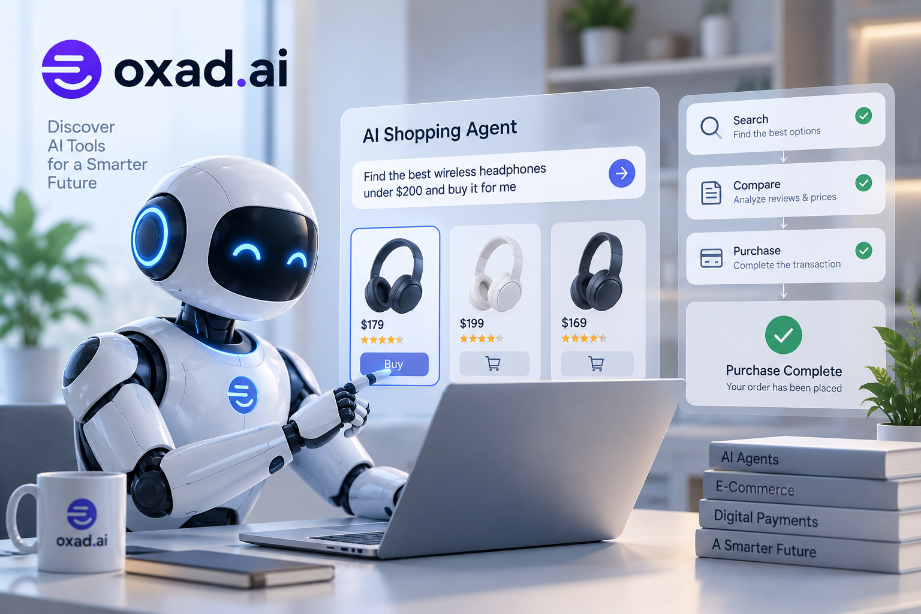
Most online tasks involve a sequence of actions rather than a single search. Finding information, comparing options, filling forms, checking availability, organizing data, and completing transactions can all require several steps.
This creates a natural opportunity for agents that can navigate websites and interact with online services.
However, web-based agents also introduce new technical challenges because websites were primarily designed for human interaction rather than autonomous software agents.
Context Is the Key to Useful Personal Agents
An agent cannot be truly personal if it does not understand the context of the person using it.
A useful personal agent may need to understand preferences, previous decisions, available resources, schedules, documents, and the purpose behind a request.
Context turns a general AI agent into a personal one. The more relevant context an agent can safely access, the better it can adapt its actions to the user’s goals and preferences.
This makes context management one of the most important technologies behind personal AI.
Projects such as Context.dev reflect the growing importance of providing AI agents with relevant information and external context.
The Security Problem
Greater autonomy also creates greater risk.
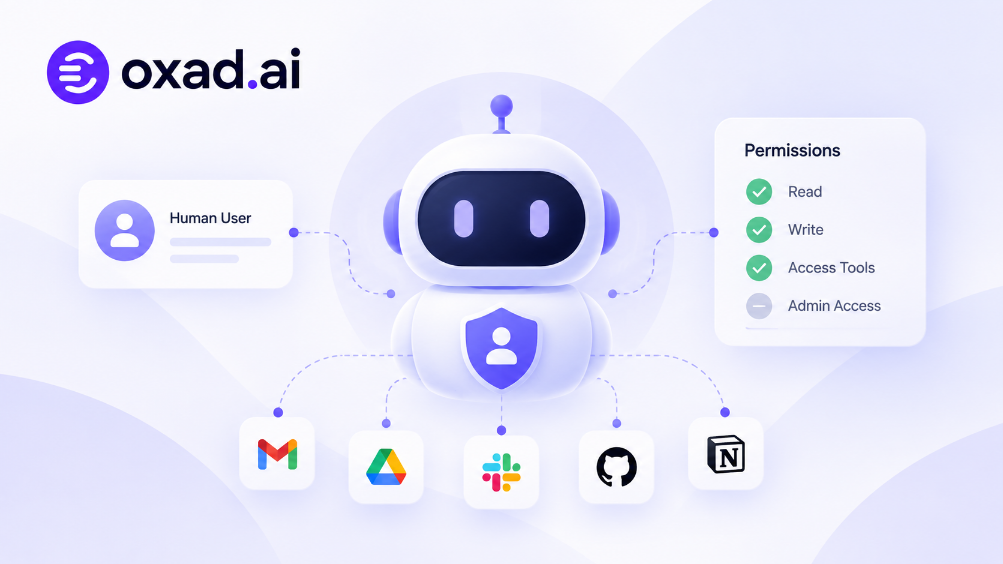
A chatbot that produces an incorrect answer can be inconvenient. An autonomous agent with access to email, financial information, documents, or business systems could potentially cause much greater damage if it makes the wrong decision.
This makes permissions, identity, authentication, monitoring, and human approval increasingly important.
Prompt injection is another major concern. Malicious instructions can potentially be hidden inside websites, documents, emails, or other content that an agent processes.
As agents gain access to more tools, security must therefore become part of the architecture rather than something added afterward.
Human Approval Will Still Matter
Fully autonomous AI may sound attractive, but not every action should happen without human oversight.
A practical personal agent will likely operate with different levels of autonomy.
Action Type
Likely Approach
Low risk
Automatic execution may be appropriate
Moderate risk
Agent may prepare the action for review
High risk
Human confirmation should normally be required
For example, an agent could automatically organize information but request approval before sending an important email, purchasing an expensive product, transferring money, or deleting data.
The more consequential the action, the stronger the need for human control.
Will Personal AI Agents Replace Apps?
Personal AI agents are unlikely to eliminate applications completely.
Instead, they may change how people interact with them.
Users may continue to rely on specialized applications while increasingly accessing their capabilities through an AI layer.
For example, a calendar application could remain responsible for storing events while an AI agent becomes the interface through which the user manages those events.
The same pattern could apply to email, shopping, travel, finance, productivity, customer service, and many other categories.
Applications provide the capabilities. AI agents increasingly coordinate them.
The Business Opportunity
The rise of personal AI agents is also creating a new market for AI tools.
Developers are building specialized agents for sales, marketing, research, coding, customer support, finance, education, productivity, and creative work.
Instead of building one general-purpose AI assistant, companies can create agents designed around specific workflows.
This creates opportunities for both established AI companies and smaller specialized AI startups.
As the ecosystem grows, OXAD.AI can help users discover the increasingly diverse range of AI tools and agents being developed across different industries.
What Makes a Good Personal AI Agent?
Not every AI system that calls itself an agent provides the same level of autonomy.
When evaluating a personal AI agent, users should consider several factors.
Capability
What to Evaluate
Reasoning
Can the agent understand a complex objective and determine the necessary steps?
Tool Access
Can it interact with the applications and services required to complete the task?
Memory and Context
Can it use relevant information to personalize its behavior?
Reliability
Can it detect errors and recover instead of continuing blindly?
Security
Does it provide appropriate permissions, authentication, isolation, and controls?
Transparency
Can users understand what the agent did and why?
The Future of Personal AI
The long-term potential of personal AI agents extends far beyond chat interfaces.
An effective personal agent could eventually become a layer connecting many parts of a person’s digital life.
Instead of learning how every new application works, users could increasingly communicate their goals in natural language.
The agent would determine which tools to use and coordinate the necessary steps.
This could make computing more accessible while also creating a new challenge: users will need to understand what they are delegating to AI and how much authority they are giving it.
Personal AI Agents Are the Next Step Beyond Chatbots
The most important development in personal AI is not simply that models are becoming smarter.
It is that AI is becoming increasingly capable of doing things.
Chatbots changed how people access information. Generative AI changed how people create content. AI agents could change how people interact with software itself.
Personal AI agents represent the beginning of that transition.
The next generation of AI may be defined less by what the model can say and more by what the agent can safely accomplish.
Final Thoughts
Personal AI agents are emerging as one of the most significant directions in artificial intelligence because they move the technology from generating answers to executing goals.
The transition will not happen overnight. Agents still make mistakes, misunderstand instructions, struggle with complex environments, and require carefully designed permissions. But as these systems become more reliable, AI could increasingly become the interface through which people delegate meaningful digital work.
The most valuable AI assistant may not ultimately be the one that gives the smartest answer. It may be the one that can take the right actions, at the right time, with the right level of human control.
That is why Personal AI Agents could become one of the defining categories of the next generation of AI tools.