AI agents can use tools, follow instructions, and complete tasks. But what happens when the agent needs to remember something from yesterday?
This question is becoming increasingly important as AI agents move from short conversations toward longer, multi-session workflows. An agent that starts every session from scratch can repeat mistakes, forget user preferences, and lose important decisions from earlier work.
That is why AI agent memory is becoming a distinct part of agent architecture.
A strong developer signal appeared on September 25, 2026: Hindsight, an open-source project described as “Agent Memory That Learns,” appeared among GitHub’s trending repositories. Its approach goes beyond simply storing conversation history by focusing on retaining information that can help an agent improve its behavior over time. GitHub Trending lists Hindsight as a trending repository, while its project describes long-term memory designed for agents that learn over time.
The broader idea is simple:
Context tells an agent what matters now. Memory helps it use what it learned before.
What Is AI Agent Memory?
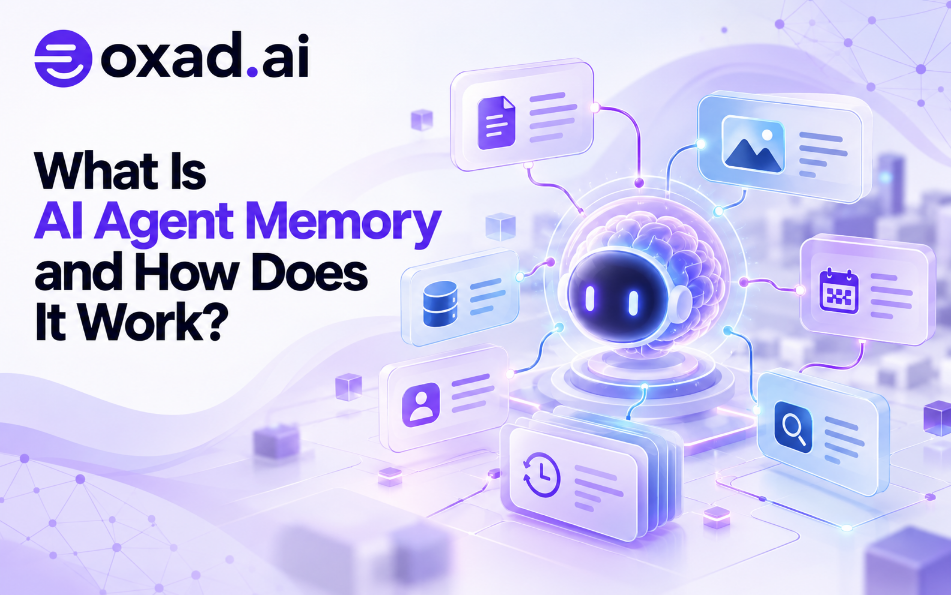
AI agent memory is a system that allows an AI agent to retain, retrieve, update, and use information across interactions or sessions.
Instead of treating every request as an isolated conversation, a memory-enabled agent can preserve useful information and bring it back when it becomes relevant.
That information might include:
User preferences
Previous decisions
Important project facts
Past task results
Successful and unsuccessful approaches
Recurring instructions
Relevant events and experiences
The goal is not to remember everything. Good memory systems need to decide what should be retained, when it should be retrieved, how it should be updated, and what should eventually be forgotten.
Why Do AI Agents Need Memory?
A normal chatbot can often provide a useful answer using the current conversation. An agent working across hours, days, or weeks faces a different problem.
Imagine an AI coding agent working on the same software project for several weeks. During one session it discovers that a particular library causes a compatibility problem. If that information disappears when the session ends, the agent may make the same mistake later.
With persistent memory, the agent can potentially record the lesson and retrieve it when a similar situation occurs.
Interact → Store → Retrieve → Learn → Act differently next time
Research on long-term agent memory describes persistent memory as a way to support learning across sessions, reduce repeated context injection, and manage information over long-running tasks. Research on long-term agent memory also treats memory as a distinct data-management problem.
Context vs Memory: What Is the Difference?
One of the most important concepts to understand is that context is not the same thing as memory.
Context is the information an AI model can access during its current reasoning process. Memory is information that can persist beyond that immediate interaction and be retrieved later.
Concept
Main purpose
Context
What the agent can use right now
Short-term memory
Recent interaction history and working state
Long-term memory
Information retained across sessions
Episodic memory
Past events, experiences, and episodes
Semantic memory
Learned facts and durable knowledge
Procedural memory
How to perform recurring tasks or workflows
Why Can’t an AI Agent Simply Use Its Context Window as Memory?
A context window is not a permanent memory store. Even large context windows have practical limits. Long histories can contain irrelevant information, duplicate tool results, conflicting instructions, and outdated details.
Anthropic’s engineering work on long-running agents describes compaction and structured note-taking as ways to work beyond a single context window. Their structured note-taking approach lets an agent persist important notes outside the context window and retrieve them later.
OpenAI’s Agents SDK documentation also describes session memory as a way to maintain history and continuity without manually resubmitting every message.
Think of it this way: context is your desk for today’s work. Memory is the filing system you can return to tomorrow.
How Does AI Agent Memory Work?
A memory architecture can be much more sophisticated than simply saving a transcript.
Observe: The agent receives a conversation, task, result, or event.
Extract: The system identifies information that may be useful later.
Store: Selected information is written to an external memory system.
Retrieve: Relevant memories are searched when a future task needs them.
Evaluate: The agent decides whether a recalled memory is relevant or trustworthy.
Update: Older information can be revised when new evidence appears.
Forget: Outdated or unwanted information can be removed.
This is why modern agent memory is increasingly treated as an architectural component rather than simply a database containing old conversations.
What Is Long-Term Memory for AI Agents?
Long-term memory allows information to survive beyond the current interaction or context window.
For example, a personal AI could remember that a user prefers concise project reports. A coding agent could remember a project’s architectural decision. A research agent could retain an important finding that should influence a later investigation.
Hindsight is a useful current example because its project explicitly describes itself as an agent memory system focused on helping agents learn over time, rather than merely recalling conversation history.
Hindsight on GitHub describes the project as “Agent Memory That Learns” and provides an open-source implementation for adding long-term memory to agents.
What Is Episodic Memory in AI?
Episodic memory refers to memories of particular events or experiences.
For an AI agent, an episodic memory might record that a previous deployment failed after a specific configuration change, a research source resolved a difficult question, a user rejected one approach, or a workflow succeeded after a particular sequence of actions.
The value is not just knowing a fact. The agent can potentially remember what happened and use that experience when facing a similar situation.
What Is Semantic Memory in AI?
Semantic memory stores durable facts and concepts rather than individual experiences.
For example, a project may use PostgreSQL, a company may have a particular brand style, or a user may prefer a specific output format.
Semantic memory can help an agent build a stable knowledge layer that remains useful across many tasks.
What Is Procedural Memory in AI?
Procedural memory concerns how something should be done.
Instead of remembering only that a task happened, the agent can retain a repeatable approach. For example, an agent might learn that a reporting workflow requires checking three data sources before generating the final report.
This creates an important connection between memory and agent behavior:
Experience → Learned procedure → Future action
Does AI Agent Memory Mean the Agent Is Actually Learning?
Not necessarily.
Storing information in an external memory system does not automatically mean that the underlying AI model has changed its parameters.
In many agent architectures, “learning” means that the system can remember useful information and change future behavior through retrieval and reasoning.
Research such as Agentic Memory explores architectures where memory operations such as storing, retrieving, updating, summarizing, and discarding information become part of the agent’s decision process.
What Can an AI Agent Remember?
Memory
Example
Preferences
Preferred writing style
Projects
Current project architecture
Decisions
Why a previous approach was rejected
Experiences
What worked during a previous task
Procedures
Steps used for a recurring workflow
Facts
Durable information needed for future tasks
How Is AI Agent Memory Stored?
There is no single storage method. Depending on the system, memories can be represented using databases, vector indexes, structured files, knowledge graphs, key-value stores, or combinations of these approaches.
Modern research increasingly treats memory as a managed data problem. Long-term agent memory may require ingestion, revision, forgetting, and retrieval rather than simple record storage.
The important distinction is this: memory is not simply where information is stored; it is also how the system decides what information remains useful.
What Are the Risks of AI Agent Memory?
Memory Poisoning
If incorrect or malicious information enters persistent memory, an agent may repeatedly rely on it in future sessions.
Outdated Information
A memory can be correct when created and wrong later. Systems therefore need ways to revise or invalidate old information.
Privacy
Long-term memory can contain personal preferences, project details, conversations, or sensitive information. Users need clear controls over what is stored and how it is used.
Over-Recall
Remembering too much can be almost as problematic as remembering too little. Irrelevant memories can distract an agent and increase context pollution.
False Memories
An agent can incorrectly infer or store something that was never actually established. Memory systems therefore need mechanisms for provenance, confidence, and correction.
AI Agent Memory vs RAG: Are They the Same?
No.
RAG is primarily a method for retrieving relevant information from an external knowledge source and providing it to a model.
Agent memory is broader. It can include information created by the agent’s own experiences, user preferences, previous decisions, task outcomes, and evolving state.
RAG
Agent Memory
Retrieves external information
Can retain agent experiences and state
Usually knowledge-focused
Can include preferences, events, decisions, and procedures
Often read-oriented
May support storing, updating, and forgetting
In practice, an agent can use both. RAG can provide external knowledge while memory provides continuity from previous interactions.
How Does Memory Change Personal AI?
A personal AI without durable memory can help you today. A personal AI with carefully controlled memory can potentially understand how you work over time.
It could remember preferences, recurring projects, past decisions, successful workflows, important constraints, and previous mistakes and corrections.
“AI that helps me” → “AI that knows how I work.”
That does not mean an agent should know everything about a person. Good personal AI memory should be selective, transparent, controllable, and easy to correct.
Why AI Agent Memory Is Becoming a Separate Infrastructure Layer
As agents become more capable, their architecture is expanding beyond a model plus tools.
Long-running agents increasingly need mechanisms for context management, memory, scheduling, documents, evaluation, and persistent state.
Agent infrastructure therefore starts to resemble a system with several specialized layers:
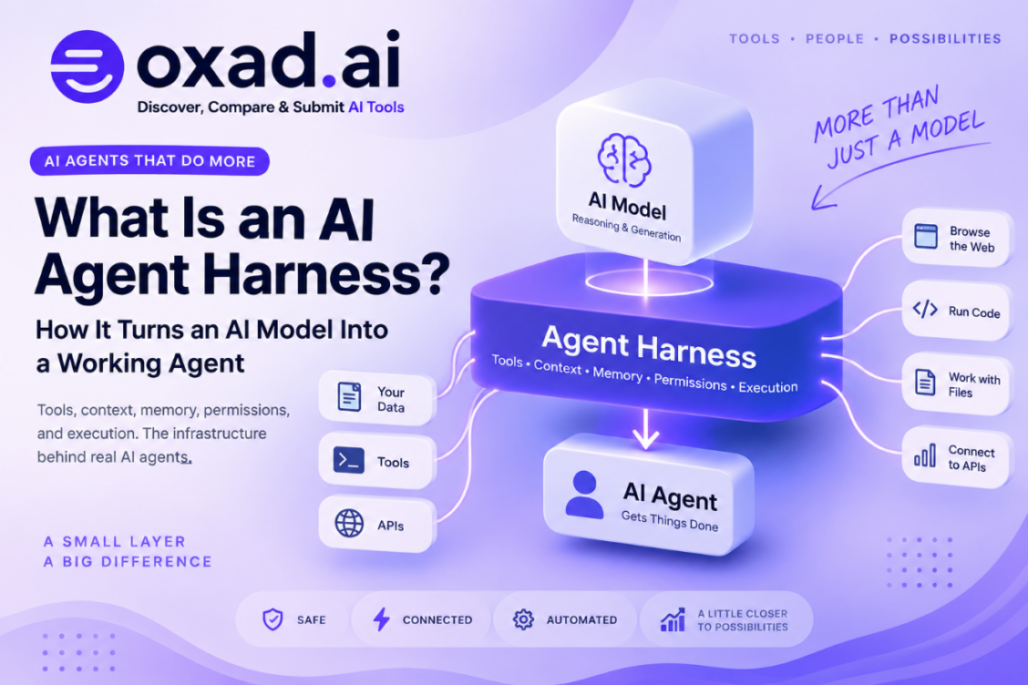
This is where AI agent infrastructure becomes relevant. A harness can coordinate the environment in which an agent operates, while memory can provide continuity across separate runs.
What Does AI Agent Memory Mean for Coding Agents?
Coding agents are an especially clear example of why persistent memory matters.
A project can contain architectural decisions, known bugs, preferred commands, failed approaches, deployment constraints, and conventions that are difficult to reconstruct from scratch in every session.
AI coding agents can benefit from persistent project information because future coding tasks can potentially begin with knowledge of what happened previously rather than treating every session as a blank slate.
How Could AI Agent Memory Evolve?
The next generation of memory systems may move beyond simple “save and retrieve” architectures.
Automatic memory formation
Memory importance scoring
Conflict detection
Memory revision
Controlled forgetting
Memory provenance
User-owned memory
Cross-agent memory
Multimodal memory
Memory evaluation and benchmarking
One particularly interesting direction is memory that can distinguish between a temporary observation and a durable fact. That distinction could prevent agents from turning every piece of conversation into permanent knowledge.
What Is the Future of AI Agent Memory?
AI agents are moving from short interactions toward persistent workflows. That makes memory increasingly important because a genuinely long-running agent needs more than intelligence in the current moment. It needs continuity.
The most useful architecture may therefore not be the agent that remembers everything. It may be the agent that knows what to remember, when to recall it, when to update it, and when to forget it.
That is a much more demanding problem than simply increasing a context window.
AI Agent Memory FAQ
What is AI agent memory?
AI agent memory is a system that lets agents retain, retrieve, update, and use information across interactions or sessions.
How does AI agent memory work?
It typically extracts useful information, stores it, retrieves relevant memories later, and updates or removes outdated information.
What is long-term memory for AI agents?
Long-term memory preserves useful information beyond the current conversation or context window.
Is context the same as memory?
No. Context is information available during current reasoning, while memory can persist and be retrieved across future interactions.
What is episodic memory in AI?
Episodic memory represents past events or experiences that an agent may use when facing similar situations.
What is semantic memory in AI?
Semantic memory stores durable facts, concepts, and knowledge that can be useful across multiple tasks.
Can AI agents learn from memory?
They can adapt future behavior using stored experiences, although this is different from changing the model’s underlying parameters.
Is AI agent memory the same as RAG?
No. RAG retrieves external information, while agent memory can include experiences, preferences, decisions, and evolving state.
Can AI agent memory be deleted?
It can be designed to support deletion and forgetting, although the exact controls depend on the memory system.
Why do coding agents need memory?
Persistent memory can preserve project decisions, previous solutions, constraints, and lessons across separate coding sessions.
Conclusion
AI agent memory may become one of the most important infrastructure layers for long-running agents.
The progression is no longer simply about making an AI model more capable. Agents also need a way to maintain continuity:
Context → Memory → Experience → Personalization
Context tells an agent what matters now. Memory allows it to carry useful knowledge from previous interactions into the future. When those systems work together, an AI agent can become more consistent, more personalized, and better suited to long-running work.
The central question for the next generation of agents may therefore be surprisingly simple:
Not only “What can the agent do?” but also “What can the agent remember—and how should it use that memory?”