AI Trading: How AI Is Changing Stocks, Forex & Markets
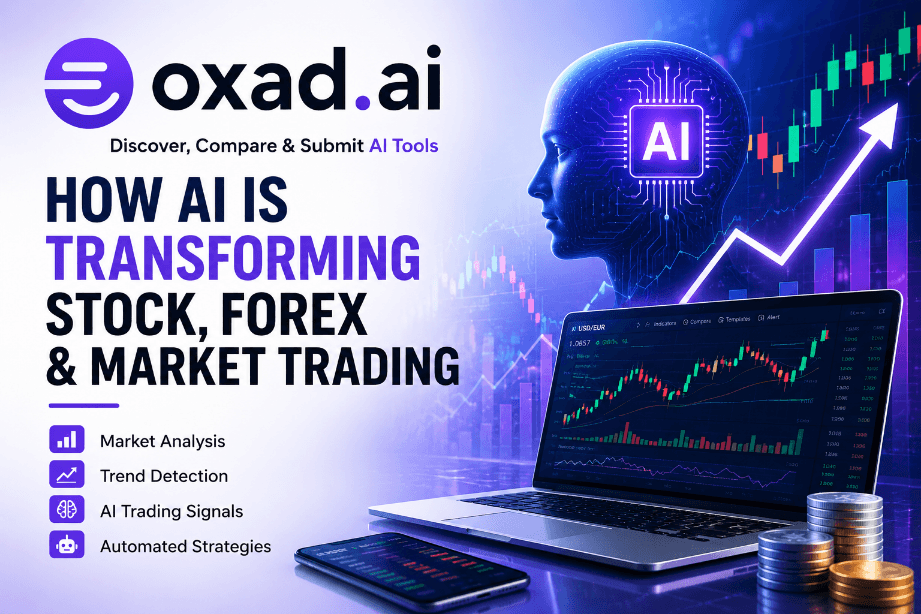
Artificial intelligence is rapidly changing the way investors and traders analyze financial markets. From stock exchanges and foreign exchange markets to commodities and digital assets, AI-powered technologies can process enormous quantities of information and identify patterns that would be difficult to evaluate manually. The growing availability of AI trading tools has made advanced market analysis more accessible to individual traders, while professional investors and financial institutions are also using machine learning, predictive analytics, and automated systems to improve their research processes.
Traditional market analysis often requires traders to examine price charts, financial statements, economic reports, technical indicators, company announcements, and market news separately. This process can be time-consuming, especially when hundreds or thousands of financial instruments are being monitored simultaneously. AI can help organize and analyze these different sources of information, allowing users to identify relevant signals and market trends more efficiently. Instead of replacing human decision-making completely, AI is increasingly being used as a research assistant that helps traders understand large and complex datasets.
How Artificial Intelligence Analyzes Financial Markets
AI systems can evaluate historical and real-time market information using machine learning algorithms, statistical models, natural language processing, and other analytical techniques. Depending on the platform, an AI trading system may examine historical price movements, trading volume, volatility, technical indicators, financial news, economic data, and investor sentiment. By processing these variables together, AI can identify relationships and recurring patterns that may not be immediately obvious through conventional analysis.
For example, an AI market analysis platform could examine how a particular stock behaved after similar changes in trading volume or market volatility occurred in the past. It could also analyze financial news to determine whether a significant announcement is likely to influence market sentiment. In the forex market, AI can evaluate currency pairs alongside economic indicators, interest-rate expectations, inflation data, and historical price behavior. These capabilities allow traders to explore market conditions from multiple perspectives rather than relying on a single indicator.
AI and Stock Market Analysis
AI stock market analysis is one of the most popular applications of artificial intelligence in finance. Stock traders can use AI-powered platforms to monitor price movements, compare companies, analyze historical performance, and detect potential changes in market momentum. Some tools can scan large groups of stocks and highlight assets that match specific technical or fundamental criteria.
AI can also help analyze unstructured information. Financial markets react not only to numerical data but also to news, earnings announcements, analyst commentary, and changes in public sentiment. Natural language processing allows AI systems to process large volumes of written information and categorize or summarize relevant developments. This can help traders stay informed without manually reading every article or financial report.
Another important application is pattern recognition. Markets often contain complex relationships between price, volume, volatility, and other variables. Machine learning models can examine historical datasets to identify recurring patterns and estimate how similar market conditions behaved previously. These observations can support a trader’s research process, although historical patterns do not guarantee that the same outcome will occur in the future.
AI for Forex and Currency Trading
The foreign exchange market is another major area where artificial intelligence can provide analytical advantages. AI forex trading tools can monitor currency pairs continuously and evaluate large amounts of market information. Because forex markets operate across international financial centers and can respond quickly to economic developments, traders often need to monitor numerous variables at the same time.
AI can help analyze factors such as currency price movements, volatility, economic indicators, central bank announcements, interest-rate expectations, and historical correlations between currency pairs. By combining these inputs, AI-powered platforms can provide traders with a broader view of current market conditions. Some systems can also generate alerts when predefined conditions or unusual market movements are detected.
However, the ability to process large amounts of information does not mean that AI can predict every market movement accurately. Financial markets are influenced by unexpected events and human behavior, making them inherently difficult to forecast. AI-generated signals should therefore be interpreted carefully and evaluated alongside traditional research methods.
AI as a Trading Research Assistant
One of the most practical ways to use artificial intelligence in trading is as a research assistant. Rather than automatically placing trades, AI can help traders collect information, compare assets, summarize market developments, identify historical patterns, and monitor changes in volatility. This approach allows users to benefit from AI’s ability to process information while maintaining human control over financial decisions.
Traders can also explore specialized AI trading tools designed for market analysis, trading research, technical analysis, and other financial workflows. Choosing the appropriate tool depends on the user’s objectives, preferred markets, level of experience, and risk-management approach.
Ultimately, artificial intelligence represents an important development in financial market analysis, but it should not be viewed as a guaranteed method for making profitable trades. AI can identify patterns, process information, and generate analytical insights, while traders remain responsible for evaluating those insights and understanding the risks involved.
How AI Detects Stock Market Trends and Price Movements
One of the most valuable applications of artificial intelligence in finance is the analysis of stock market trends and price movements. Traditional technical analysis requires traders to examine charts, indicators, trading volume, support and resistance levels, and historical price data. AI can process these variables simultaneously and analyze much larger datasets, helping traders identify patterns and changes in market behavior more efficiently.
Machine learning models can study historical market data to identify recurring relationships between price, volume, volatility, and other indicators. For example, an AI system may examine how a stock behaved during previous periods of increasing trading volume or unusual volatility. When similar conditions appear again, the system can recognize the pattern and provide an analytical signal for further investigation.
However, identifying a historical pattern does not mean that the same result will occur again. Financial markets are influenced by constantly changing economic conditions and investor behavior. AI-generated analysis should therefore be considered one component of a broader trading process rather than a guaranteed prediction.
AI and Market Trend Detection
AI market analysis can go beyond individual stocks by examining entire sectors, indexes, and asset groups. A trader may want to know whether a particular stock is moving independently or following a broader market trend. AI can compare price movements across multiple assets and identify correlations that may be difficult to detect manually.
This capability is particularly useful when markets become volatile. Instead of monitoring each asset separately, traders can use AI systems to scan large groups of securities and identify unusual movements, changes in momentum, or increases in trading activity. Automated monitoring can save time and allow users to focus on the assets that require closer attention.
Using AI to Analyze Financial News and Market Sentiment
Financial markets respond not only to price data but also to news and investor sentiment. Company earnings, economic reports, central bank decisions, geopolitical developments, and unexpected announcements can cause significant market movements. Artificial intelligence can analyze large amounts of written information to help traders understand how market sentiment is changing.
Natural language processing allows AI systems to analyze financial articles, company announcements, reports, and other text-based information. Instead of reading hundreds of articles manually, traders can use AI to summarize important developments and identify recurring themes. Some systems can classify information according to its potential market sentiment, such as positive, negative, or neutral.
For example, an AI platform may monitor news related to a particular company and identify changes in the tone of recent reports. It could also track news about an industry or economic sector and highlight developments that may deserve further research. This can make financial research faster and more organized.
AI for Technical Analysis
AI technical analysis combines traditional market indicators with automated data processing and pattern recognition. AI platforms can analyze moving averages, momentum indicators, trading volume, volatility, candlestick patterns, and other technical variables. By examining several indicators together, these systems can help traders evaluate market conditions without manually reviewing every chart.
Automated chart scanning is particularly useful for traders who follow a large number of assets. Instead of opening hundreds of charts individually, users can configure specific conditions and allow an AI-powered system to identify potentially relevant opportunities. This approach can make the research process more efficient while maintaining human oversight.
AI can also help traders compare different market environments. A strategy that appears effective during a strong upward trend may behave differently during a sideways market or a period of extreme volatility. By analyzing historical examples, machine learning systems can help users understand how certain patterns or indicators behaved under different conditions.
AI Trading Signals and Market Alerts
Another common application is the generation of AI trading signals. These signals may combine technical indicators, historical patterns, volatility, market sentiment, and other data to identify situations that deserve attention. Depending on the platform, users may receive alerts when an asset reaches a specific price level or when several market conditions occur simultaneously.
Trading signals should not be confused with guaranteed predictions. An AI model can produce an analysis based on available data, but unexpected events can quickly invalidate that analysis. Market liquidity, economic announcements, geopolitical events, and sudden changes in investor sentiment can all influence prices.
For this reason, traders should evaluate AI-generated signals critically and consider their own trading objectives and risk tolerance. AI can reduce the amount of manual analysis required, but it does not remove the risks associated with investing or trading financial assets.
Monitoring Multiple Financial Markets With AI
AI is also useful for monitoring several markets simultaneously. A trader may follow stocks, indexes, currencies, commodities, and other assets at the same time. An AI platform can continuously process market information and identify significant changes across different asset classes.
This broader perspective can help traders understand relationships between markets. For example, changes in interest-rate expectations can influence currencies, stocks, and other financial instruments at the same time. AI can organize these relationships and help users identify connections between different market movements.
As artificial intelligence continues to develop, its role in market research is likely to become more sophisticated. The greatest benefit may not be replacing traders, but helping them process information faster, monitor more markets, identify relevant patterns, and make better-informed decisions.
AI for Automated Trading and Algorithmic Strategies
Artificial intelligence is also becoming increasingly important in algorithmic trading, where computer systems analyze market data and execute predefined strategies automatically. Traditional automated trading systems usually follow rules created by traders, such as buying or selling when an asset reaches a particular price or when technical indicators meet specific conditions. AI can add another layer of analysis by using machine learning models to evaluate large datasets and identify complex patterns.
AI-powered trading systems can continuously monitor financial markets without requiring a trader to manually review every price movement. Depending on their design, these systems may analyze price data, trading volume, volatility, market sentiment, and other variables before generating an alert or executing an action. This can be particularly useful in fast-moving markets where prices can change significantly within a short period.
However, automation does not eliminate trading risk. An automated strategy can continue making decisions according to its programming even when market conditions have changed. Poorly designed models, inaccurate data, technical failures, excessive trading, or unexpected market events can lead to significant losses. Proper testing, monitoring, and risk controls are therefore essential when using AI in automated trading.
Machine Learning and Predictive Market Analysis
Machine learning for trading involves training algorithms to identify relationships and patterns within historical financial data. Instead of relying exclusively on manually defined rules, machine learning models can analyze numerous variables and determine which combinations may have been associated with particular market outcomes in the past.
For example, a model could study historical relationships between price momentum, trading volume, volatility, economic indicators, and market sentiment. After being trained and tested, it may generate predictions or probability estimates based on new market data. These estimates can provide traders with additional information when evaluating a potential setup.
The quality of the underlying data is extremely important. Financial datasets can contain missing information, errors, outdated values, or patterns that are specific to a particular historical period. A model that performs well on historical data may perform poorly when exposed to new market conditions. This is one reason why traders and developers need to use proper testing methods and avoid assuming that past performance guarantees future results.
AI and Risk Management
While much of the discussion around AI trading focuses on finding opportunities, AI risk management can be equally important. Financial markets are uncertain, and controlling potential losses is a fundamental part of responsible trading. AI systems can help monitor volatility, position sizes, portfolio exposure, and changes in market conditions.
A portfolio containing several assets may have hidden relationships that are difficult to identify manually. AI can analyze correlations and other statistical relationships to help traders understand how different positions may respond to the same market event. This can provide additional information when evaluating overall portfolio exposure.
AI can also monitor unusual market behavior. Large changes in volatility, trading volume, or correlations may indicate that market conditions are different from those observed previously. Automated alerts can help traders recognize these changes earlier and reconsider whether an existing strategy remains appropriate.
AI for Portfolio Analysis
Artificial intelligence can be applied not only to individual trades but also to portfolio analysis. Investors can use AI-powered platforms to compare assets, examine historical performance, evaluate diversification, and organize financial information. Some tools can analyze a portfolio and identify concentrations or relationships between different holdings.
For example, an investor may hold several companies from the same industry without realizing how strongly their performance is connected. AI-based portfolio analysis can help identify these relationships and provide a clearer view of overall exposure. This does not automatically determine what an investor should buy or sell, but it can improve the quality and efficiency of portfolio research.
AI in High-Frequency and Fast-Moving Markets
Speed is another reason artificial intelligence is attracting attention in financial markets. Stock and forex prices can change rapidly, especially when important economic data or breaking news is released. AI systems can process incoming information much faster than manual analysis and can continuously monitor markets for predefined conditions.
In professional financial environments, automated systems may process market information at very high speeds. However, sophisticated automated trading infrastructure requires specialized technology, reliable data feeds, extensive testing, and strong risk controls. Individual traders should not assume that access to an AI tool automatically provides the same capabilities available to large financial institutions.
Choosing an AI Trading Tool
There is no single AI trading platform that is ideal for every investor. The right solution depends on the user’s market, objectives, experience, preferred analysis methods, and level of automation. Some platforms focus on stock screening, while others specialize in forex analysis, technical indicators, portfolio research, market sentiment, or automated strategies.
When evaluating an AI trading tool, users should examine the type of data it uses, the markets it supports, available analytical features, pricing, transparency, and risk-management capabilities. It is also important to understand whether the platform provides research and signals or actually executes trades. These are very different functions and involve different levels of risk.
Oxad.ai provides a dedicated collection of AI trading tools that can help users explore specialized solutions for financial market research and trading workflows. Comparing several platforms before choosing one can help users find a solution that matches their specific requirements.
The Future of AI in Stock, Forex, and Financial Markets
The role of artificial intelligence in financial markets is expected to continue expanding as computing power, data availability, and machine learning technologies improve. AI is already being used for market research, technical analysis, sentiment analysis, portfolio monitoring, and automated trading. As these technologies become more sophisticated, traders and investors may gain access to faster and more personalized financial analysis.
One important development is the growing ability of AI systems to combine different types of information. Instead of analyzing price charts independently, future AI platforms may simultaneously evaluate market prices, financial statements, economic indicators, news, social sentiment, and global events. Combining these data sources could provide a more comprehensive view of market conditions and help users understand why prices are changing.
AI and Real-Time Market Analysis
Real-time analysis is likely to become one of the most important applications of artificial intelligence in trading. Financial markets generate enormous quantities of data every second, including price changes, order activity, trading volume, economic announcements, and news. AI systems can continuously process this information and identify unusual changes that may deserve attention.
For individual traders, this could make market monitoring significantly more efficient. Instead of watching multiple charts throughout the trading session, users could rely on AI-powered alerts to highlight significant movements, changes in volatility, or important developments. The trader can then investigate the information and decide whether it is relevant to their strategy.
Generative AI for Financial Research
Generative AI is introducing another dimension to financial analysis. Unlike traditional models that primarily produce numerical predictions or signals, generative AI can interact with users through natural language. Traders can ask questions about financial data, request summaries of market developments, compare companies, or explore potential scenarios using conversational interfaces.
For example, an investor could ask an AI assistant to summarize the latest developments affecting a particular industry or explain why a stock experienced significant volatility. Generative AI can also help organize research by turning complex financial information into easier-to-understand summaries. However, users should verify important financial information against reliable sources because AI-generated responses can contain errors or outdated information.
AI and Personalized Trading Research
Another potential advantage of AI is personalization. Different traders use different strategies, timeframes, markets, and risk-management approaches. Future AI platforms may increasingly adapt their analysis to individual preferences rather than providing the same information to every user.
A long-term investor may be more interested in company fundamentals, earnings growth, valuation, and economic trends, while a short-term trader may focus on price momentum, volatility, volume, and technical patterns. AI can potentially organize information according to these different objectives, making financial research more relevant and efficient.
Limitations and Risks of AI Trading
Despite its potential, artificial intelligence has significant limitations in financial markets. The most important limitation is uncertainty. No AI model can know every factor that will influence future prices. Unexpected political events, natural disasters, economic shocks, corporate announcements, changes in monetary policy, and sudden shifts in investor sentiment can create market conditions that were not present in historical training data.
Another concern is overconfidence in automated predictions. A sophisticated interface or high historical accuracy does not guarantee future profitability. Models can perform well during one market environment and deteriorate when conditions change. Traders should therefore evaluate AI systems carefully and avoid treating generated signals as certain outcomes.
Data quality is also critical. AI models depend on the information provided to them. Incomplete, inaccurate, delayed, or biased data can negatively affect analysis. Traders should understand where a platform obtains its data and how frequently that information is updated, particularly when making decisions in fast-moving markets.
Why Human Judgment Still Matters
AI can process information at a scale and speed that is difficult for humans to match, but human judgment remains important. Traders need to understand the assumptions behind an AI model, evaluate the reliability of its information, and consider factors that may not be represented in historical datasets.
The most effective approach may therefore be a combination of human expertise and artificial intelligence. AI can handle repetitive analysis, monitor markets, identify patterns, and organize information, while humans can provide context, evaluate uncertainty, and make decisions based on broader financial objectives.
Explore AI Trading Tools
As artificial intelligence continues to evolve, traders have access to an expanding range of specialized tools for market research, technical analysis, stock screening, forex analysis, portfolio monitoring, and trading automation. Choosing the right platform requires comparing its features, supported markets, data sources, pricing, and level of automation.
To discover specialized solutions, explore the AI Trading Tools category on Oxad.ai. It provides a convenient starting point for finding AI-powered platforms designed for different trading and financial analysis workflows.