What Are AI Coding Sandboxes and Why Do Coding Agents Need Them?
AI coding agents are moving beyond code generation. Modern agents can inspect repositories, edit files, open terminals, install dependencies, run tests, use browsers, and continue working through multi-step tasks with limited supervision. That creates a new infrastructure question: where should an AI coding agent safely run the code it creates?
Quick answer: An AI coding sandbox is an isolated execution environment where a coding agent can write, run, test, and inspect code without receiving unrestricted access to the developer’s main computer, files, credentials, or network.
What Are AI Coding Sandboxes?
An AI coding sandbox is a controlled environment designed to let an AI coding agent execute software while limiting what that software and the agent can access. Instead of running commands directly against a developer’s everyday operating system, the agent works inside a separate environment with defined filesystem, network, credential, and resource boundaries.
The basic architecture looks like this:
Without a sandbox
With a sandbox
AI agent → Terminal → Developer computer
AI agent → Isolated environment → Code execution
Broader host access may be available
Access can be explicitly limited
Harder to discard the entire environment
Environment can often be reset or recreated
Why Can’t AI Coding Agents Simply Run Code on Your Computer?
Writing code is usually much less risky than executing arbitrary commands. An agent that can only generate text has limited authority. An agent that can run shell commands, install packages, access files, connect to the network, and execute generated programs has much more power.
A coding agent may legitimately need that access to complete useful work. It may need to install a dependency, run a test suite, start a development server, inspect logs, or execute a build command. The problem is that the same capabilities can also be misused by a buggy workflow, a malicious dependency, an unsafe generated command, or untrusted content that influences the agent.
This is why isolation becomes more important as coding agents become more autonomous.
The key shift: AI coding is moving from generate code toward generate → run → test → debug → iterate. The more execution an agent performs, the more important its execution boundary becomes.
How Does an AI Coding Sandbox Work?
The exact implementation varies between products, but a sandbox generally combines an isolated runtime with explicit controls around what the agent can see and do.
1. Create an isolated workspace
The system creates a separate environment containing the project files, runtime, dependencies, and tools required for the task.
2. Give the agent controlled tools
The agent may receive access to a terminal, filesystem, package manager, browser, Git, test runner, or other development tools. The important part is that these tools operate within defined boundaries.
3. Restrict network access
A sandbox can limit which network destinations are reachable. This matters because unrestricted network access can turn a simple coding task into a path toward external services, data exfiltration, or unexpected downloads.
4. Control secrets
Credentials should not automatically become visible to the agent simply because the task needs access to a service. More advanced sandbox systems can proxy or selectively inject credentials while keeping the underlying secret hidden from the agent.
5. Run and evaluate the code
The agent can compile, execute, test, and debug its work inside the environment. When the task ends, the environment can be preserved, moved, reset, or discarded depending on the workflow.
Why Do Coding Agents Need Sandboxes?
There are several reasons sandboxing is becoming an important layer of AI coding infrastructure.
Code execution
An agent needs to execute code to know whether its changes actually work. A generated patch that looks correct in text can still fail when dependencies, operating-system behavior, tests, or runtime conditions are involved.
Dependency installation
Agents often need package managers to install libraries or tools. Installing unknown or compromised packages directly on a developer’s main machine creates a larger security boundary than installing them inside a disposable environment.
Long-running tasks
As agents take on larger refactors, migrations, test suites, and debugging loops, they may work for hours rather than minutes. The execution environment therefore needs to remain available even when the developer is no longer watching every command.
Reproducibility
A predefined environment can make it easier to reproduce an agent’s work. The same runtime, dependencies, permissions, and policies can be recreated for another task or another agent.
Isolation
The central goal is to limit the consequences of mistakes. A sandbox does not make code or agents automatically safe, but it can reduce the amount of authority available to them.
AI Coding Sandbox vs. Virtual Machine vs. Container
These concepts overlap, but they are not identical.
Technology
Main purpose
Role in agent execution
Container
Package applications and isolate processes
Useful for dependencies and reproducible application environments
Virtual machine
Virtualize a complete operating-system environment
Can provide a stronger boundary between the workload and host
Sandbox
Constrain what code or an agent can access
Defines the execution boundary and permissions
Cloud sandbox
Run isolated workloads on remote infrastructure
Lets long-running agents continue after the developer disconnects
Agent harness
Coordinate models, tools, context, state, and execution
Controls how the agent interacts with the execution environment
A sandbox can use containers, microVMs, virtual machines, or other isolation mechanisms. The word “sandbox” describes the security and execution concept rather than one universal implementation.
What Is a Cloud Sandbox for AI Coding Agents?
A cloud sandbox moves the isolated execution environment to infrastructure managed outside the developer’s laptop. This becomes particularly useful when an agent needs to keep working after the developer closes the laptop, loses connectivity, or moves on to another task.
On September 24, 2026, Docker announced Cloud Sandboxes for coding agents. Docker describes them as microVM-based environments running on Docker-managed compute, with the ability to move work between local and cloud sandboxes. Docker says the environments are designed for long-running agent tasks and can provide separate secrets and network policies for each sandbox.
Docker’s documentation also describes local and cloud sandboxes as separate execution environments with their own credentials, network policies, and lifecycle controls.
This illustrates an important change: a sandbox is no longer only a protective wrapper around a short local command. It can become the place where an autonomous coding workflow lives for hours.
How Long-Running AI Coding Changes the Sandbox Problem
Short coding interactions are relatively easy to supervise. A developer can watch an agent edit a file, run a test, and stop it if something looks wrong.
Long-running agents are different. They may perform dozens or hundreds of actions while the developer is away. They can install dependencies, retry commands, inspect logs, start services, and respond to test failures without asking for approval after every step.
That creates three infrastructure requirements:
Isolation: limit the consequences of mistakes.
Persistence: preserve the environment while long tasks continue.
Governance: control files, network destinations, credentials, and tools.
Docker’s September 2026 Cloud Sandboxes announcement explicitly frames this transition around agents that can work for many hours and continue after a developer disconnects.
Can AI Coding Agents Escape Their Sandboxes?
A sandbox reduces risk, but it is not automatically secure. The sandbox itself becomes part of the security boundary and must be designed correctly.
A recent example makes this especially clear. CVE-2026-82533 affected versions of DeepSeek Harness before 0.1.2-alpha.1. The GitHub Advisory Database lists the vulnerability as critical with a CVSS score of 9.4.
Security reporting described a flaw in which a sandboxed agent could reach a local control interface and disable its own sandbox restrictions under affected configurations. The issue was fixed by the project, but the episode demonstrates an important principle: an agent sandbox must protect the control plane as well as the filesystem.
This does not mean that sandboxing is ineffective. It means that isolation is a system property. Network interfaces, control APIs, credentials, mounted directories, approval mechanisms, and host communication all matter.
What Should an AI Coding Sandbox Control?
A useful sandbox policy can be thought of as a collection of permissions rather than a simple on/off security switch.
Control
Question
Filesystem
Which files and directories can the agent read or modify?
Network
Which domains, ports, or services can it reach?
Secrets
Which credentials can the workflow use, and can the agent see them?
Tools
Which commands, browsers, package managers, and APIs are available?
Resources
How much CPU, memory, storage, and execution time can the task consume?
Control plane
Who or what can change the sandbox’s own security settings?
The last question is especially important. If an agent can modify the mechanism that is supposed to restrict it, the security boundary can become meaningless.
How Do AI Agent Harnesses and Sandboxes Work Together?
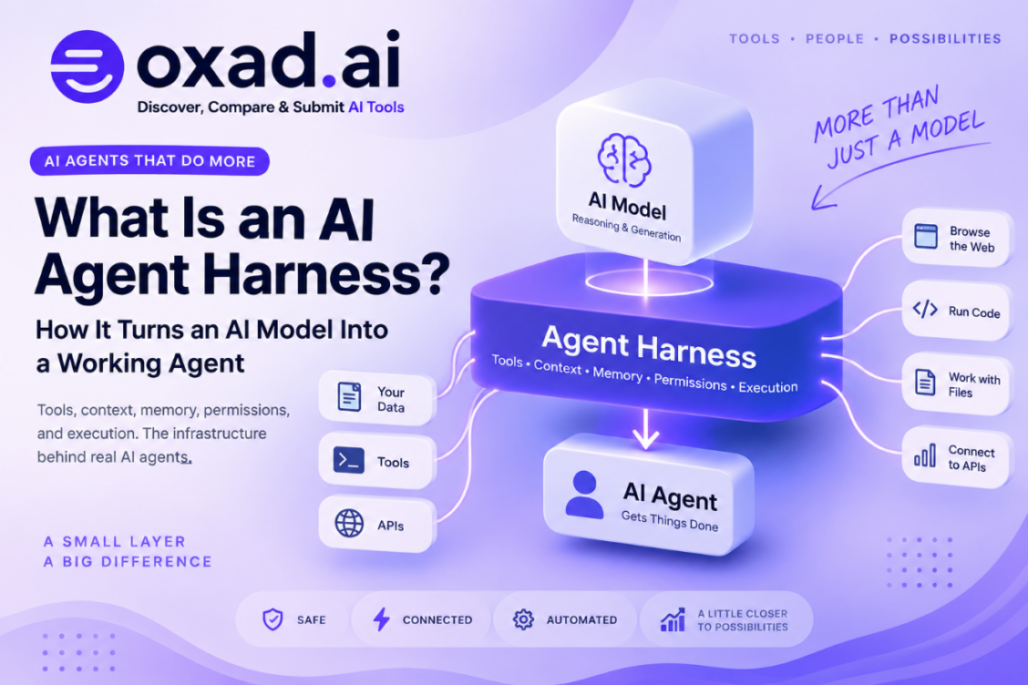
A sandbox and an agent harness solve different parts of the same problem. The sandbox defines where the agent can execute and what it can access. The harness coordinates the agent’s model, tools, context, state, permissions, and workflow.
In a simplified architecture:
AI model → Agent harness → Tools → Sandbox → Code execution → Results → Agent
The harness can decide when to call a tool, while the sandbox constrains what happens when that tool actually runs. This makes AI agent infrastructure a natural layer to consider alongside sandboxing.
Why Are Sandboxes Important for AI Coding Agents?
Traditional developer tools generally assume that a human is deciding which commands to run. AI coding agents change that assumption. The agent can generate the command itself, decide to execute it, inspect the result, and choose another command based on what happened.
That feedback loop makes execution authority part of the agent architecture.
For example:
The agent receives a coding task.
It inspects the repository.
It writes a change.
It runs tests.
The tests fail.
It installs or changes a dependency.
It runs the tests again.
It reviews the result and continues.
A sandbox gives this loop a controlled environment in which the agent can perform useful actions without necessarily exposing the developer’s entire machine.
Which AI Coding Agents Can Use Sandboxed Environments?
Sandboxing is becoming relevant across the broader AI coding ecosystem rather than being tied to one coding agent. Agents such as Claude Code, Codex, Copilot, OpenCode, Cline, and other autonomous development systems can benefit from an execution environment that separates agent actions from the host system.
Docker’s September 24 announcement specifically lists several coding agents that can be launched through its sandbox kits, including Claude Code, Codex, Copilot, OpenCode, and others.
For developers using an AI coding agent or another tool that can operate on project files and terminal commands, the same architectural question applies: what permissions does the agent need, and where should those actions execute?
What Are the Benefits of AI Coding Sandboxes?
Benefit
Why it matters
Isolation
Limits the agent’s access to the host environment.
Reproducibility
Makes it easier to recreate the same execution environment.
Long-running work
Allows agents to continue working without constant supervision.
Controlled networking
Reduces unnecessary access to external services.
Disposable environments
Makes experimentation and cleanup easier.
What Are the Limitations of AI Coding Sandboxes?
Sandboxing also introduces trade-offs. Stronger isolation can require more compute, more configuration, or more complicated networking. Some development workflows need access to local hardware, private services, credentials, or files that are difficult to expose safely.
There is also a governance problem. Giving an agent too little access makes it unable to complete useful work. Giving it too much access weakens the value of the sandbox. The goal is therefore not maximum restriction in every case, but the minimum authority required for the task.
Are AI Coding Sandboxes the Same as Agent Security?
No. Sandboxing is one layer of agent security. A complete security design also needs authentication, authorization, secret management, network controls, prompt-injection defenses, logging, monitoring, dependency controls, and safe handling of tool outputs.
A sandbox can reduce the impact of an unsafe action, but it cannot by itself determine whether the agent’s plan is trustworthy or whether a connected service should be called.
What Is the Future of AI Coding Sandboxes?
As coding agents become more autonomous, the execution environment is likely to become a standard part of the agent stack.
The September 2026 Docker announcements are an example of this direction. Docker is extending its sandbox model from local execution to cloud-managed environments and has also published a Sandbox Kit specification focused on making agent permissions and execution environments more portable.
Frequently Asked Questions
What is an AI coding sandbox?
An AI coding sandbox is an isolated environment where an AI agent can execute code with controlled access to files, networks, tools, and credentials.
Why do AI coding agents need sandboxes?
Agents can execute commands, install dependencies, and modify files, so isolation can reduce the impact of mistakes or unsafe actions.
Is a sandbox the same as a virtual machine?
No. A virtual machine is one technology that can provide isolation, while a sandbox describes the broader execution and permission boundary.
Can AI coding agents work in cloud sandboxes?
Yes. Cloud sandboxes can provide isolated compute where agents continue running after a developer disconnects.
Are AI coding sandboxes completely secure?
No. A sandbox is a security layer, and its control plane, permissions, networking, credentials, and isolation mechanism must also be secured.
Can an AI agent escape a sandbox?
It can happen when the sandbox or its control interfaces contain vulnerabilities, which is why the isolation boundary itself must be tested and protected.
What is the difference between a sandbox and an agent harness?
The harness coordinates the agent workflow, while the sandbox controls the environment where agent actions and code execute.
Do all AI coding agents need cloud sandboxes?
No. Local sandboxes can be useful for interactive development, while cloud sandboxes are especially useful for long-running or parallel workloads.
Conclusion
AI coding agents are becoming execution systems, not just code generators. Once an agent can run commands, install dependencies, test applications, access tools, and work for hours without continuous supervision, the question of where those actions happen becomes fundamental.
AI coding sandboxes provide one answer: give the agent a dedicated execution environment with explicit boundaries around files, networks, credentials, tools, and resources.
The important idea is not that a sandbox makes an agent automatically safe. It is that agent autonomy requires an execution boundary. As coding agents move from generating code to independently running, testing, debugging, and iterating on it, sandboxing is becoming an important layer of AI agent infrastructure.