What Is an Agent-Ready Website and How Can Websites Work With AI Agents?
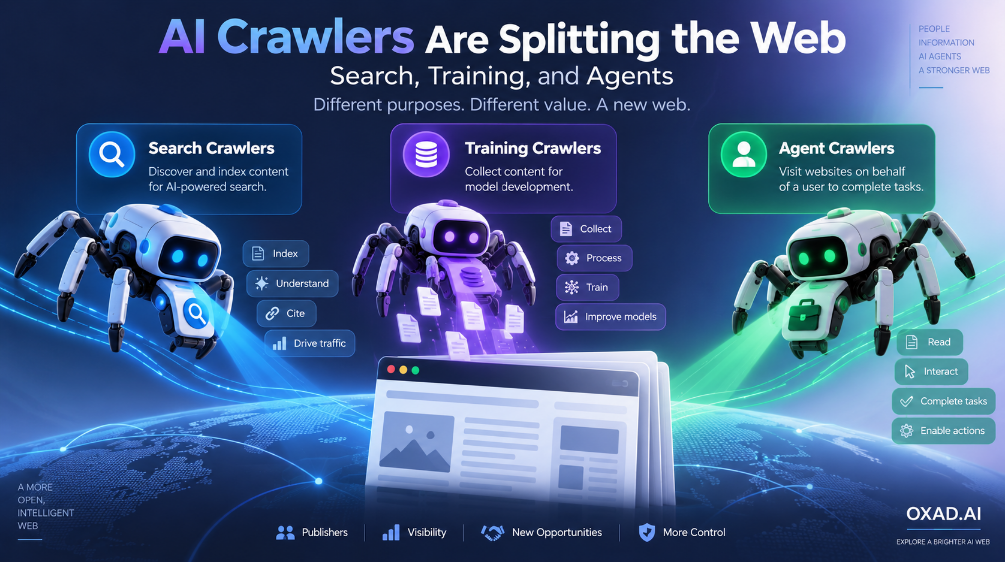
AI agents are becoming a new kind of web visitor. They do not only read pages. Increasingly, they search, compare, fill forms, book services, and complete tasks for people. That creates a new question for website owners: is your website easy for an AI agent to discover, understand, use, and trust?
For years, website owners focused on making pages friendly to people and search engines. Now a third layer is emerging: agent readiness. An agent-ready website is designed so AI systems can understand important information and, where appropriate, interact with the site’s capabilities without guessing what buttons, forms, or page elements mean.
The timing is important. On October 6, 2026, TechCrunch reported that personal AI agents are increasingly running into website access problems caused by intentional restrictions and traditional anti-bot protections. The problem is becoming visible in shopping, travel, reservations, and other tasks that agents are expected to perform on behalf of users.
What Is an Agent-Ready Website?
An agent-ready website is a website that AI agents can reliably discover, read, understand, act on, and verify.
It does not mean replacing the human interface. A good agent-ready site still works normally for people and search engines. Instead, it adds clearer machine-readable information and explicit pathways for software to interact with the site.
Traditional website
Agent-ready website
Human visitor
Human + AI agent
Visual navigation
Semantic and machine-readable pathways
Buttons and forms
Clearly labelled actions and structured tools
Page content
Content plus explicit capabilities
Click and read
Discover, understand, act, verify
Why Are Agent-Ready Websites Becoming Important?
The web was primarily designed around a human at the other end of a browser. An agent changes that assumption. Instead of asking a person to search for a product, compare options, fill out a form, and confirm a reservation, the user can delegate part of that workflow to software.
That creates a practical problem: an agent can only complete a task reliably when the website gives it enough information and enough predictable ways to act.
SEO helps people find your website. Agent readiness helps an AI system understand what your website can do and complete a useful task.
This does not make SEO obsolete. Search visibility, strong content, structured data, performance, accessibility, and agent readiness increasingly reinforce each other.
How Do AI Agents Interact With Websites?
Today, browser agents can interact with websites in several ways. They may read the page structure, inspect the accessibility tree, use screenshots, simulate clicks and typing, or interact with explicit tools exposed by the site.
The most fragile approach is often visual guessing: the agent sees a button, determines what it probably means, clicks it, waits for the page to change, and then tries to determine whether the action succeeded.
A more explicit model looks like this:
AI Agent
↓ Discover
↓ Understand
↓ Authenticate
↓ Call an explicit action
↓ Receive a structured result
↓ Verify the outcome
What Is the Difference Between SEO and Agent Readiness?
SEO
Agent readiness
Helps search engines discover pages
Helps agents discover information and capabilities
Optimizes content for search visibility
Makes content and actions easier for software to interpret
Agent readiness is not one file or one API. It is better understood as a stack of capabilities.
1. Discovery
Agents need to find the important parts of a site. A clear sitemap, stable canonical URLs, useful navigation, structured content, and carefully considered machine-readable resources can help.
2. Understanding
Semantic HTML, accessible labels, Schema.org structured data, clear headings, visible product or service facts, and server-rendered critical information reduce ambiguity.
3. Capability Discovery
An agent should be able to determine what it can actually do. Depending on the use case, that may involve an API, OpenAPI documentation, MCP, WebMCP, or another declared capability interface.
4. Authentication and Permissions
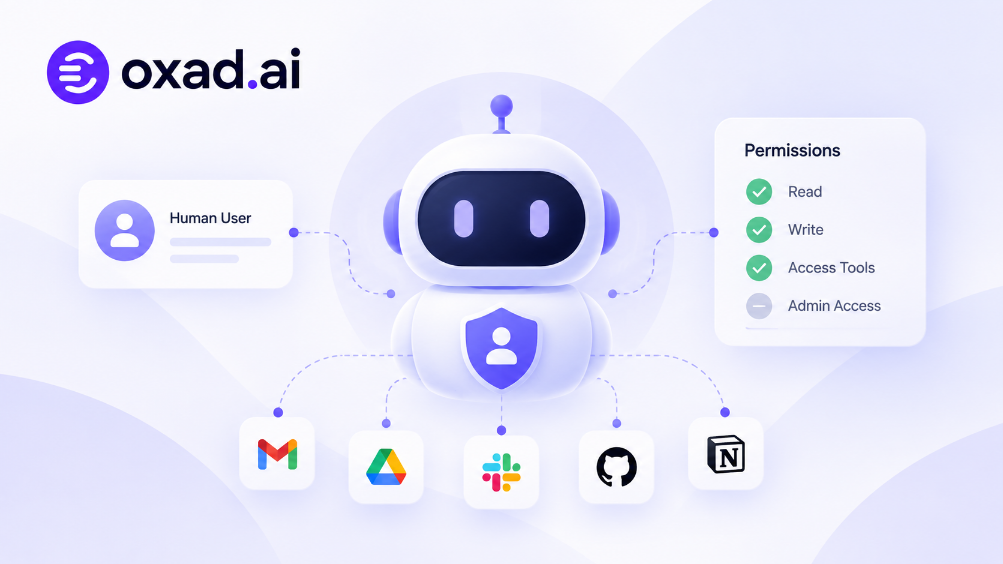
Reading a public page is very different from changing an account, placing an order, or making a payment. Agent-ready systems therefore need explicit identity, authentication, authorization, and user-consent boundaries.
Forms, APIs, search functions, booking functions, support workflows, and transaction endpoints should have clear inputs and predictable outcomes.
6. Verification
The agent needs to know whether an action actually succeeded. Clear status messages, structured responses, stable identifiers, and confirmation states can make a major difference.
What Is WebMCP?
WebMCP is an emerging browser-oriented approach that lets websites expose structured tools that AI agents can call directly. Instead of forcing an agent to guess which button to press, the page can declare an action, describe what it does, and define the inputs required.
Chrome’s documentation describes WebMCP as a proposed web standard for exposing structured tools through JavaScript and annotated HTML forms. It is being developed in the W3C Web Machine Learning Community Group with participation from Google and Microsoft.
The important idea for website owners is simple:
HTML tells an agent what the page contains. WebMCP can tell an agent what the page can do.
What Is the Difference Between HTML, APIs, MCP, and WebMCP?
Technology
Main purpose
HTML
Presents information and interface elements on a web page
API
Lets software communicate with a service programmatically
MCP
Connects AI applications to external tools and data sources
WebMCP
Lets a web page expose structured tools to browser-based agents
These technologies are complementary rather than mutually exclusive. A website can have normal HTML for people, structured data for machines, APIs for applications, an MCP server for AI clients, and WebMCP tools for compatible browser agents.
For a broader explanation of how agents connect to external services, see AI Connectors.
Why WebMCP Matters for Website Owners
WebMCP is still an emerging standard, so website owners should not treat it as a universal requirement today. But it provides a useful direction for web development: make important actions explicit instead of forcing an agent to infer them from pixels.
Current ecosystem work already demonstrates the potential. WebMCP benchmarks compare direct tool calling with screenshot-based computer use and other browser interaction methods. The goal is not simply to make agents faster; it is to make interactions more predictable and easier to verify.
That is particularly valuable for workflows such as:
Searching products or services
Checking availability
Comparing options
Filling forms
Booking appointments
Managing subscriptions
Starting support requests
Adding products to a cart
What About Anti-Bot Systems and CAPTCHAs?
This is one of the biggest reasons agent readiness has become a practical issue rather than a purely theoretical concept.
Traditional anti-bot systems were designed to distinguish humans from automated traffic. But a legitimate AI agent can now be acting directly on behalf of a real customer. A blanket rule that treats every automated interaction as hostile can therefore block a genuine user journey.
Recent reporting has highlighted exactly this tension. Some websites intentionally restrict agents, while others appear to block them because existing security systems were not designed for agent-mediated browsing.
The answer should not be to remove security. Agent-ready design needs better identity, permissions, rate limits, auditability, user confirmation, and explicit trust boundaries.
Does an Agent-Ready Website Need MCP?
No. MCP is useful, but agent readiness is broader than MCP.
A site can improve agent readiness by first making its public information clear and machine-readable, ensuring important content is accessible without unnecessary interaction barriers, using semantic forms, maintaining stable URLs, and making permissions explicit.
Then, depending on its business model, it can expose deeper capabilities through APIs, MCP, WebMCP, or other emerging protocols.
Can Agent Readiness Improve Task Success?
There is early experimental evidence that structured agent-ready design can improve task completion. A July 2026 research study compared two versions of a prototype storefront across 300 agent runs. The agent-ready version recorded an 89.3% strict success rate compared with 49.3% for the baseline.
This should be treated as proof of concept, not a universal benchmark. It involved one prototype storefront and a limited task set. Still, the size of the difference illustrates why explicit semantics and action pathways deserve attention.
How Can You Make a Website Agent-Ready?
You do not need to rebuild an entire website. Start with the journeys that matter most.
List the important tasks. What do customers actually want an agent to do?
Make critical information explicit. Put prices, availability, policies, product facts, and service details in readable text.
Improve semantic structure. Use meaningful headings, labels, forms, buttons, and structured data.
Check access rules. Review robots.txt, WAF behavior, rate limits, CAPTCHA flows, and other controls.
Define permissions. Separate read-only operations from actions that change data or spend money.
Expose stable actions. Consider APIs, MCP, WebMCP, or other appropriate interfaces.
Return clear results. Give agents structured success, failure, and state information.
Test real tasks. Do not only scan source code. Test whether an agent can actually complete the workflows that matter.
Agent-Ready Web Architecture
Discovery
Sitemap + stable URLs + useful machine-readable content
↓ Understanding
Semantic HTML + structured data + clear facts
↓ Capability Discovery
APIs + MCP + WebMCP where appropriate
↓ Identity & Permissions
Authentication + authorization + user consent
↓ Action
Forms + tools + transactional endpoints
↓ Verification
Structured responses + status + confirmation
What Does This Mean for SEO?
The most useful way to think about agent readiness is as an additional layer on top of good technical SEO.
A site that is difficult to crawl, poorly structured, dependent on inaccessible JavaScript, unclear about its products, or constantly changing its URLs will usually be difficult for both search systems and agents to understand.
But agent readiness goes one step further. Search engines primarily need to understand and rank content. Agents increasingly need to understand capabilities and complete objectives.
That makes agent readiness particularly relevant to e-commerce, SaaS, booking websites, marketplaces, support portals, publishers, and any website where users ask software to take action.
What Is the Future of the Agentic Web?
The web is unlikely to become completely agent-only. Humans will continue to browse, read, compare, and interact directly. The more likely outcome is a layered web in which the same site serves three audiences:
Layer
Primary visitor
Goal
Human web
People
Read, explore, interact
Search web
Search systems
Discover, index, rank
Agent web
AI agents
Understand, act, verify
This is why the phrase agent-ready website is becoming useful. It describes a shift in web architecture rather than a single vendor’s product.
Watch: How WebMCP Makes Websites Agent-Ready
The following Google Cloud Tech demonstration shows how WebMCP can expose typed tools inside web pages and allow an AI agent to interact with website functionality more directly.
Frequently Asked Questions
What is an agent-ready website?
An agent-ready website is designed so AI agents can reliably discover, understand, use, and verify its information and capabilities.
How do AI agents interact with websites?
They can read page structure, use accessibility information, simulate browser actions, call APIs, or use explicit tools exposed by the website.
What does agent-ready mean?
It means a website provides clear information, predictable actions, appropriate permissions, and reliable results for AI-driven workflows.
How can I make my website ready for AI agents?
Improve semantics, structured data, accessibility, machine-readable content, authentication, action clarity, and testing of real agent tasks.
What is WebMCP?
WebMCP is an emerging browser-oriented standard for exposing structured website tools that compatible AI agents can call directly.
What is MCP for websites?
MCP can connect AI applications to tools and services; websites may expose capabilities through MCP or related interfaces depending on the use case.
Is agent readiness the same as SEO?
No. SEO focuses on discoverability and search visibility, while agent readiness adds reliable understanding, action, permissions, and verification.
Do all websites need WebMCP?
No. WebMCP is most relevant when a website has useful interactive workflows that browser-based agents should operate.
Can anti-bot systems block AI agents?
Yes. WAF rules, CAPTCHA systems, rate limits, and bot policies can prevent legitimate agents from completing user-requested tasks.
Is an agent-ready website only for e-commerce?
No. SaaS, travel, healthcare, support, media, finance, booking, education, and many other sites can benefit.
Final Takeaway
The next evolution of the web may not be about replacing websites with agents. It may be about making websites understandable and usable by both humans and agents.
AI agents are becoming a new type of visitor. The important question for website owners is no longer only whether Google can find a page. It is also whether an AI system can understand what the site offers, determine what it is allowed to do, complete the right action, and verify the result.
That makes agent-ready web design an emerging layer alongside SEO, accessibility, structured data, APIs, MCP, and security. The standards are still evolving, especially around WebMCP and agent identity, but the direction is already clear: websites will increasingly need to communicate not only what they contain, but also what an authorized agent can safely do.