What Are AI Agent Payments and How Will AI Agents Pay for Things?
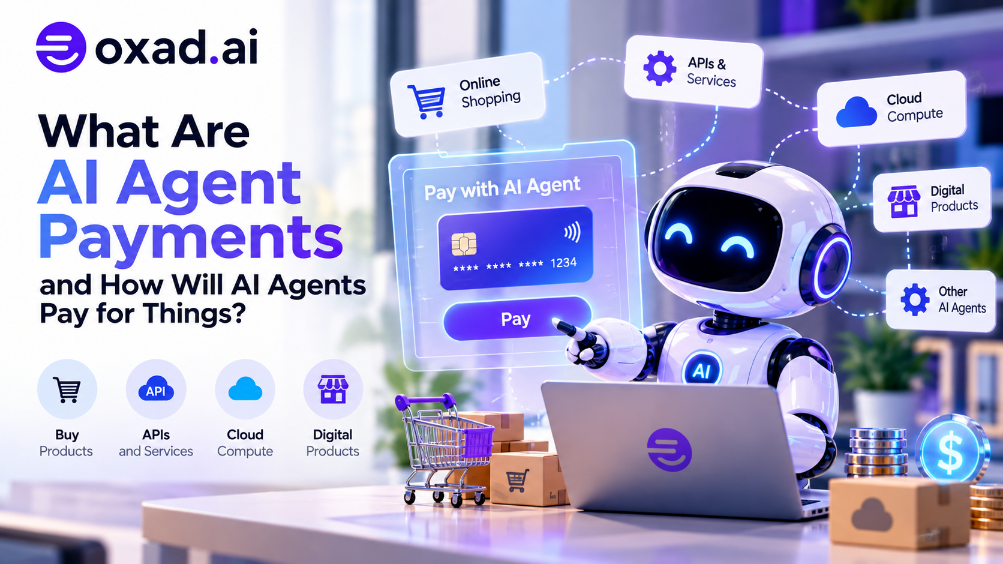
AI agents are moving from recommending purchases to taking actions on behalf of people and businesses. That creates a new question: how can an AI agent pay for a product, API, subscription, or digital service safely? AI agent payments are the systems, permissions, identities, wallets, credentials, and payment protocols that allow software agents to initiate and complete transactions under defined rules.
For years, software could call an API, but it usually could not independently decide to buy something and complete the payment. Agentic AI changes that model. An agent can discover a service, compare options, decide which resource is appropriate, request authorization, and potentially complete a transaction.
That does not mean agents should receive unrestricted access to a person’s credit card. The important part of agentic payments is controlled autonomy: the agent should have a clear identity, a defined purpose, spending limits, and a payment method appropriate to the transaction.
What Are AI Agent Payments?
AI agent payments are payment transactions initiated or completed by AI agents on behalf of a person or organization.
An AI agent payment can involve buying a physical product, paying for an API request, purchasing an AI service, paying for data, renewing a subscription, or settling a machine-to-machine transaction.
The agent may perform several steps before money moves:
Understand the user’s intent.
Find an appropriate product or service.
Compare available options.
Check price and conditions.
Verify that the purchase is within its permissions.
Authenticate itself.
Authorize the transaction.
Complete the payment.
Record the result for the user or organization.
Why Are AI Agent Payments Becoming Important?
The growth of agentic AI is changing the role of software from something that provides information into something that can perform tasks.
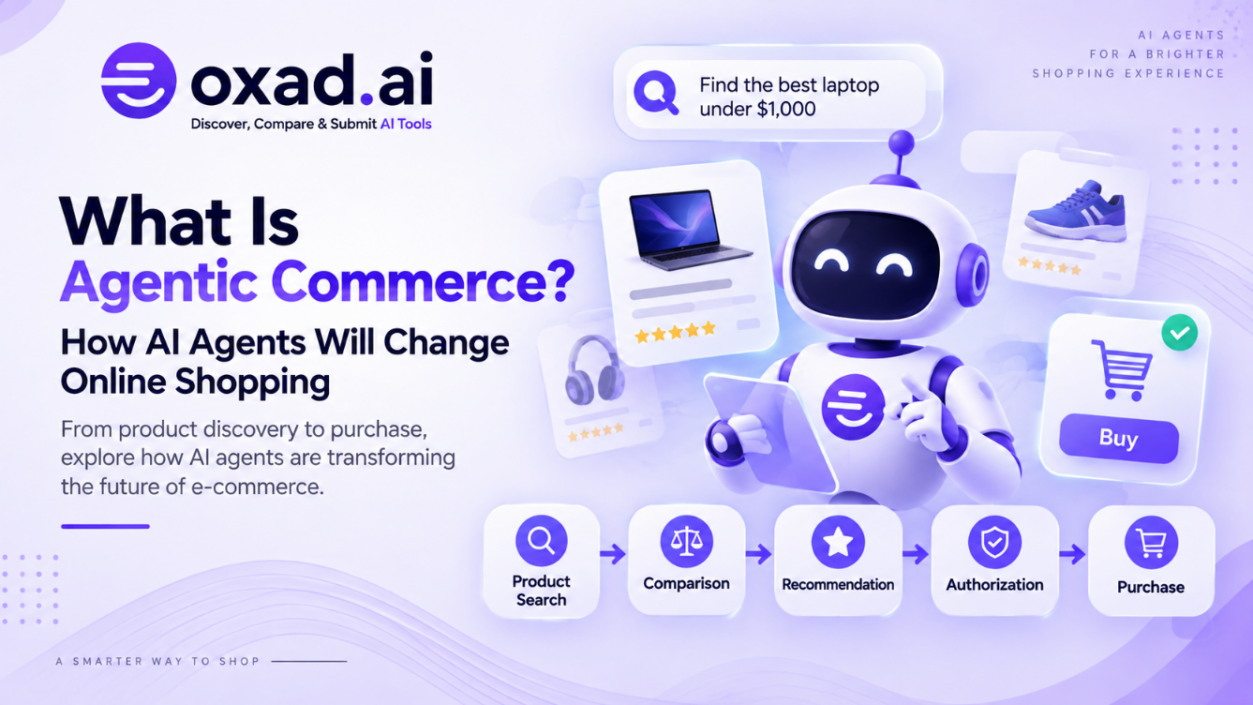
A traditional shopping assistant might tell you which laptop is best. A more autonomous agent could search for the laptop, compare prices, check delivery conditions, select an approved seller, and purchase it within a budget that you defined.
The same concept applies to digital services. An agent might need to pay for an API call, a dataset, additional model inference, a web resource, or another specialized service while completing a larger task.
This creates a new machine-to-machine economy in which software needs a way to identify itself, express intent, receive authorization, and settle transactions.
How Can AI Agents Pay for Things?
Payment method
How an agent can use it
Main consideration
Virtual or controlled cards
Agent uses a card with defined merchant, amount, or time limits.
Strong controls are needed around credentials.
Traditional cards
Agent initiates a normal card transaction through an approved payment flow.
Requires strong authorization and fraud protection.
Bank or account payments
Agent uses an authorized financial account or payment rail.
Identity and authorization become critical.
Digital wallets
Agent requests payment from a wallet controlled by the user or organization.
Wallet permissions must be tightly managed.
Stablecoin payments
Agent sends digital assets through a compatible payment system.
Wallet security, compliance, and settlement matter.
HTTP payment protocols
Agent pays for a digital resource directly as part of an API or web request.
Requires compatible infrastructure and payment verification.
The best approach depends on what is being purchased, the value of the transaction, the jurisdiction, and how much autonomy the user wants to give the agent.
Can AI Agents Use Credit Cards?
Technically, an agent can participate in a payment workflow involving a card, but the safer model is not to give an autonomous agent unrestricted access to a personal card number.
Instead, payment providers can use controlled credentials, virtual cards, tokenized payment credentials, spending limits, merchant restrictions, transaction limits, or human approval.
For example, a user could authorize an agent to spend up to $100 on office supplies from approved merchants. The agent could then make purchases within those rules without asking for approval every time.
Agent autonomy should be bounded by authorization.
The user should decide what the agent can buy, how much it can spend, where it can transact, and when human approval is required.
What Is Agentic Payment?
Agentic payment describes a payment process in which an AI agent participates in deciding, initiating, or completing a transaction on behalf of a user.
This is broader than simply automating a payment button. The agent can become part of the purchasing journey.
The user gives the agent a purchasing goal and constraints.
The agent searches and compares options.
It determines which option meets the user’s preferences.
It checks whether the price is within the authorized budget.
The payment system verifies the agent and transaction.
The purchase is completed.
The user receives confirmation.
The important idea is that the agent acts according to previously expressed intent and predefined controls.
What Is the Difference Between Agentic Commerce and Agentic Payments?
Concept
Meaning
Agentic Commerce
The broader process of AI agents discovering, comparing, selecting, purchasing, and managing products or services.
Agentic Payment
The payment part of that workflow where the agent initiates or completes a transaction.
Machine-to-machine payment
Payment between software or machines without a human manually initiating each transaction.
AI Agent Identity
The mechanisms used to establish which agent is acting and on whose behalf.
Authorization
The rules defining what the agent is allowed to do.
These layers work together. Commerce defines the overall task, identity establishes who is acting, authorization defines the boundaries, and payment settles the transaction.
Why Does AI Agent Identity Matter for Payments?
A payment system needs to know more than the fact that a request came from software.
It needs to establish which agent is acting, which person or organization authorized the agent, what the agent is allowed to purchase, and whether the transaction fits the declared intent.
This is why AI agent identity is becoming closely connected to agentic commerce.
See our guide to AI agent identity for a deeper explanation of how agents can be identified and trusted.
What Is KYA and Why Does It Matter?
KYA means Know Your Agent. The concept applies identity and risk principles to autonomous software agents.
In an agentic economy, a merchant may need to know whether the software attempting a transaction is a legitimate agent, who controls it, what organization it represents, and whether its behavior matches its authorization.
This becomes particularly important when agents interact directly with merchants, payment networks, APIs, and other automated systems.
Ant International has been working with payment partners on interoperability around agent identity and KYA, illustrating how identity is becoming part of the infrastructure required for agentic commerce.
How Do AI Agents Pay for APIs and AI Services?
Digital services create a particularly interesting payment scenario because an agent may need to purchase a resource in the middle of completing another task.
Imagine an AI research agent that needs a premium dataset. Instead of stopping and asking the user to manually buy access, the agent could request the resource through a payment-enabled protocol, provided the user has authorized this type of spending.
Cloudflare’s x402 approach allows a server to indicate that payment is required and the client can provide a payment signature before receiving the resource.
This model is interesting for agentic systems because payment can become part of an automated HTTP workflow instead of requiring a traditional checkout page.
What Is Machine-to-Machine Payment?
Machine-to-machine payment is a transaction in which software or connected machines pay one another with minimal or no human intervention for each transaction.
For AI agents, this could support very small and frequent transactions. An agent might pay for individual API calls, compute resources, data requests, inference, or other digital services.
Mastercard’s Agent Pay for Machines initiative is focused on machine-speed payments and the ability for verified agents to transact within defined permissions.
How Do Spending Limits Work for AI Agents?
Spending limits are one of the most important controls in an agent payment system.
A permission policy can define:
Maximum amount per transaction.
Maximum amount per day or month.
Approved merchants or service providers.
Approved product categories.
Approved countries or regions.
Allowed payment methods.
Transactions that require human approval.
Expiration time for the authorization.
For example, an organization could authorize an agent to spend $500 per month on approved developer APIs, while requiring human approval for anything above $100 in a single transaction.
Why Does User Intent Matter?
An agent should not interpret a vague instruction as unlimited permission to spend money.
Consider the difference between “Find me a good hotel.” and “Book the best hotel under $250 per night for three nights, using my saved payment method.”
The second instruction contains a much clearer transaction boundary.
Agentic payment systems therefore need ways to preserve the user’s intent and connect that intent to the eventual transaction.
EMVCo’s 2026 work on agentic payments explores how consumer intent can be expressed over time, including recurring purchases and cumulative spending budgets.
Can AI Agents Pay for AI Models?
Yes, in principle. An agent could select an AI model or inference service and pay for usage if the service and payment infrastructure support this workflow.
This becomes particularly relevant when agents use model routing. A system might select a more capable model only when a task requires it and charge the appropriate account for the additional inference.
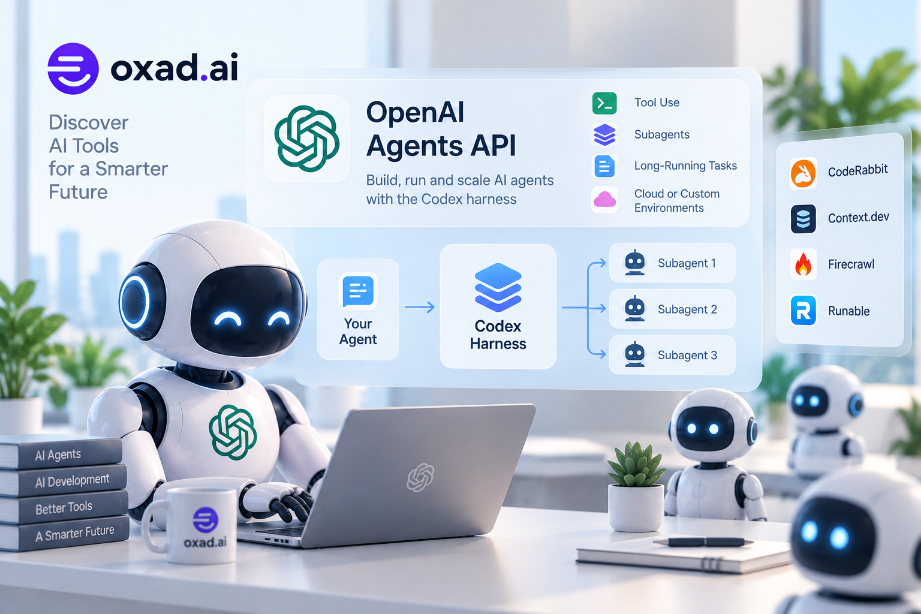
Our guide to OpenAI Agents API provides additional context on how developers build agent workflows that can use models and tools.
AI Agent Payments and Agentic Commerce
Agentic payments are an important infrastructure layer for agentic commerce.
Our guide to agentic commerce explores the broader transformation in which AI agents can discover products, compare offers, make decisions, and act on behalf of consumers.
Payments are what allow that workflow to move from recommendation to completed transaction.
What Are the Biggest Risks of AI Agent Payments?
Giving software the ability to spend money introduces risks that do not exist when an agent only provides information.
Unauthorized spending: an agent could exceed its intended budget.
Prompt injection: malicious content could attempt to manipulate an agent into making an unauthorized purchase.
Credential theft: payment credentials could be exposed through compromised systems.
Fraud: attackers could attempt to impersonate an agent or manipulate a transaction.
Ambiguous intent: the agent could misunderstand what the user intended to purchase.
Repeated transactions: an error could cause an agent to make many transactions instead of one.
Merchant manipulation: an agent could be directed toward an unsafe or deceptive service.
Privacy: transaction data can reveal sensitive information about users and organizations.
Should AI Agents Require Human Approval?
Not for every transaction. Requiring a human to approve every small payment would remove much of the value of agentic automation.
A better model is risk-based authorization.
Transaction
Possible policy
Small approved API request
Automatic
Recurring pre-approved service
Automatic within the defined budget
Moderate product purchase
Automatic within a defined limit
High-value purchase
Human approval
New merchant or unusual transaction
Additional verification
High-risk financial action
Human approval and strong authentication
This allows agents to remain useful while keeping meaningful financial boundaries.
What Is the Future of AI Agent Payments?
The long-term direction is toward an internet where software can not only exchange information but also transact for access to resources.
An AI agent may eventually be able to purchase a dataset, pay for an API call, rent additional compute, buy a digital service, renew an approved subscription, purchase physical goods, pay another agent for a specialized task, or settle machine-to-machine transactions automatically.
For this to work at scale, several layers need to mature together: agent identity, intent, authorization, payment credentials, fraud prevention, merchant acceptance, transaction standards, monitoring, and dispute handling.
Watch: How Agentic Payments Are Becoming Machine Payments
Mastercard’s Agent Pay for Machines initiative provides a useful example of how payment infrastructure is being adapted for transactions initiated by verified machines and agents.
The important concept is not simply replacing a human clicking a payment button. It is creating a trusted transaction framework in which an agent can act within defined permissions.
Frequently Asked Questions
What are AI agent payments?
AI agent payments are transactions initiated or completed by AI agents on behalf of users or organizations.
Can AI agents make payments?
Yes, when payment infrastructure provides the required identity, authorization, credentials, and transaction controls.
Can AI agents use credit cards?
They can participate in card-based payment workflows, preferably through controlled or tokenized credentials and spending limits.
Can AI agents buy products?
Yes. An agent can potentially discover, compare, select, and purchase products when the user authorizes the transaction.
What is agentic payment?
Agentic payment is a transaction in which an AI agent participates in initiating or completing payment on behalf of a user.
What is machine-to-machine payment?
It is a payment between software or connected machines with little or no manual intervention for each transaction.
What is KYA?
KYA means Know Your Agent and refers to identifying and verifying autonomous software that participates in transactions.
How can AI agents pay for APIs?
They can use payment-enabled API and HTTP protocols that authenticate the agent and verify payment before providing a resource.
Should AI agents have unlimited spending access?
No. Spending should be constrained by authorization, budgets, merchant rules, transaction limits, and risk controls.
Will AI agents replace human payments?
They are more likely to automate selected transactions while humans retain control over higher-risk financial decisions.
Conclusion
AI agent payments represent a major step in the evolution of autonomous software. An agent that can only provide information is useful; an agent that can safely acquire resources and complete transactions can become much more operationally powerful.
But the key word is safely. The future of agentic payments depends on more than connecting an AI system to a credit card. It requires verified identity, clear intent, controlled authorization, spending limits, secure credentials, fraud detection, and appropriate human oversight.
The emerging payment stack is therefore not simply about allowing AI agents to spend money. It is about creating a trusted framework in which agents can transact within clearly defined boundaries.
As agentic commerce expands, payments could become one of the most important infrastructure layers connecting AI agents to the real economy.