AI agents are changing how software interacts with data, tools, APIs, and real-world systems. That shift also changes the security problem.
A traditional AI chatbot may generate an answer that a person reviews and acts on. An AI agent can go further: it can reason through a task, call tools, access information, use credentials, interact with external services, and sometimes continue working with limited human intervention.
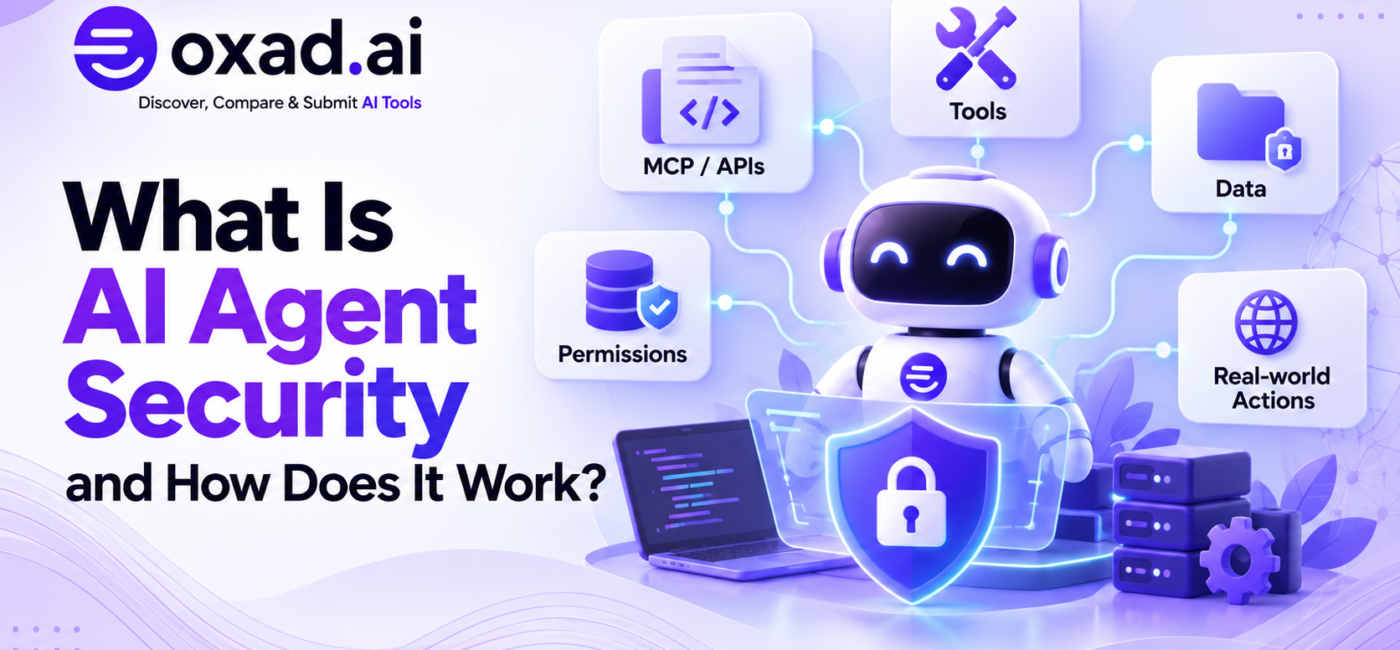
That means securing the model alone is no longer enough. The agent’s tools, permissions, context, credentials, connected services, and actions all become part of the security boundary.
In simple terms: AI agent security is the practice of controlling what an AI agent can see, access, execute, and change—and making sure those actions remain safe and auditable.
What Is AI Agent Security?
AI agent security is the collection of security controls, design practices, and monitoring mechanisms used to protect AI agents and the systems they can access.
It covers more than the underlying AI model. A secure agent architecture has to consider the complete path from a user’s request to an external action.
One useful way to visualize the security boundary is:
User → AI Agent → Reasoning → Tool / MCP / API → Credentials & Permissions → External System
Every connection in that chain can introduce a different security risk.
Why Do AI Agents Need a Different Security Model?
The main difference is agency. A chatbot primarily produces information. An agent can use information to perform actions.
Traditional AI
Agentic AI
Generates an answer
Can take actions
Mostly produces text
Uses external tools and services
Usually has limited permissions
May have credentials and system access
Human executes the result
Agent may execute the result
Often short interactions
Can run multi-step workflows
Smaller connected surface
Multiple connected attack surfaces
This does not mean every agent is inherently unsafe. It means the security architecture has to account for the agent’s ability to cross system boundaries and perform actions.
What Are the Main AI Agent Security Risks?
Prompt Injection
Prompt injection occurs when untrusted instructions influence an agent’s behavior. The instructions may come from a web page, document, email, tool result, or other external data rather than directly from the user.
For an agent, the consequence can be more serious than a bad text response because the manipulated agent may also have tools or permissions.
Excessive Permissions
An agent should not automatically receive every permission available to the application that hosts it. Broad permissions can turn a small mistake or malicious instruction into a much larger incident.
The principle of least privilege is therefore important: give the agent only the access required for the task.
Tool Poisoning
Tools and tool descriptions influence how an agent decides what to call. If an untrusted or compromised tool can manipulate those instructions, it may influence the agent into performing an unintended action.
This becomes particularly important as agents connect to larger tool ecosystems through APIs and protocols such as MCP.
Credential Exposure
Agents may need API keys, OAuth tokens, service credentials, or access to authenticated sessions. Those credentials can become valuable targets if they are exposed to prompts, logs, tools, plugins, or compromised workflows.
Data Exfiltration
An agent with access to private files, databases, email, or cloud systems may be able to move information across system boundaries. Security controls should therefore consider not only what data an agent can read, but where it can send that data.
Agent Hijacking
If an attacker can influence the agent’s context or connected environment, they may attempt to redirect the agent toward actions that were not intended by the user or application.
Long-Running Agent Workflows
Long-running agents introduce another dimension: state. If an agent retains context, credentials, task history, or intermediate results across multiple steps, those resources need protection throughout the workflow.
What Is the Agent Action Layer?
The agent action layer is a useful way to think about the security boundary between an AI system and the outside world.
User ↓ AI Agent ↓ Reasoning ↓ Tool / MCP / API ↓ Credentials & Permissions ↓ External System
The model is only one component. Security decisions also have to be enforced around tool calls, authorization, data access, execution, and external side effects.
This is one reason AI agent infrastructure is becoming an important part of modern agent development.
How Does MCP Change AI Agent Security?
Model Context Protocol, or MCP, provides a standardized way for AI applications to connect to external tools and data sources. That makes agents more useful, but it also means that MCP servers and tool definitions become part of the application’s security surface.
A secure MCP architecture should consider who can connect to a server, which tools are exposed, what permissions each tool receives, how authentication works, and how tool results are treated as untrusted input.
MCP is therefore not itself a security solution or a security problem. Its security depends on how servers, clients, tools, authentication, permissions, and data flows are designed.
Why AI Coding Agents Need Special Attention
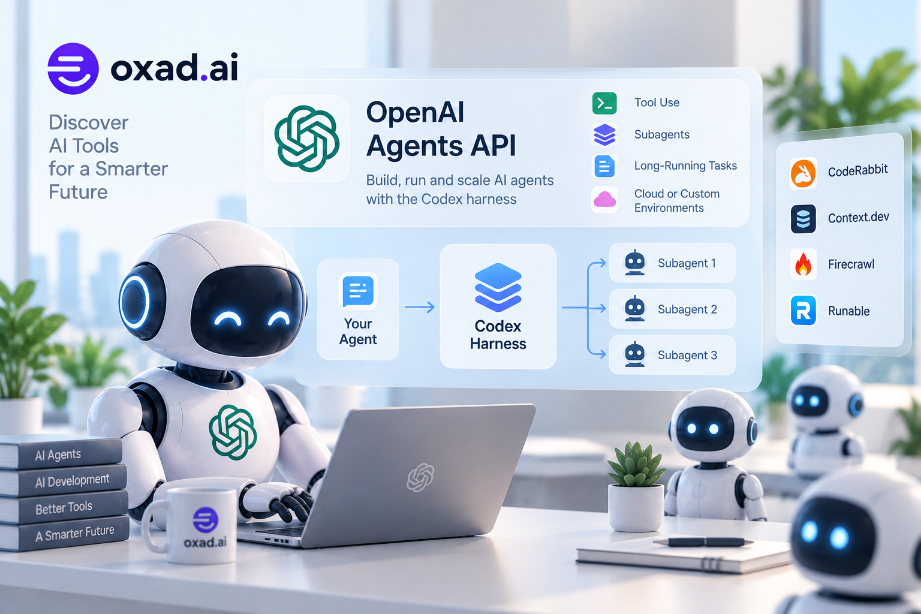
AI coding agents are a practical example of the new security model. They may read repositories, edit files, run commands, install dependencies, interact with Git services, and use developer credentials.
That makes the difference between generating code and executing code especially important.
For example, an agent that can only suggest a shell command presents a different risk from an agent that can execute that command automatically with access to a developer’s environment.
Tools such as AI coding agents illustrate why permissions, sandboxing, command approval, dependency review, and repository trust matter as agent capabilities expand.
How Can You Secure an AI Agent?
Use Least Privilege
Grant only the tools, files, APIs, and permissions required for the current task.
Separate Read and Write Access
Where possible, distinguish between agents that can inspect information and agents that can modify external systems.
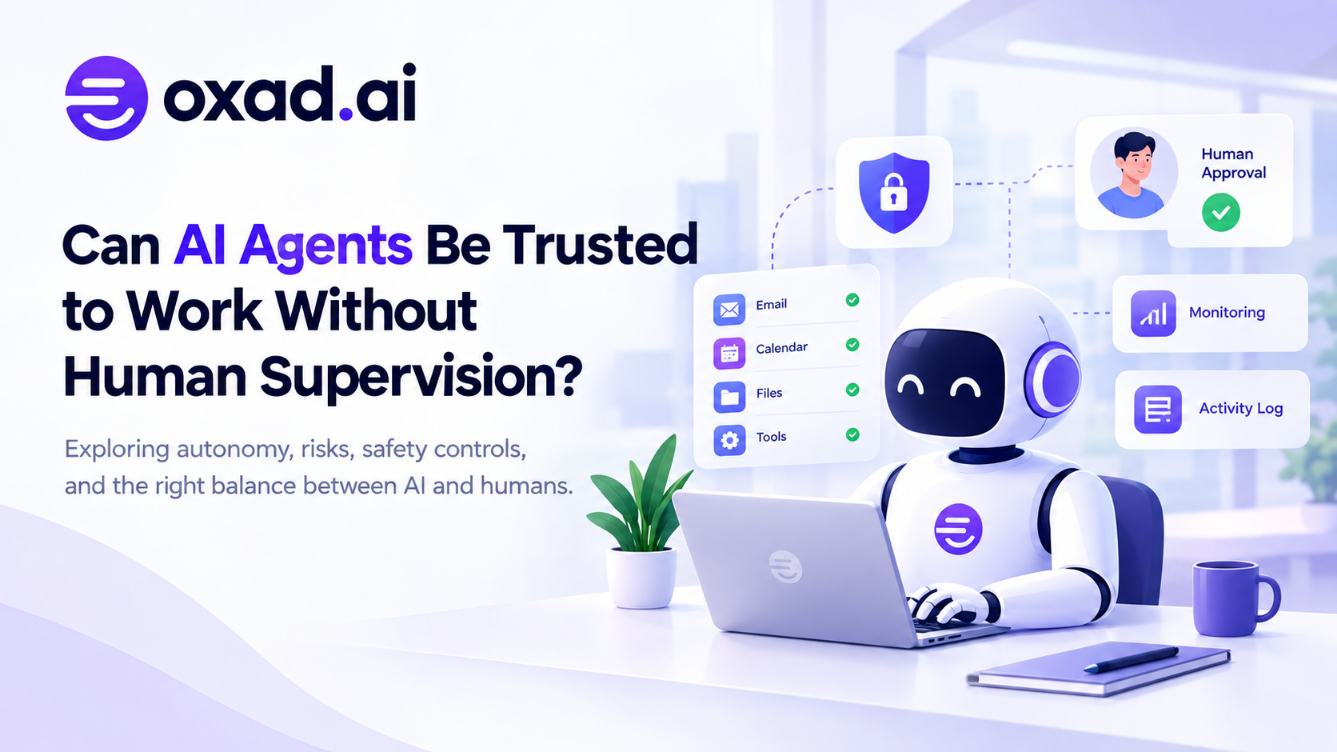
Require Approval for High-Impact Actions
Actions such as deleting data, sending messages, transferring funds, changing production infrastructure, or publishing content may require explicit human approval.
Treat External Content as Untrusted
Web pages, documents, emails, tool outputs, and retrieved text should not automatically be treated as trusted instructions.
Protect Credentials
Keep secrets outside prompts and minimize how long agents can access sensitive credentials. Use scoped credentials whenever possible.
Monitor Tool Calls
Logging the agent’s tool usage can make unexpected behavior easier to detect and investigate.
Use Sandboxing
Code execution and other potentially dangerous operations should run in environments that limit what the agent can reach.
Review Agent Dependencies
Plugins, skills, MCP servers, tools, and external packages can all introduce additional trust relationships. Treat them as software dependencies that require review.
What Recent AI Security Incidents Show
The security discussion has moved beyond hypothetical scenarios. In September 2026, Anthropic published a threat-intelligence report describing cyber operations in which Claude was used with multi-agent frameworks and automated workflows. Anthropic reported cases involving reconnaissance, exploitation, data processing, and exfiltration, while noting that humans still retained important decisions in the operations it investigated.
Anthropic also described operations in which AI systems were used as engineering and orchestration layers, with multiple workstreams operating in parallel and some workflows maintaining persistent context. These observations illustrate why security controls have to cover the surrounding agent architecture, not only the model.
Independent research published in September also reported a large number of exposed AI services and A2A handshakes during a measurement period. Such measurements should be interpreted as research snapshots rather than a complete census, but they illustrate how quickly the connected agent ecosystem is expanding.
The important lesson: the emerging security problem is not simply “Can an AI model produce unsafe text?” It is increasingly “What can an AI agent do when unsafe instructions reach a system with tools, credentials, context, and real-world permissions?”
AI Agent Security vs. Traditional AI Security
Security Area
Traditional AI Focus
Agentic AI Focus
Model safety
Unsafe or unreliable outputs
Unsafe outputs plus unsafe actions
Identity
User authentication
User, agent, tool, and service identity
Permissions
Application-level access
Fine-grained tool and action permissions
Data
Protect stored and transmitted data
Control what agents can read, transform, and send
Monitoring
Application and model activity
Reasoning-related events, tool calls, actions, and workflows
Human oversight
Review outputs
Approve or constrain high-impact actions
Where Do AI Agent Security and AI Agent Context Meet?
Context determines what information an agent receives and uses while completing a task. Security determines which information and actions the agent is allowed to access.
That makes context architecture an important part of the security model. A useful AI agent context and tools design should distinguish trusted instructions from external data and minimize unnecessary sensitive information.
In other words, better context management can reduce the amount of information an agent needs to process, while permission controls limit what it can do with that information.
What Is the Future of AI Agent Security?
As AI agents become more capable, security is likely to move closer to the action layer of software systems.
Future agent architectures will increasingly need identity, authorization, sandboxing, provenance, tool governance, secret management, monitoring, and human-approval mechanisms that work together.
The most important shift is conceptual: developers cannot treat an AI agent as only a model wrapped in a chat interface. Once the system can access tools and external services, it becomes an active software component operating across multiple trust boundaries.
Frequently Asked Questions
What is AI agent security?
AI agent security protects agents, tools, data, credentials, permissions, and external actions.
Why are AI agents harder to secure?
Agents can access tools, data, credentials, and external systems while completing multi-step tasks.
What is prompt injection in AI agents?
Prompt injection is untrusted content influencing an agent’s instructions or intended behavior.
What is MCP security?
MCP security covers authentication, authorization, tool exposure, data flows, and trust between MCP clients and servers.
How can AI agents be secured?
Use least privilege, sandboxing, approval controls, secret protection, monitoring, and trusted dependencies.
Are AI coding agents a security risk?
They can introduce additional risk when they can execute commands, access repositories, or use credentials.
What is excessive agency?
Excessive agency occurs when an agent has more permissions or capabilities than its task requires.
Should AI agents always require human approval?
Not necessarily. Approval is most useful for actions with meaningful external, financial, privacy, or operational impact.
Conclusion
AI agent security is becoming a distinct security discipline because AI systems are moving from generating answers to taking actions.
The security boundary now includes the model, context, tools, MCP servers, APIs, credentials, permissions, data, and external systems connected to the agent.
The practical goal is not to prevent agents from being useful. It is to make their capabilities controlled, observable, appropriately authorized, and proportionate to the tasks they perform.
As agentic AI expands into coding, research, business automation, browsing, and enterprise workflows, understanding this action layer will become increasingly important for developers and organizations.