What Are AI Teammates and How Are They Changing the Way We Work?
AI is moving from something people ask to something people delegate. The emerging idea of an AI teammate goes beyond a chatbot or a one-off AI agent. It describes an AI system with an ongoing role, access to tools and context, permission to execute work, and the ability to continue making progress as part of a human workflow.
That shift is becoming easier to see in the products being announced in 2026. OpenAI’s dots are described as always-on agents with their own cloud computer and browser. Microsoft has introduced Copilot Autopilot as a persistent digital teammate with its own identity, memory, computer, and workspace. Salesforce is positioning Agentforce Coworker as an AI teammate that works inside existing business permissions and can coordinate specialized agents. These are different products, but they point toward a similar architectural idea: AI is becoming a participant in work, not only an interface for asking questions.
What Is an AI Teammate?
An AI teammate is an AI agent designed to work alongside people over an ongoing period, with a defined role, access to relevant context and tools, and enough autonomy to perform tasks without requiring a new prompt for every step.
An ordinary AI assistant usually waits for an instruction. An AI teammate can be given an objective and continue working within predefined boundaries. It may monitor a workflow, prepare information, update documents, communicate with systems, follow up on tasks, or coordinate other agents.
The word teammate is useful because it emphasizes the relationship between the human and the AI. The AI is not necessarily replacing the human decision-maker. Instead, it becomes another actor in the workflow with capabilities, permissions, responsibilities, and limits.
How Do AI Teammates Work?
Most AI teammates combine several layers rather than relying on a model alone.
Model → reasoning and decision-making
Agent harness → task loop, tools, context, and state
Identity → role and responsibility inside the organization
Memory and context → relevant history, knowledge, and current work
Tools → applications, APIs, browser, files, and business systems
Execution environment → a computer, sandbox, cloud workspace, or runtime
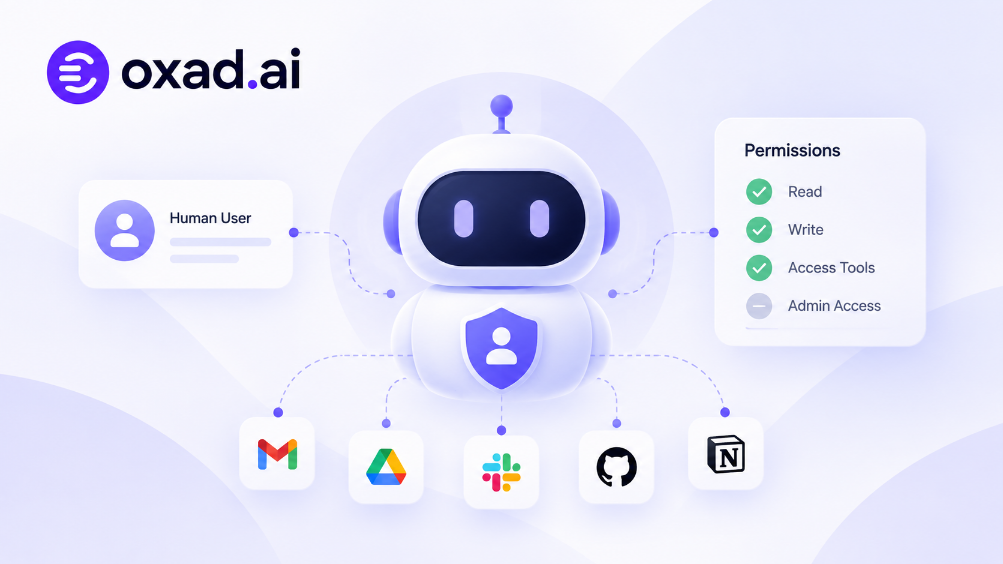
Governance → permissions, approvals, audit logs, and security policies
The agent receives a goal, evaluates the current state, chooses an action, uses a tool, observes the result, and decides what to do next. This loop can continue until the objective is completed, a policy requires human approval, or the agent reaches a boundary.
This is one reason AI agent infrastructure matters. A teammate needs more than a model prompt. It needs an execution loop that can manage actions, context, state, tools, and failures over time.
What Is the Difference Between an AI Assistant, AI Agent, and AI Teammate?
Capability
AI Assistant
AI Agent
AI Teammate
Answers questions
Core
Yes
Yes
Uses tools
Sometimes
Core
Core
Multi-step execution
Limited
Core
Core
Works proactively
Rarely
Sometimes
Core characteristic
Persistent role or identity
Usually no
Sometimes
Increasingly common
Ongoing context
Limited
Increasing
Core requirement
Works inside team workflows
Limited
Increasing
Core characteristic
Continues without a new prompt
Rarely
Possible
Central use case
These categories overlap. An AI teammate is not a completely separate technical species from an AI agent. Rather, it is an agent designed around a continuing role in a human or organizational workflow.
Why Are AI Teammates Emerging Now?
Several pieces of the AI stack have matured at the same time.
Models can reason over longer tasks
Modern models can handle more complex instructions and longer chains of actions. This makes it practical to delegate work rather than only ask for a single response.
Agents can use more tools
APIs, browsers, computer-use systems, MCP servers, files, databases, and business applications give agents access to the systems where work actually happens.
Persistent environments are becoming available
An agent that needs to work for hours or days needs somewhere to store state and continue execution. Cloud runtimes and dedicated agent computers make this possible.
Enterprise permissions are becoming part of the architecture
Businesses cannot simply give an AI unrestricted access to every application. Modern teammate systems therefore increasingly connect agent actions to identity, permissions, audit, and governance.
Work is becoming delegatable
The important change is behavioral. Instead of asking, “What can AI tell me?”, teams increasingly ask, “What can I give AI responsibility for?”
What Did OpenAI’s Dots Show About AI Teammates?
OpenAI’s September 29, 2026 DevDay announcements provide a clear example of the direction. OpenAI describes dots as always-on agents powered by GPT-6 Astra. Each dot has its own cloud computer and browser and can use connected tools, handle recurring work, and follow up across surfaces such as ChatGPT, text messaging, email, and Slack.
The important concept is not simply the name “dots.” It is the architecture behind the experience: an agent has an execution environment and can remain active instead of waiting for the user to restart the conversation.
OpenAI has also been building infrastructure for long-running agents. Its Agents API provides managed agent infrastructure and lets developers select an execution environment for agents, including OpenAI-managed sandboxes or supported external environments. This makes the AI teammate concept increasingly accessible as a developer architecture rather than only a consumer feature.
How Is Microsoft Copilot Becoming an AI Teammate?
Microsoft’s September 25, 2026 Copilot announcement makes the terminology especially explicit. Microsoft describes Autopilot as a persistent, proactive personal agent that can keep working when the user is not actively interacting with it.
Microsoft says users can give Autopilot a name, role, and goal. It can monitor channels, follow up on threads, run recurring work, and resume a project days later. The company also says Autopilot has its own identity, memory, computer, and workspace within the organization’s tenant, with permissions, audit, and governance.
This is a useful illustration of why “AI teammate” is different from simply saying “AI agent.” The emphasis is on a continuing organizational role: the AI exists in the same work environment as people and participates in workflows over time.
How Is Salesforce Using the AI Teammate Concept?
Salesforce uses the term Agentforce Coworker for an AI teammate inside its Lightning environment. Salesforce says the Coworker can reason across accounts, activity, and history, surface insights, take action, and operate within existing permissions and business rules.
Salesforce also describes the Coworker as a layer that can call specialized Agentforce agents. That means an AI teammate does not necessarily need to perform every task itself. It can act as a coordinator that delegates work to specialized agents.
This points toward a future workplace where the “teammate” may be an orchestration layer over multiple specialized AI workers.
Can AI Teammates Work With Humans?
Yes. The strongest workplace designs are likely to combine autonomous execution with explicit human control.
An AI teammate can prepare a report, analyze a pipeline, draft a customer response, organize a project, investigate an issue, or prepare a software change. A human can then review the result, approve sensitive actions, change the objective, or take over when judgment is required.
Human sets the goal and boundaries → AI teammate executes within those boundaries → Human reviews important outcomes.
This model preserves human agency while allowing AI to handle more of the repetitive and operational work.
What Can an AI Teammate Do?
Role
Example Work
Research teammate
Monitor sources, compare information, summarize developments, and maintain research notes.
Sales teammate
Research accounts, prepare briefs, update CRM records, and organize follow-ups.
Marketing teammate
Draft campaigns, analyze performance, prepare content, and coordinate workflows.
Operations teammate
Track recurring processes, identify exceptions, and prepare operational updates.
Coding teammate
Write code, run tests, inspect errors, review changes, and maintain projects.
Executive support teammate
Prepare briefings, organize information, monitor commitments, and surface items requiring attention.
Are AI Teammates Replacing AI Assistants?
Not necessarily. The two models are useful for different levels of work.
An assistant is often ideal when a person wants a fast answer, draft, explanation, or recommendation. A teammate becomes useful when the task has multiple steps, requires tools, continues over time, or needs to fit into a larger workflow.
The relationship can be viewed as:
Ask → Assist → Delegate → Collaborate
As AI becomes more capable, users may switch between these modes rather than choosing one permanent interface.
What Role Does Memory Play in an AI Teammate?
Persistent context is one of the clearest differences between a one-off assistant interaction and a continuing teammate relationship.
A teammate may need to know the current project, previous decisions, open tasks, organizational rules, user preferences, and the results of earlier actions. Without some form of persistent state, the user would need to rebuild the context every time the agent starts.
Memory does not mean that the model permanently learns every detail. In many systems, relevant information is stored outside the model and retrieved when needed. This distinction matters because memory must also be governed: stale, incorrect, sensitive, or malicious information should not automatically become part of future decisions.
Why Does Identity Matter?
A human teammate has a role. People know whether they are talking to a designer, developer, analyst, manager, or operations specialist.
AI teammates are beginning to adopt a similar concept. A role can define what the agent is responsible for, what tools it can access, what information it should use, and what actions require approval.
Identity also helps organizations distinguish between different agents. Instead of one universal AI with unrestricted access, a company can operate multiple specialized teammates with narrower responsibilities.
Can AI Teammates Delegate to Other Agents?
Yes. Multi-agent collaboration is becoming an important part of agent architecture.
A primary teammate could receive a broad objective and delegate specialized work to other agents. For example, a product teammate might ask one agent to research competitors, another to analyze customer feedback, and another to prepare a technical feasibility report.
The main teammate can then combine the results and present a coherent output to the human team.
This creates a hierarchy that looks more like an organization:
Human Team
↓
AI Teammate / Coordinator
↓
Research Agent | Coding Agent | Data Agent | Operations Agent
What About AI Coding Teammates?
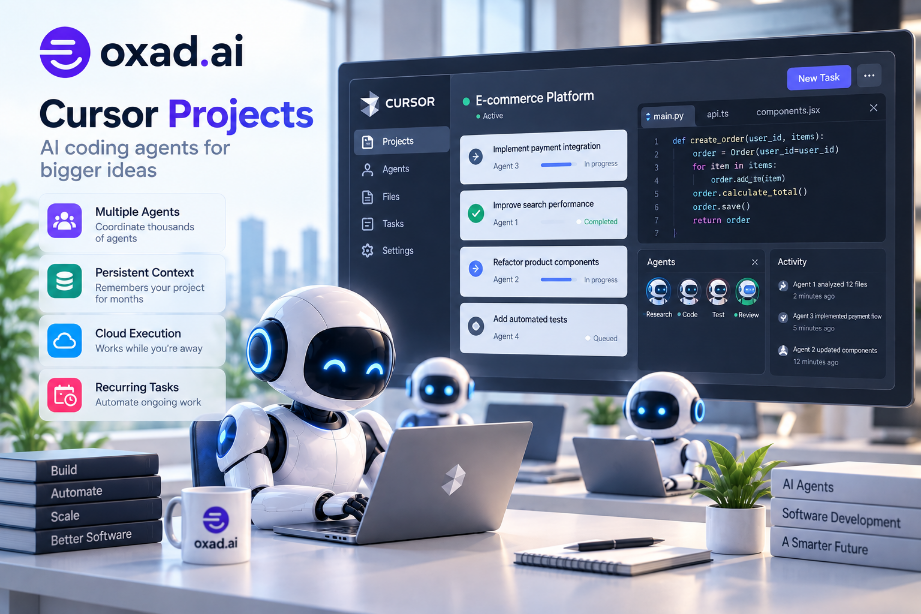
Software development is one of the clearest areas where the teammate model can become practical. A coding agent can work across a repository, inspect issues, modify files, run tests, investigate failures, and prepare changes for review.
The shift is from “write this function” toward “take responsibility for this engineering task.” That requires a combination of coding capability, context, execution, testing, and human review.
Developers can explore this broader category through OXAD.AI’s guide to AI coding tools, while agent developers can use the OpenAI Agents API as one example of infrastructure for building agents that perform multi-step work.
What Are the Risks of AI Teammates?
Too much authority
A teammate with access to many systems can cause problems if its permissions are broader than necessary. Least-privilege access is therefore important.
Incorrect decisions
An AI can misunderstand a goal or act on incomplete information. High-impact actions should have appropriate review or approval mechanisms.
Prompt injection and untrusted content
Agents that read websites, documents, messages, and files can encounter instructions designed to manipulate them. The agent must distinguish data from authorized instructions.
Memory errors
Incorrect or outdated memories can influence future work. Persistent context needs mechanisms for correction, expiration, and access control.
Accountability
Organizations need to know which agent performed an action, which permissions it used, what information influenced it, and whether a human approved the result.
What Does an AI Teammate Need to Be Useful?
Layer
Why It Matters
Clear role
Defines responsibility and reduces ambiguous behavior.
Strong model
Provides reasoning and planning capability.
Context
Connects decisions to current work and organizational knowledge.
Tools
Allows the agent to act rather than only generate text.
Persistent state
Allows work to continue across sessions.
Execution environment
Provides a place to run software and workflows.
Governance
Controls permissions, approvals, monitoring, and accountability.
Are AI Teammates a New Category or Just AI Agents With a New Name?
There is no single industry-wide technical definition of “AI teammate.” The term is being used by companies to describe agents that operate with a more persistent role in human workflows.
Research is also beginning to treat agentic teammates as a distinct workplace design problem. A September 2026 study examined persistent, proactive AI teammates deployed across multiple teams and focused on how these systems interact with human collaboration, trust, organizational rules, and agency.
That distinction is useful. An AI agent describes what a system can do. An AI teammate describes how the system participates in work.
What Is the Future of AI Teammates?
The next stage may not be a workplace filled with dozens of chat windows. Instead, people may interact with a small set of persistent AI roles that understand ongoing objectives and coordinate specialized agents behind the scenes.
A marketing teammate could monitor campaigns. A development teammate could maintain software. A research teammate could track a topic. An operations teammate could monitor recurring processes. Humans would remain responsible for goals, priorities, judgment, and high-impact decisions while agents handle increasing amounts of execution.
The most important infrastructure may therefore move below the interface: identity, memory, context, agent harnesses, computers, permissions, tools, observability, and secure execution environments.
AI Teammates in Practice
For a practical example of how multiple AI agents can work together as digital coworkers, this video demonstrates Microsoft’s Autopilot and Scout concept.
Video source: Collaboration Simplified on YouTube. The video is independent content and is included as a practical example of AI coworkers and agent orchestration.
Frequently Asked Questions
What is an AI teammate?
An AI teammate is an AI agent designed to work continuously within a role, using context and tools to perform tasks alongside humans.
How do AI teammates work?
They combine a model with an agent loop, tools, context, memory or state, an execution environment, and permission controls.
What is the difference between an AI agent and an AI teammate?
An AI agent describes an autonomous system that can take actions. An AI teammate emphasizes a persistent role within a human or organizational workflow.
Can AI teammates work without a prompt?
Yes. Persistent teammates can monitor workflows, run recurring tasks, or continue delegated work within predefined boundaries.
Can an AI teammate use other AI agents?
Yes. A teammate can coordinate specialized agents for research, coding, analysis, operations, or other tasks.
Are AI teammates replacing AI assistants?
Not necessarily. Assistants remain useful for interactive questions and quick tasks, while teammates are designed for longer-running delegated work.
Are AI teammates secure?
Security depends on permissions, isolation, monitoring, data controls, human approvals, and the design of the agent environment.
Can AI teammates be used for coding?
Yes. Coding teammates can work with repositories, tools, tests, development environments, and software workflows under appropriate controls.
Conclusion
AI teammates represent a shift from AI that answers toward AI that participates in work. The difference is not simply a better chatbot. It is the combination of a role, persistent context, tools, execution, identity, permissions, and the ability to continue making progress.
OpenAI’s dots, Microsoft’s Copilot Autopilot, and Salesforce Agentforce Coworker show different approaches to this emerging model. As these systems mature, the central question becomes less “What can AI generate?” and more “What work can we safely delegate to an AI teammate while keeping humans informed and in control?”
I like the distinction between an AI assistant and an AI teammate. The idea of giving an agent a persistent role makes the concept much easier to understand.
Question: Can an AI teammate really keep working when the user is offline? I assume it depends on the execution environment, permissions, and whether the required tools are available.
The section about identity and permissions is especially interesting. If AI agents are going to operate inside companies, controlling what each agent can access seems essential.
The multi-agent example makes sense. One teammate coordinating research, coding, data, and operations agents could become a useful way to organize complex workflows.



4 Replies to “What Are AI Teammates and How Are They Changing the Way We Work?”
I like the distinction between an AI assistant and an AI teammate. The idea of giving an agent a persistent role makes the concept much easier to understand.
Question: Can an AI teammate really keep working when the user is offline? I assume it depends on the execution environment, permissions, and whether the required tools are available.
The section about identity and permissions is especially interesting. If AI agents are going to operate inside companies, controlling what each agent can access seems essential.
The multi-agent example makes sense. One teammate coordinating research, coding, data, and operations agents could become a useful way to organize complex workflows.