What Is an AI Gateway and Why Do AI Agents Need One?
AI agents are gaining access to more models, tools, data, and applications. That creates a new infrastructure problem: how do you control all those connections from one place? An AI Gateway is emerging as one answer.
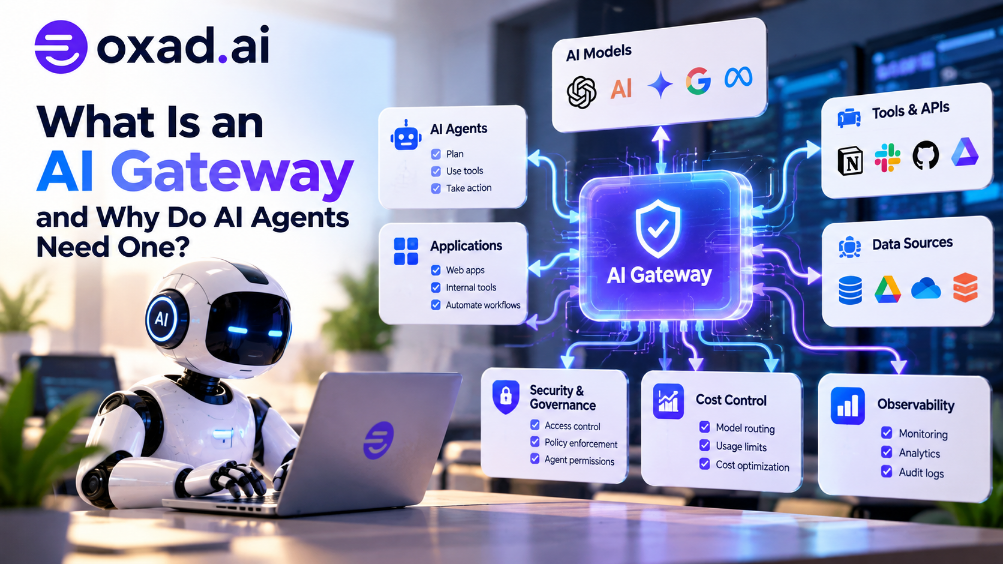
An AI Gateway is a control layer that sits between AI applications or agents and the models, tools, data sources, and AI services they use. Instead of every application connecting directly to every provider, the gateway can provide one managed path for routing, authentication, security, observability, cost controls, and governance.
This idea is becoming especially relevant as AI agents move from answering questions to taking actions. Recent announcements from CData, Kong, and F5 show how the category is expanding from simple model routing toward governance of models, agents, MCP tools, data, identity, and cost. CData announced Connect AI Gateway on September 29, 2026; Kong announced general availability of AI Gateway 2.2 on September 30; and F5 expanded its AI Gateway earlier in August.
What Is an AI Gateway?
An AI Gateway is a centralized infrastructure layer for managing traffic between AI applications and the AI services they depend on.
A simple architecture looks like this:
AI App / AI Agent
↓
AI Gateway
↓
Models + Tools + MCP + Data + AI Services
The gateway can inspect and control the request before it reaches the destination. Depending on the implementation, it may select a model, authenticate the caller, enforce a budget, apply security policies, log the request, expose governed tools, or route the request to another provider if the first one is unavailable.
Why Do AI Agents Need an AI Gateway?
A single chatbot may need one model endpoint. An autonomous agent can need several models, dozens of tools, multiple MCP servers, databases, APIs, browsers, and external applications.
Direct connections can quickly become difficult to manage:
Different API keys and credentials.
Different model providers and pricing.
Different security policies.
Different tool permissions.
Different logging and monitoring systems.
Different rate limits.
Different data-access rules.
An AI Gateway creates a common control point around these connections.
How Does an AI Gateway Work?
The exact architecture differs between products, but the basic flow can look like this:
1. Agent sends request
↓
2. Gateway identifies caller
↓
3. Policies are evaluated
↓
4. Model / tool / MCP route is selected
↓
5. Request is executed
↓
6. Response and action are observed
↓
7. Usage, cost, and audit data are recorded
This allows the application or agent to use a stable interface while infrastructure teams manage providers and policies behind the gateway.
What Can an AI Gateway Control?
Control
What It Can Do
Model routing
Send requests to different models according to task, latency, quality, availability, or cost.
Authentication
Identify users, applications, agents, and services.
Tool governance
Control which tools or MCP servers an agent can discover and invoke.
Security
Apply policies, filtering, guardrails, and access controls.
Cost management
Track usage, budgets, model costs, and routing decisions.
Observability
Record requests, responses, latency, errors, and actions.
Failover
Move traffic to another provider when a model or service becomes unavailable.
How Does an AI Gateway Manage Multiple AI Models?
One important use case is model routing.
Instead of hard-coding one model into an application, the application can send requests to the gateway and let routing rules decide what happens next.
For example:
A simple classification task could use a smaller model.
A complex coding problem could use a stronger reasoning model.
A high-volume task could be routed toward a lower-cost provider.
A failed provider could trigger automatic failover.
A sensitive workflow could be restricted to approved models.
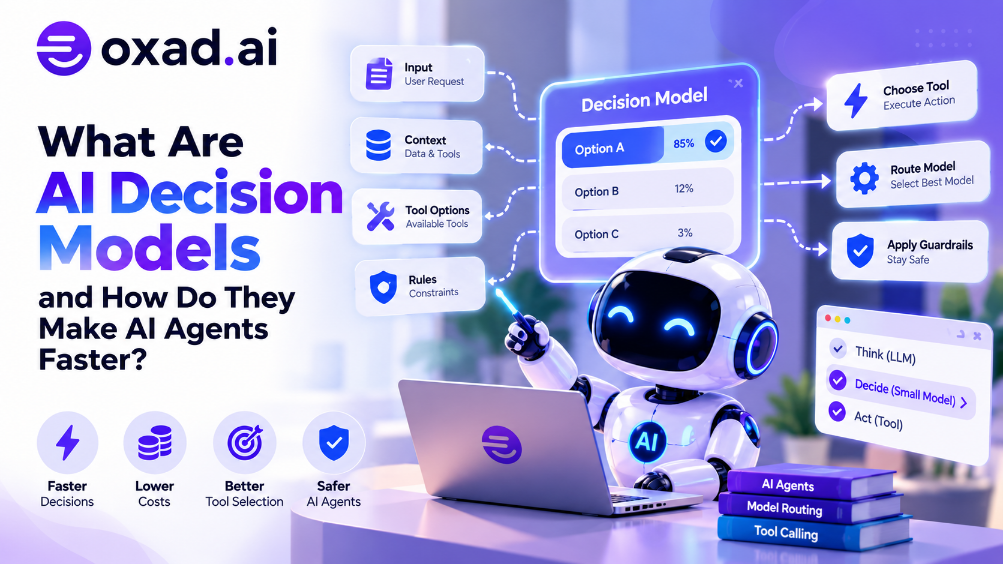
This connects directly with AI model routing and the broader infrastructure described in CloudflareAI., but the gateway can add authentication, budgets, policies, logging, and provider abstraction around the routing layer.
How Can AI Gateways Reduce AI Costs?
AI Gateway cost controls can operate at several levels.
A gateway can measure which users, teams, applications, agents, and models are consuming tokens or other billable resources. It can then apply budgets, quotas, routing rules, caching, or provider selection.
For example, an organization could define a policy such as:
Low complexity → economical model
Medium complexity → standard model
High complexity → reasoning model
Provider failure → automatic fallback
CData’s current Model Gateway documentation describes routing by user, team, and department, spending limits, and provider failover. F5 similarly positions its AI Gateway around routing, caching, budget enforcement, and AI interaction governance.
What Is AI Tool Governance?
Model governance controls which models an application can use. Tool governance controls what an agent can do.
This distinction becomes important with agentic AI.
An agent might have access to:
CRM tools.
Payment systems.
Cloud infrastructure.
Git repositories.
Databases.
Web browsers.
Email.
Internal knowledge systems.
An AI Gateway can become the policy layer that determines which tools are visible to which agent or identity and under what conditions they can be used.
What Is the Relationship Between AI Gateways and MCP?
MCP provides a protocol for connecting AI applications to tools and resources. An AI Gateway can sit in front of MCP infrastructure and add centralized authentication, rate limiting, logging, policy enforcement, and tool discovery controls.
In other words:
MCP = a way to connect AI to tools
AI Gateway = a control layer for those connections and other AI traffic
Kong’s AI Gateway 2.2, announced September 30, 2026, includes governed MCP tool access through a single endpoint and can reveal only the tools a caller is authorized to see and execute. Kong’s documentation also describes authentication, rate limiting, logging, and AI policies around MCP traffic.
AI Gateway vs API Gateway: What Is the Difference?
Feature
API Gateway
AI Gateway
Main traffic
APIs and services
Models, AI apps, agents, tools, and AI APIs
Routing
Routes API requests
Can route by model, task, provider, or policy
Cost awareness
Usually service/API focused
Can account for tokens, modalities, and model pricing
AI policies
General API policies
May include AI-specific guardrails and model policies
Agent tools
Possible through APIs
Can provide dedicated agent and MCP governance
The distinction is not absolute. Modern API gateways can support AI traffic, and some AI gateways build on traditional API-management technology. Kong explicitly describes its AI Gateway as bringing enterprise governance concepts into the agentic AI era.
AI Gateway vs MCP vs AI Agent
Concept
Primary Role
AI Agent
Reasons, plans, and performs tasks.
MCP
Provides a standardized way for AI systems to interact with tools and resources.
AI Gateway
Controls and governs AI traffic, models, tools, identities, costs, and policies.
AI Agent Harness
Provides the runtime and orchestration environment around an agent.
That means an AI Gateway does not replace MCP or an agent. It can sit around them as part of the infrastructure.
How Does an AI Gateway Secure AI Agents?
Security becomes more important when agents can take actions.
A gateway can provide a central point for:
Identity-aware access control.
Rate limiting.
Credential isolation.
Tool permissions.
Prompt and response policies.
Data filtering.
Audit logs.
Cost limits.
Provider restrictions.
MCP governance.
F5 describes its AI Gateway as a control plane spanning models, agents, tools, and APIs, with policy enforcement and auditability. Kong’s latest release similarly adds identity-aware AI policies and governed MCP access.
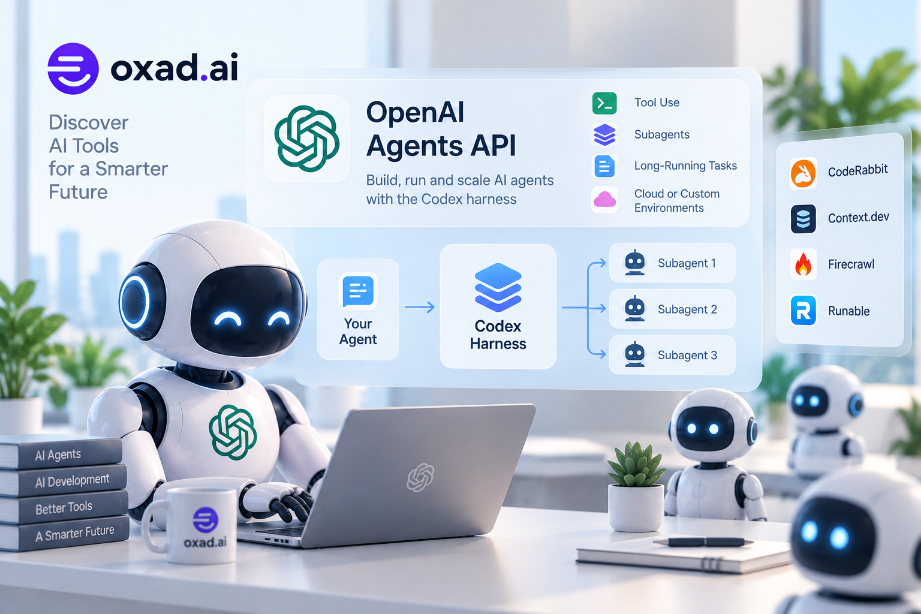
This makes AI Gateway closely related to AI agent infrastructure. For the application layer, the OpenAI Agents API is another useful reference point for understanding how agents are built around models and tools., because the gateway can become one of the control layers surrounding an agent runtime.
Why Is AI Gateway Becoming Important Now?
The recent market movement is not coming from one company alone.
On September 29, 2026, CData announced Connect AI Gateway as a control point between AI and enterprise systems, covering models, tools, identity, records, and actions. On September 30, Kong announced AI Gateway 2.2 with MCP tool governance, cost management, identity-aware policies, and expanded model support. F5 had already positioned its August AI Gateway update as a unified control plane across models, agents, tools, and APIs.
Together, these developments illustrate a broader infrastructure pattern: AI gateways are expanding beyond simply forwarding model requests.
What Does an AI Gateway Mean for AI Agents?
For agents, the gateway can become the boundary between what the agent wants to do and what the organization allows it to do.
This is especially useful when many agents share infrastructure. Instead of implementing every security and cost policy inside every agent, some controls can be centralized at the gateway.
What Does AI Gateway Governance Include?
AI governance can include several dimensions:
Model governance: which models are approved.
Identity governance: who or what agent is making the request.
Tool governance: which tools are available.
Data governance: which records and information can be accessed.
Cost governance: how much different users or agents can spend.
Security governance: which requests or actions should be blocked.
Audit governance: what activity must be recorded.
CData’s current gateway positioning is particularly focused on connecting these layers to enterprise data and enforcing permissions down to records and actions.
Could an AI Gateway Reduce Vendor Lock-In?
An AI Gateway can make provider changes easier when applications use a common gateway interface rather than embedding every provider’s endpoint and credential throughout the application.
For example, an application could send requests to one gateway while the gateway routes traffic among approved providers. CData describes its Model Gateway as OpenAI- and Anthropic-compatible and supporting routing and failover across multiple providers.
However, abstraction does not eliminate provider differences. Models still vary in capabilities, context limits, modalities, tool support, latency, and behavior.
What Are the Limitations of AI Gateways?
A gateway adds another infrastructure component to operate.
Centralization can create a critical dependency if redundancy is poor.
Model abstraction can hide important provider-specific features.
Security policies must be configured correctly.
Routing decisions can introduce unexpected behavior or costs.
Observability does not automatically guarantee that an agent is safe.
Tool governance is only effective when permissions and identities are accurate.
Watch an AI Gateway and Agentic Workflow Example
This Kong demonstration shows how an AI Gateway can expose API orchestration as MCP tools, apply semantic guardrails, connect an agent to tools, and protect against prompt injection and secret exfiltration.
Watch CData’s AI Agent Tooling and Security Example
This CData video demonstrates how governed agent tooling and MCP can be used to control what AI agents can access and do. It provides useful background for understanding why a gateway becomes important as agent access expands.
What Could the AI Gateway Become?
The long-term role may extend beyond model traffic.
A mature AI infrastructure stack could look like:
AI Agent
↓
Agent Harness
↓
AI Gateway
↓
Model + MCP + Tools + Data
↓
Enterprise Systems
In that architecture, the gateway becomes a common enforcement point for identity, model selection, tool access, cost, security, and observability.
Frequently Asked Questions
What is an AI Gateway?
An AI Gateway is a control layer between AI applications or agents and the models, tools, data, and AI services they use.
Why do AI agents need an AI Gateway?
Agents can use many models, tools, MCP servers, applications, and data sources, creating a need for centralized routing, security, cost, and governance controls.
What is the difference between an AI Gateway and an API Gateway?
An API Gateway manages API traffic broadly, while an AI Gateway adds controls designed for AI models, agents, tools, tokens, model routing, and AI-specific policies.
What is the difference between AI Gateway and MCP?
MCP is a protocol for connecting AI systems with tools and resources. An AI Gateway is an infrastructure control layer that can govern MCP and other AI traffic.
Can an AI Gateway reduce AI costs?
It can help through model routing, budgets, quotas, caching, provider selection, and usage monitoring.
Can an AI Gateway secure AI agents?
It can provide centralized identity, access controls, tool governance, rate limits, filtering, logging, and other policy controls.
Does an AI Gateway replace an AI agent harness?
No. The gateway governs traffic and access, while an agent harness provides the runtime and orchestration environment around the agent.
Can an AI Gateway support multiple model providers?
Many AI Gateway implementations are designed to route requests across multiple providers and models from a common interface.
Conclusion
AI Gateway is becoming an important infrastructure layer as AI moves from chatbots toward agents that use multiple models, tools, data sources, and applications.
The key idea is simple: instead of giving every AI application direct and fragmented access to everything it needs, a gateway can create a governed path where models, tools, identity, security, cost, and observability can be managed together.
3 Replies to “What Is an AI Gateway and Why Do AI Agents Need One?”
Mano
The model routing section makes the role of an AI Gateway much easier to understand. Centralizing routing and provider policies seems especially relevant when an agent uses several models.
Does an AI Gateway replace MCP? Answer: No. MCP connects AI systems with tools and resources, while an AI Gateway can add governance, authentication, monitoring, and policy controls around those connections.
The comparison with a traditional API Gateway is useful. For agentic systems, cost controls, model selection, tool permissions, and MCP governance add another layer that ordinary API traffic does not always require.



3 Replies to “What Is an AI Gateway and Why Do AI Agents Need One?”
The model routing section makes the role of an AI Gateway much easier to understand. Centralizing routing and provider policies seems especially relevant when an agent uses several models.
Does an AI Gateway replace MCP? Answer: No. MCP connects AI systems with tools and resources, while an AI Gateway can add governance, authentication, monitoring, and policy controls around those connections.
The comparison with a traditional API Gateway is useful. For agentic systems, cost controls, model selection, tool permissions, and MCP governance add another layer that ordinary API traffic does not always require.