What Are AI Decision Models and How Do They Make AI Agents Faster?
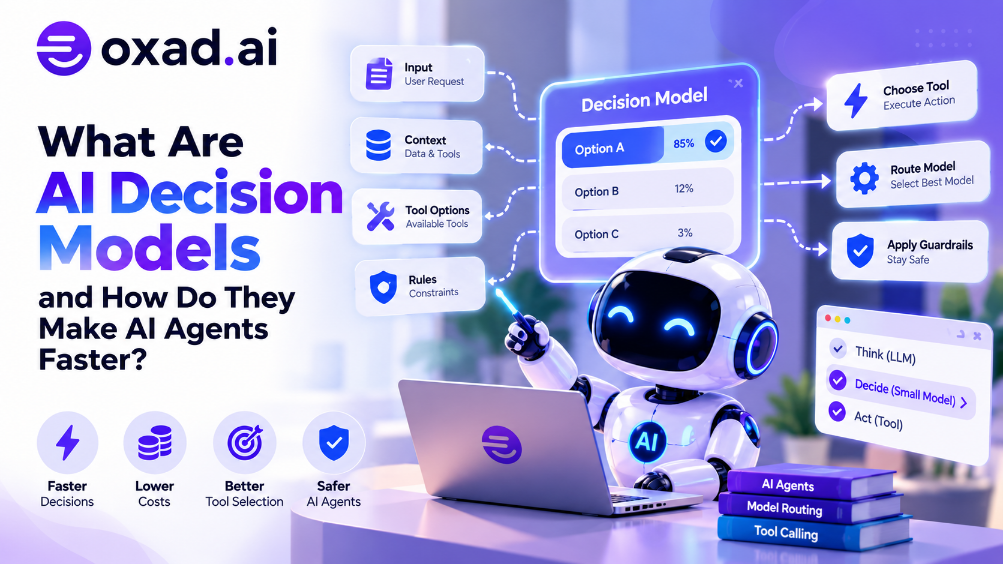
AI agents are becoming more capable, but that does not mean every decision needs a large reasoning model. A new class of small AI decision models is emerging to handle constrained choices such as tool selection, routing, classification, guardrails, and next-action decisions with lower latency and more predictable outputs.
For years, the typical AI agent architecture has placed a large language model at the center of almost every step: understand the request, reason about the problem, choose a tool, evaluate the result, and decide what to do next. That approach is powerful, but it can also be expensive and unnecessarily slow when the decision is small and well defined.
That is why AI decision models are attracting attention. On October 1, 2026, AWS introduced Strands Decider 2B, an open-source model designed to choose among predefined options or score them rather than generate free-form text. On the same day, Cloudflare introduced Clef and Clef-flash, also open-source decision models for high-speed classification and agentic workflows.
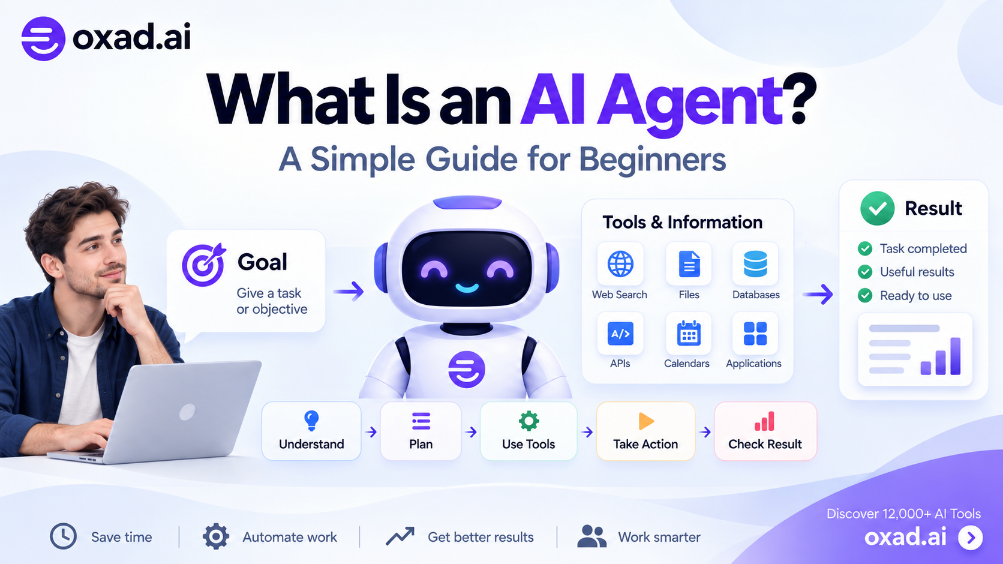
This does not mean decision models will replace large language models. The more interesting possibility is that they will work beside them: a large model handles complex reasoning while a smaller decision model handles the many narrow choices that happen inside an agent.
What Is an AI Decision Model?
An AI decision model is a model designed to answer a constrained decision question rather than generate an open-ended response.
Instead of asking an AI to write an answer, you can give it a state and a defined set of possible outcomes:
Which tool should the agent call?
Should this request be escalated to a human?
Is this action allowed?
Which model should handle this task?
Should the agent retry?
Which workflow should run next?
The output can be a choice, a yes/no decision, or a score. This makes the result easier for software to consume because the application does not need to parse a paragraph of generated text.
The simple idea:
LLM: Understand → Reason → Generate → Decide
Decision model: Read state → Score options → Choose
A decision model is therefore not simply a smaller chatbot. Its value comes from deliberately reducing the output space so that the model can make a narrow decision quickly and consistently.
Why Are AI Decision Models Appearing Now?
The timing is closely connected to the rapid growth of agentic AI. Modern agents increasingly operate for longer periods, call multiple tools, route work between models, and repeat actions until a task is complete. Every one of those steps can create small decisions.
AWS’s Strands team describes Strands Decider 2B as part of a new class of decision models, also referred to as System One models. The model is designed to select among supplied options or assign scores and confidence rather than generate arbitrary text. AWS says the 2B model can run locally and return decisions with very low latency.
Cloudflare introduced Clef and Clef-flash at the same time, describing decision models as a way to produce bounded, structured outputs for workflows and agents. That simultaneous movement from two major infrastructure companies is an important signal: decision models may be developing into a reusable architectural layer rather than remaining a single experimental model.
How Do AI Decision Models Work?
The easiest way to understand the architecture is to imagine an AI agent receiving a customer request:
“My payment has failed three times and I need help immediately.”
A general LLM could analyze the message and generate a response. A decision model could instead answer focused questions such as:
Is this urgent? → Yes
Which team should handle it? → Billing
Should a human be notified? → Yes
The agent can then use those structured decisions to determine its next action.
Strands Decider uses a small decision-oriented output head rather than a normal language-generation head. The project documentation describes three useful decision styles: choosing one option, answering a yes/no question, and scoring on an ordered scale.
AI Decision Models vs General LLMs
Capability
General LLM
AI Decision Model
Generates free-form text
Yes
No
Open-ended reasoning
Strong
Limited
Predefined choices
Possible
Core purpose
Tool selection
Possible
Natural use case
Structured output
Can require parsing
Built into the task
Confidence scoring
Varies by implementation
Core capability in this model class
Latency
Can be higher
Designed for fast decisions
Local deployment
Depends on model
Strong fit for small models
Complex reasoning
Strong
Not the main goal
The important point is that this is not a “better model” versus a “worse model” comparison. They solve different problems.
Are AI Decision Models Better Than LLMs?
Not overall. A decision model is better when the agent needs a fast, bounded decision. A large reasoning model remains much more useful when the task requires planning, explanation, code generation, synthesis, or open-ended problem solving.
For example, an agent researching a complex security issue may need a frontier model to understand the evidence and develop a plan. But after the plan is produced, a small decision model could answer a narrow question such as:
“Which approved security tool should execute the next step?”
This creates a hybrid architecture in which each model does the work it is best suited to perform.
How Can Decision Models Make AI Agents Faster?
Agents can become expensive when every step invokes a large model. Consider an agent that processes 100 workflow events and makes several routing or validation decisions for each event. Many of those decisions do not require open-ended reasoning.
A decision model can potentially reduce:
Inference latency for narrow decisions.
Token generation because it does not need to generate prose.
Parsing complexity because the answer is constrained.
Cloud inference cost when a small model can run locally.
Repeated reasoning overhead for simple choices.
AWS reports that Strands Decider 2B can run on local CPU or GPU hardware, while its project documentation reports a median response time of around 115 ms on an RTX 3090 for the reference model. These figures are vendor/project measurements rather than a universal benchmark, so real-world performance will depend on hardware, workload, and implementation.
Where Can AI Agents Use Decision Models?
1. Tool Selection
An agent may have dozens of tools available. A decision model can rank or choose the most appropriate tool before execution.
2. Model Routing
A decision model can decide whether a request should go to a fast model, a reasoning model, a coding model, or a specialized model. This makes decision models a natural companion to AI model routing.
3. Guardrails
Before a tool call executes, a decision model can check whether the action appears allowed, safe, relevant, or sufficiently supported. A low-confidence result can trigger human review rather than automatic execution.
4. Argument Checking
An agent might select the correct tool but produce questionable arguments. A separate decision step can verify whether the proposed parameters satisfy the required conditions.
5. Triage
Support, security, finance, and operations agents often need to classify incoming requests and route them to the right queue or specialist.
6. Retry and Recovery Decisions
An agent can ask whether it should retry a failed tool call, switch to another tool, ask the user for clarification, or stop.
7. Evaluation
A decision model can score whether an agent response meets a defined rubric, allowing systems to perform inexpensive checks before invoking a larger evaluator.
Where Does a Decision Model Fit Inside an AI Agent?
The emerging architecture looks less like one giant model and more like a coordinated system:
User Request
↓
Main AI Agent
↓
Large Reasoning Model Plan • Explain • Solve
Decision Model Choose • Score • Route
↓
Tool / Model / Workflow / Action
This is where the AI agent harness becomes important. The harness can manage the agent loop, tools, context, permissions, execution, and verification, while the decision model becomes one specialized component inside that runtime.
Decision Models and AI Model Routing
AI model routing normally asks: “Which model should handle this request?”
A decision model can become the lightweight layer that answers that question.
For example:
Task
Decision
Model Selected
Simple classification
Low complexity
Fast small model
Code generation
High coding complexity
Specialized coding model
Complex planning
High reasoning requirement
Frontier reasoning model
Simple tool choice
Known option set
Decision model
The decision model therefore does not replace model routing. It can become part of the routing layer.
What Are System One Models?
“System One” is a term now being used around this emerging decision-model category. The idea is broadly associated with fast, constrained decisions rather than the slower, open-ended reasoning associated with larger reasoning systems.
Strands explicitly describes its Decider as a “System One” decision model. Cloudflare’s Clef announcement also discusses the distinction between bounded decision outputs and the open-ended generation and tool use of LLMs.
The important concept is not the label itself. The architectural idea is what matters: use specialized intelligence for repetitive decisions and reserve expensive reasoning for problems that actually need it.
What Did AWS Launch With Strands Decider 2B?
Strands Decider 2B is an open-source decision model released by the Strands Agents team on October 1, 2026. AWS describes it as optimized for fast experimentation and local development.
The model is based on a Qwen3.5-2B base model with a decision-oriented architecture. Its project documentation shows use cases including model routing, tool selection, argument checking, triage, guardrails, evaluations, and hybrid agents.
One particularly interesting capability is confidence. Instead of returning only a choice, the model can provide a confidence value that the application can use to decide whether to continue automatically or request another check.
What Did Cloudflare Launch With Clef?
On the same day, Cloudflare introduced Clef and Clef-flash, open-source decision models available through Workers AI and on Hugging Face. Cloudflare describes them as models that take an input state and typed questions and return probabilities for allowed answers.
That makes the broader trend more interesting than any single model. Two infrastructure companies independently introduced decision-model offerings on the same day, reinforcing the idea that constrained intelligence may become another building block for agent systems.
There is another important signal from the same period: OpenAI also previewed a Decisions API at DevDay 2026, described as a way to focus model intelligence on user-defined questions with finite answers for classification, routing, and choosing an agent’s next action. This suggests that constrained decision-making is being explored across multiple parts of the AI ecosystem, not only by AWS and Cloudflare.
Is This the End of the One-Model Agent?
Probably not, but it could be the beginning of a more modular agent architecture.
The future agent may not be built around one model performing every operation. Instead, it could combine:
A frontier reasoning model for difficult planning.
A decision model for fast constrained choices.
Specialized models for coding, vision, speech, or retrieval.
Deterministic business rules for critical authorization.
A harness for execution, memory, tools, and monitoring.
This is similar to how modern software systems use specialized services instead of asking one component to perform every job.
How Do Decision Models Connect to Tool Calling?
Tool calling is one of the clearest applications. An agent might have tools for search, databases, code execution, email, payments, browsers, and internal systems.
Instead of asking a large model to reason about every possible tool on every step, a decision model could first narrow the choices. The larger model can then handle the difficult reasoning when the situation is ambiguous.
This architecture also fits naturally with the OpenAI Agents API and similar agent runtimes, where agents can combine models, tools, execution environments, and multi-step workflows. The decision model becomes a specialized component rather than the entire agent.
Can Decision Models Improve AI Agent Safety?
Potentially, yes—but they should not be treated as a complete security system.
A constrained decision model can provide an additional verification step before an agent executes an action. For example:
Is this tool call allowed?
Does the request match the user’s intent?
Are the arguments valid?
Should this action require human approval?
Is the confidence high enough to continue?
For high-impact actions, deterministic authorization and policy checks should remain authoritative. A model confidence score is not the same thing as permission.
What Are the Limitations of AI Decision Models?
Decision models are not a universal replacement for LLMs.
Limited output space: They work best when the possible decisions can be defined.
Weak open-ended reasoning: They are not designed to replace frontier reasoning models.
Quality depends on calibration: A confidence score is useful only when it is meaningful on the target workload.
Application design matters: Poorly designed choices can force the model into the wrong decision space.
Critical actions need more than a model: Authorization, validation, and human approval may still be required.
What Does This Mean for AI Developers?
The practical lesson is simple: stop assuming every AI decision needs text generation.
When an agent has to choose between a small number of known actions, a decision model may be a better architectural fit. When the problem requires creativity, planning, synthesis, or complex reasoning, a general or reasoning LLM remains appropriate.
This suggests a new optimization question for agent developers:
Does this step actually need a reasoning model, or does it only need a reliable decision?
Watch: How AI Agents Use Models, Tools, and Decision Loops
The following AWS videos help explain the agent architecture surrounding this new decision-model layer. They are not product demos for Strands Decider specifically, but they provide useful context for understanding where specialized decision components can fit.
How Does the Agent Loop Work?
What Is the Future of AI Decision Models?
The most interesting possibility is not that decision models become the next giant foundation model category. It is that they become a quiet infrastructure layer inside agents.
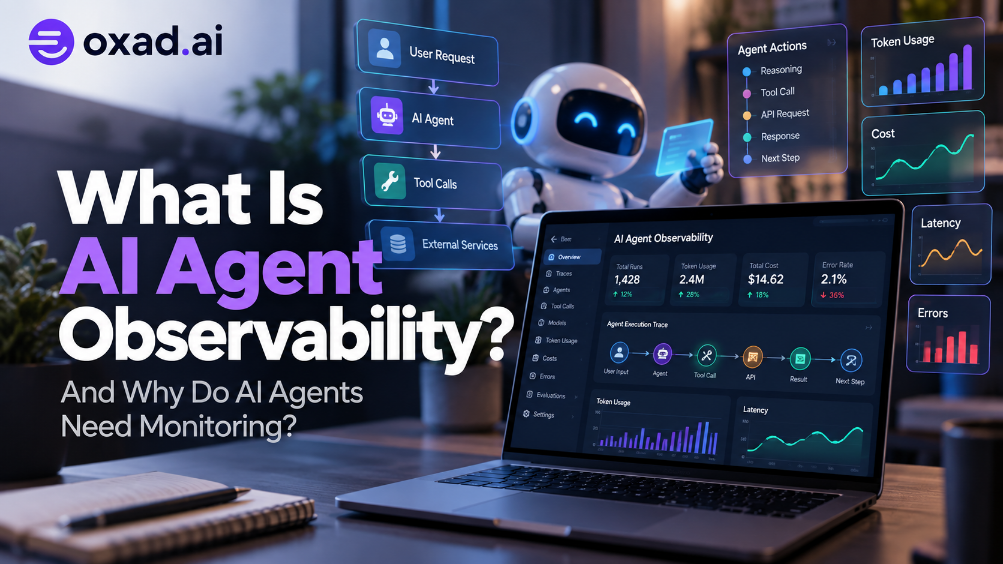
Imagine an agent running a long workflow. The frontier model handles the difficult parts. A small decision model handles dozens of routine choices. A policy engine validates sensitive actions. The harness manages tools, memory, execution, and observability.
That architecture could make agents more efficient without making them less capable.
As AI agents become longer-running and more autonomous, the number of decisions they make will grow. That creates a strong reason to separate reasoning from decision-making instead of treating them as the same operation.
Frequently Asked Questions
What is an AI decision model?
An AI decision model is designed to choose, classify, or score predefined outcomes instead of generating open-ended text.
What is the difference between an LLM and a decision model?
An LLM can generate flexible text and perform broad reasoning, while a decision model focuses on constrained choices and scores.
Can decision models replace LLMs?
No. They are better viewed as specialized components that can handle narrow decisions while LLMs handle complex reasoning.
How do decision models help AI agents?
They can select tools, route models, classify requests, check arguments, evaluate outputs, and make other fast decisions.
What is Strands Decider 2B?
It is an open-source 2B-class decision model from AWS Strands designed for fast, constrained decisions in agentic workflows.
What are System One models?
System One is an emerging term used for fast decision-oriented models that return constrained choices or scores rather than free-form reasoning.
Can decision models run locally?
Some small decision models are designed for local CPU or GPU deployment, making them useful for low-latency workloads.
Can a decision model choose AI tools?
Yes. Tool selection is one of the clearest applications because the agent can choose from a defined set of tools.
Can decision models reduce AI costs?
They can potentially reduce cost when simple decisions are moved away from larger models, although actual savings depend on the workload.
Are AI decision models secure?
They can add a useful verification layer, but they should not replace deterministic authorization, policy enforcement, or human approval for high-impact actions.
Conclusion
AI decision models represent an important shift in how developers may build the next generation of agents. Instead of using one large model for every step, developers can combine specialized models according to the type of work being performed.
Large models can reason. Decision models can choose. Harnesses can execute. Policies can control.
That separation could become one of the most important architectural patterns in agentic AI—especially as agents become faster, more autonomous, and capable of running long workflows.